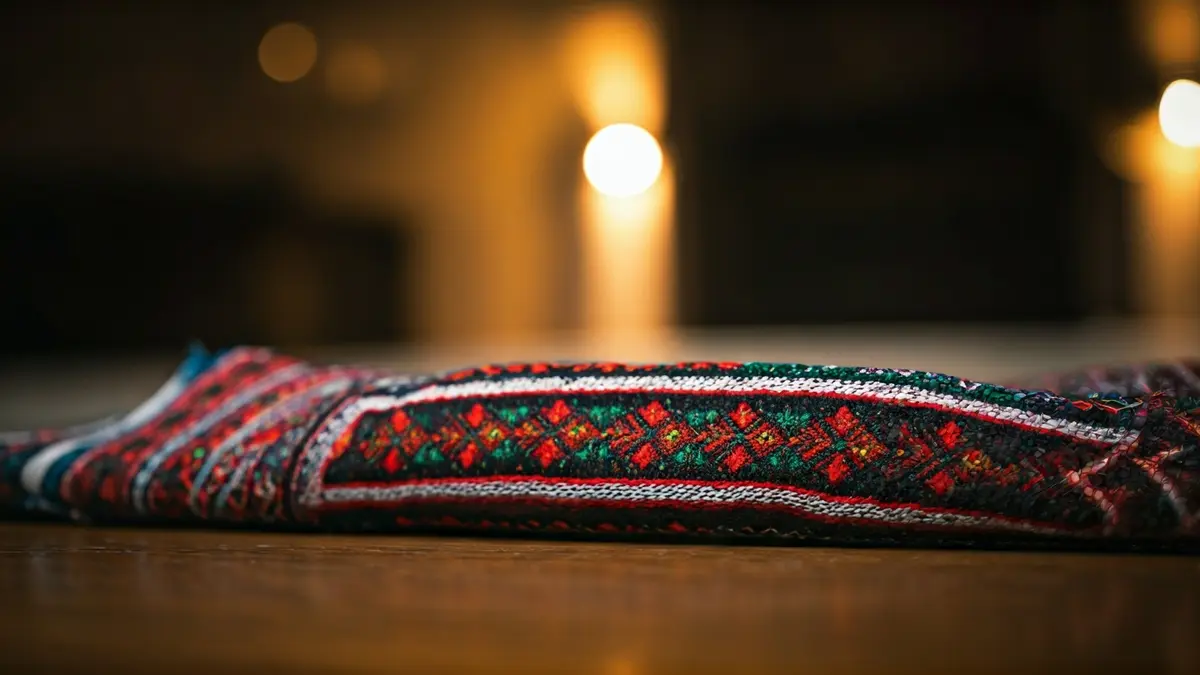
The donation, made by Palestinian-origin journalist Miriam Ghuneim, includes pieces dating back to 1968 from the village of Turmosaya, in the West Bank. These garments are significant examples of Tatreez embroidery, an artisanal technique recognized by UNESCO as Intangible Cultural Heritage of Humanity in 2021.
“"This incorporation is an opportunity to bring the cultural richness of other peoples closer to the public through craftsmanship."
Tatreez, also known as Palestinian embroidery, is a handmade technique with deep cultural and historical roots. Practiced for centuries, primarily by women in rural areas, this art has been passed down through generations, forming an essential part of Palestinian daily and community life.
Before 1948, embroidery was a fundamental domestic activity, with techniques learned and shared among mothers, daughters, and grandmothers, often also serving as a source of income. Each design, color, and motif embroidered on the traditional dress, known as thobe, told a story, reflecting the region of origin, marital status, or social standing of the woman wearing it.
Furthermore, the embroideries commemorated important events such as weddings or births, and often incorporated spiritual or protective meanings. With the addition of these two pieces, the MAIT enriches its collection with valuable ethnographic and symbolic examples, contributing to the preservation and dissemination of a globally recognized artisanal tradition.