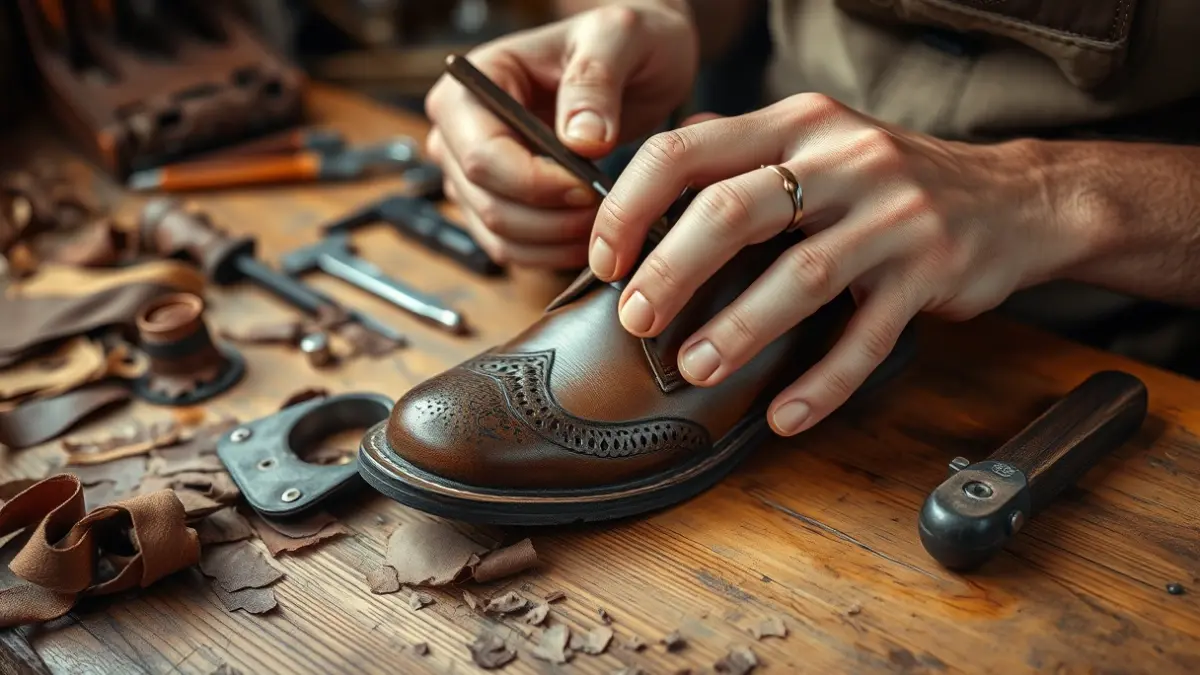
The workshop, barely ten square meters, evokes a mid-20th-century atmosphere, with the characteristic smell of leather and an apparent disarray that conceals decades of history. Shelves filled with footwear, antique tools, and various objects adorn the space, reflecting the essence of a craft refusing to die out.
The brothers, aged 61 and 59, present themselves as Tenerife's last cobblers, a reality they deeply regret. They fear their traditional work will be lost, not only in the Canary Islands but also across Spain, in an era dominated by consumerism and mass footwear production, mainly from China and India.
“"You don't get rich doing this, but you can live a dignified life."
The current trend of buying and discarding, rather than repairing, has led to the disappearance of many leather artisans. However, these brothers represent an exception, keeping alive the legacy of their father, who opened Zapatería Chávez in 1951 in the same location, when there were twenty other workshops competing in La Orotava.
The father of the current cobblers, who started as an apprentice at a young age, became independent at 19 and established his business in the picturesque San Francisco garden, near the Casa de Los Balcones and the town hall. Despite a decrease in customers compared to previous decades, the workshop continues to receive a steady flow of work, demonstrating the ongoing need for this artisanal service.
Both brothers began working in the family workshop at ages 14 and 15, respectively. Although they have contributed many years, they regret that the lack of formal contracts in the past has affected their employment history. Their main concern is that once they retire, there will be no one to continue the trade, as attempts to train apprentices have been thwarted by bureaucracy and a lack of time for teaching.
They criticize the absence of regulated training for trades like theirs, which, like blacksmithing, are at risk of disappearing. They explain that, unlike modern workshops that only quickly glue or stitch, their work involves complex repairs, from soles and tips to bag handles and zippers, often using traditional techniques and antique tools. Their services range from three to twenty euros, though some more elaborate jobs can exceed forty.
Among the anecdotes they cherish, one of the brothers recalls a custom shoe order for a client with one foot shorter than the other. The client never collected them, but later, another person appeared with the same problem and foot size, which allowed the situation to be unexpectedly resolved. Despite the apparent disarray, which sometimes leads to the confusion of a pair, the brothers continue their work, aware that they are the last guardians of a tradition that enriches Tenerife's heritage.