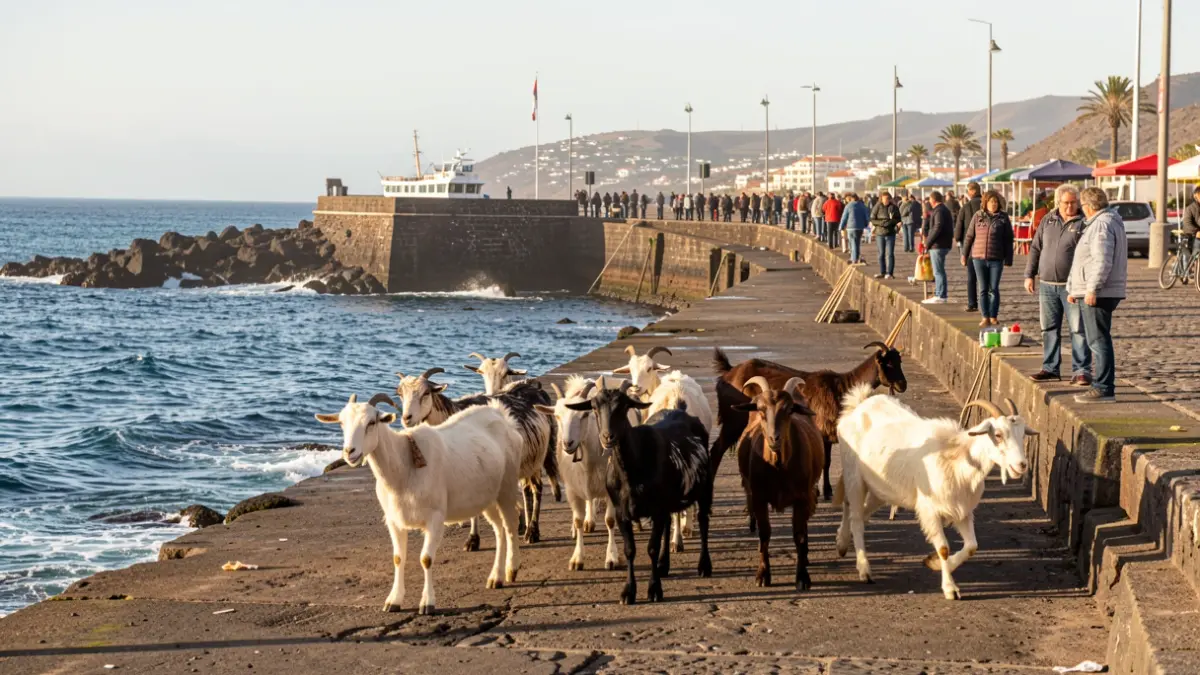
The San Juan festivities bring a unique event to the north of Tenerife: the traditional goat bathing at the pier of Puerto de la Cruz. Ranchers, locals, and visitors gather to witness this rite of Guanche origin, celebrated from early morning on June 24th.
This purifying bath, performed in the sea, has its roots in the practices of the island's ancient inhabitants. It was believed that saltwater not only cleaned and healed the livestock but also promoted the fertility of the herds, which were essential for the subsistence economy of the time.
Saltwater helped to clean the livestock, rid it of parasites, heal wounds, and protect it. It was also associated with the fertility of the flocks, fundamental in a subsistence economy based for centuries on livestock farming and agriculture.
The image of ranchers leading their flocks to the water is one of the most anticipated moments of the celebration. The event, which this year will run from 08:00 to 12:30 at the fishing pier, recreates this ancestral ritual aiming to purify and protect the animals.
The day is experienced as a popular festival, with music, folklore, and the presence of local products, keeping alive the link between the island and its livestock-raising past. High anticipation surrounds this unique scene for residents and tourists alike.
This custom was nearly lost in the 1960s, due to the rise of tourism and a perception that rural practices might not align with the modern image the municipality wished to project. However, it was revived in 1984 thanks to the efforts of various cultural groups and is now a hallmark of San Juan in Puerto de la Cruz.