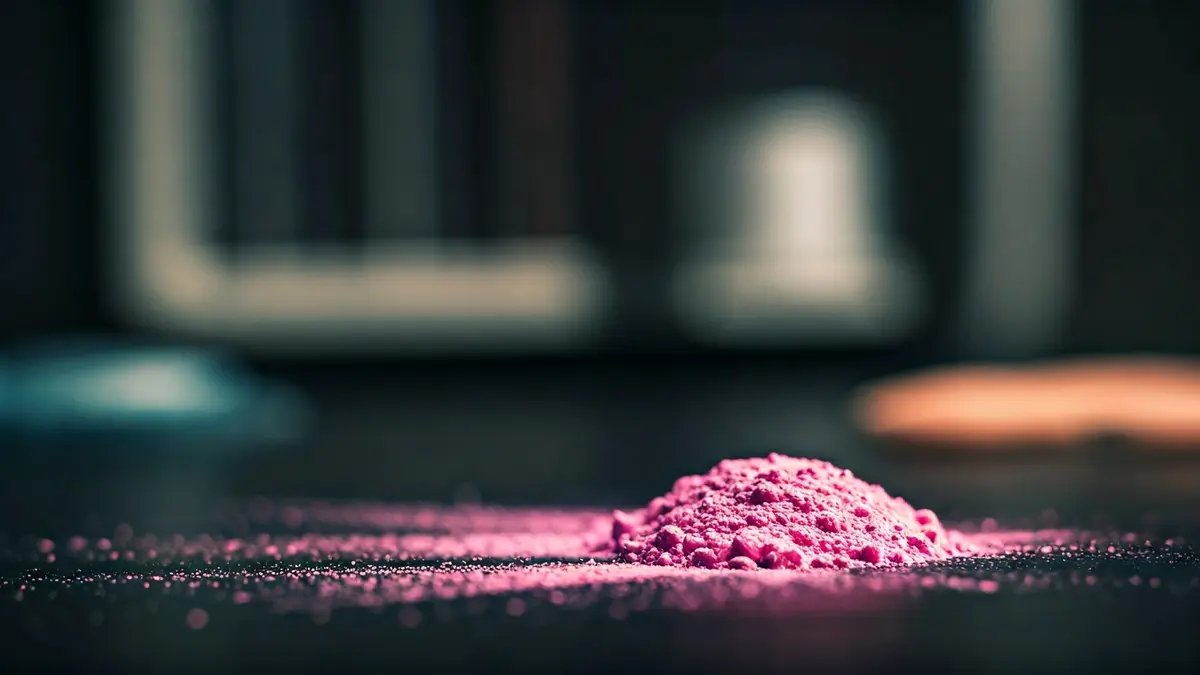
Popularly known as “pink cocaine,” 'tusi' has no relation to traditional cocaine. Forensic analyses and studies by organizations like Energy Control reveal it is a highly dangerous synthetic compound, often artificially colored and flavored to enhance its visual appeal.
The name 'tusi' comes from a mispronunciation of the 2C-B molecule, a hallucinogen synthesized in 1974. However, current research shows that today's 'tusi' rarely contains this substance. An Energy Control study between 2019 and 2022, involving 150 samples, found that only two contained real cocaine. The most common composition (44% of samples) is a “triphasic” mix of ketamine, MDMA (ecstasy), and caffeine.
Unlike white cocaine, which is a natural alkaloid, 'tusi' is a synthetic cocktail whose formula varies greatly among distributors, potentially including anything from amphetamines to crushed aspirin. Its effects are primarily psychedelic and hallucinogenic, causing a disconnection from reality, which is uncommon with conventional cocaine. Despite being made from cheaper ingredients, it is marketed as an exclusive product, with prices ranging from 80 to 100 euros per gram, exceeding the 60 euros of white cocaine.
The main danger of 'tusi' lies in its unpredictability. As an unregulated mixture, consumers never know the exact proportion of each substance.
Experts compare 'tusi' consumption to a “Russian roulette” due to the variability of its components and the potentiation of effects. Mixing ketamine with alcohol can lead to loss of coordination and deep sedation, while ecstasy with alcohol drastically increases the risk of dehydration and heatstroke. Additionally, psychotic breaks, panic attacks, and severe anxiety episodes have been reported.
The early warning drug system has recorded a significant increase in 'tusi' seizures since 2020, especially in nightlife venues, festivals, and coastal areas. Its spread is attributed to a false perception of risk and its striking aesthetic. Spanish authorities and the Seismic Network for drug surveillance are working to dismantle distribution networks, which introduce the substance through international airports or produce it domestically.