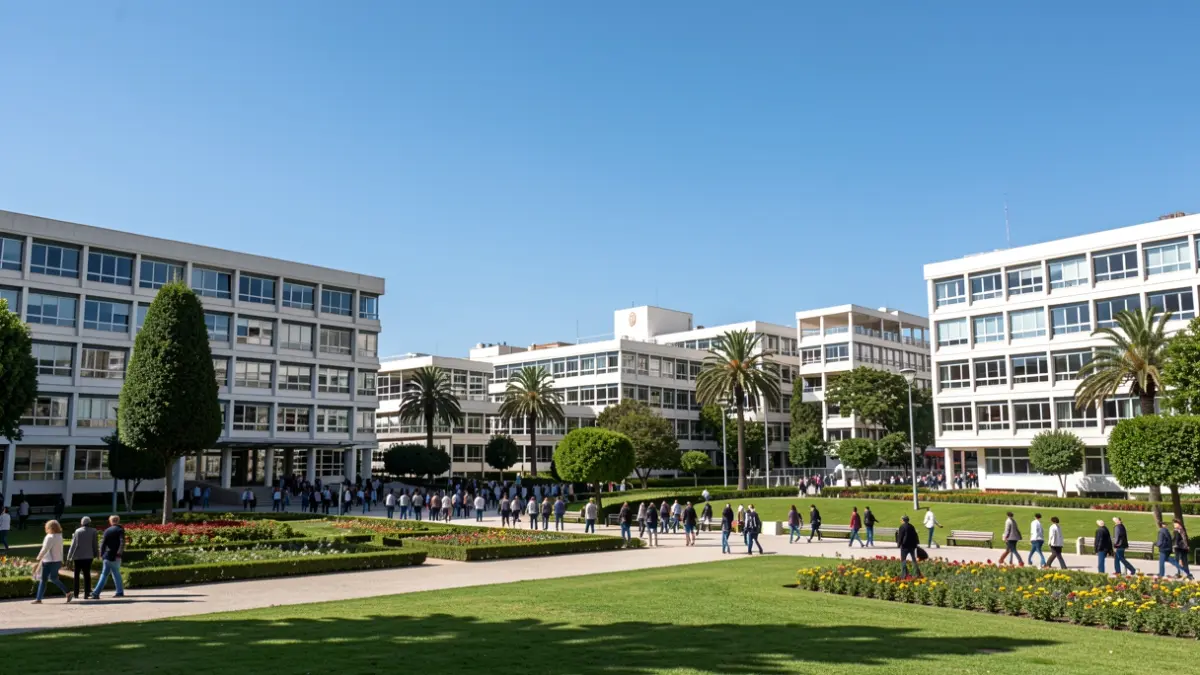
The Faculty of Economics, Business and Tourism at the University of La Laguna (ULL) will implement staggered schedules this academic year, joining the initiative that already benefits other university centers. This expansion brings the total number of students with such schedules at the ULL to over 4,700, making it one of the busiest centers on the Guajara Campus with more than 2,000 students.
The measure, announced by ULL Rector Francisco García and Tenerife Council President Rosa Dávila, primarily aims to stagger student entry times to improve university mobility and reduce the number of vehicles on the TF-5 highway. An average of 800 vehicles per day are estimated to be removed during peak hours.
The system will be applied to the Faculty's four degree programs: Business Administration and Management, Accounting and Finance, Economics, and Tourism. Classes will commence at 9:00 AM, and for the South Campus (Tourism degree), at 9:30 AM.
“"University activity generates thousands of daily trips, and organizing them better has an impact that benefits the entire citizenry. The results obtained support this measure and now allow us to expand its reach."
Rosa Dávila highlighted the collaboration between both institutions to address one of the island's mobility challenges, calling the ULL a "fundamental ally" and expressing readiness to incorporate more faculties into the initiative.
Rector Francisco García noted that a university community of around 24,000 people should contribute to minimizing its impact on mobility, adding that this initiative aligns with the DNA of a public university.
This collaboration began in November 2023 with an agreement to improve island mobility. The Council's Mobility Councilor, Eulalia García, explained that the agreement has promoted measures such as reinforcing public transport, managing parking, and reorganizing university schedules.
During the initial experience of staggered scheduling in the 2025/26 academic year, approximately 500 vehicles per day were removed from the road. With the inclusion of the Faculty of Economics, an increase of 300 fewer vehicles is estimated, totaling 800.
Other notable actions include the launch of shuttle buses in 2025, connecting different points of the island's north and south directly with the Guajara Campus, which registered over 43,200 trips last year. 70% of students use TITSA buses and the Metro, reflecting the importance of public transport.
The ULL, through its Chair of Economics and Mobility, monitors the mobility and scheduling habits of its university population. Vice-Rector Marta Domínguez pointed out the complexity of changing routines and the university's efforts. Plans are underway for the automation of preferential parking for high-occupancy vehicles.
Initial results show improved travel times on the northern highway, with reductions of 10% at 8:00 AM and up to 18% at 9:00 AM, attributed to the combination of staggered schedules and shuttle buses.
The Council has granted the academic institution a subsidy of 530,000 euros to install intelligent barriers in 13 university parking lots, aiming to prioritize access for high-occupancy vehicles.