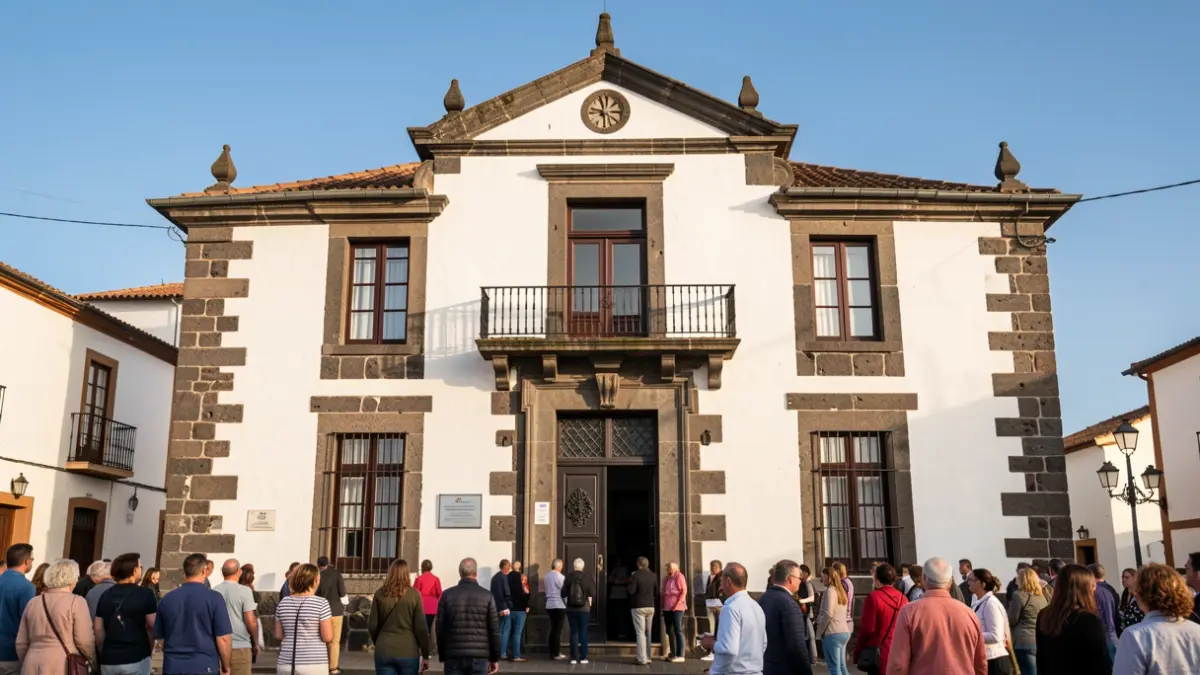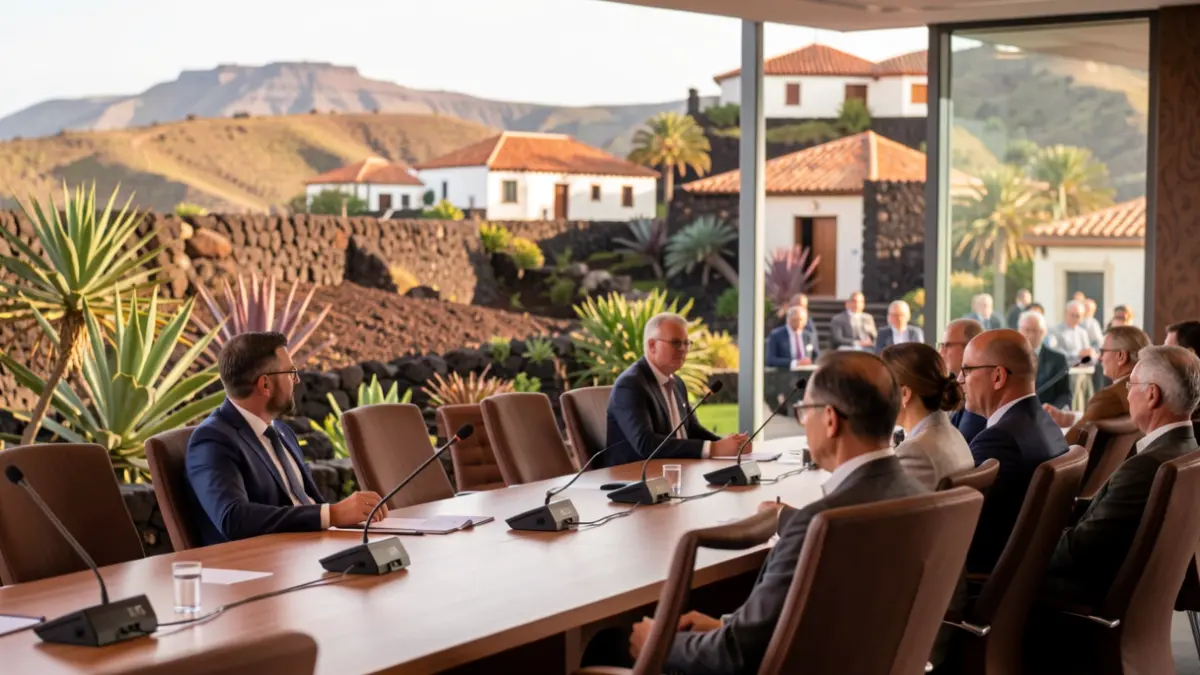
The Department of Ecological Transition and Energy of the Government of the Canary Islands, through the Climate Change and Environmental Information Service and in collaboration with GESPLAN, has finalized the participatory diagnostic phase of the Green Training Plan of the Canary Islands (PFVC). This was achieved through two validation workshops held on September 17 and 24 in Tenerife and Gran Canaria, respectively.
These sessions served to contrast and validate the results of the diagnostic process, which began in February 2026. Training priorities linked to the seven strategic axes of the PFVC have been consolidated: Energy Transition, Integrated Water Management, Circular Economy and Waste, Spatial Planning and Sustainable Construction, Primary Sector, Natural Heritage, and Sustainable Tourism.
Experts from various sectors, including training, business, research, and public administration, participated in interdisciplinary working groups. These spaces facilitated knowledge exchange, joint analysis, and the comparison of needs identified during the diagnostic phase, sharing perspectives on the capabilities and professional profiles required for the ecological transition in the Canary Islands.
Based on the information gathered, participants collaborated in the co-creation of specific training proposals, adapted to the needs of each strategic axis. Complementary non-training actions were also defined to address the identified needs.
“"I thank all participating sectors, from education to professionals linked to the ecological transition and green training and the blue economy, because they are the ones who truly know the training needs that will lead to the future workers we will need to transition towards a new Canary Islands with a sustainable, productive economic sector adapted to climate change. Together, we will achieve change in the Canary Islands."
With these workshops, the PFVC concludes its diagnostic and validation phase. The foundations are thus laid to define the training needs related to green and blue employment in the Canary Islands, identifying the competencies and professional profiles demanded by the transition towards a more sustainable economic model. The goal is to create a tool that anticipates these qualification needs and guides training.
The Green Training Plan of the Canary Islands is developed within the framework of Article 69 of the Law on Climate Change and Energy Transition of the Canary Islands. It aims to prepare current and future professionals for the changes arising from the ecological transition, identifying training needs associated with different activity sectors.
The workshop held on September 24 at the Campus del Obelisco of the University of Las Palmas de Gran Canaria marks the closure of the process, incorporating the contributions of the participants into the final diagnostic conclusions.
The PFVC is financed through the General Budgets of the Autonomous Community of the Canary Islands and is eligible for co-financing of 85% by the European Union through the Canarias FEDER 2021-2027 Programme, under the priority linked to the green transition, climate change adaptation, and resilience.