The Moon will pass between the Earth and the Sun, obscuring up to 77% of the solar disk in an event lasting approximately from 18:55 to 20:45 Canary time. Although the totality of the eclipse will not be visible from the archipelago, the partial phase will offer a prolonged spectacle for observation.
Jonay González, research coordinator at the Canary Islands Institute of Astrophysics (IAC), emphasizes that these phenomena are an opportunity to spark interest in astronomy and understand the geometry of the Sun-Earth-Moon system. He notes that the partial phase, lasting longer than totality, allows for more detailed observation of the eclipse's evolution.
To facilitate observation, the Elder Museum of Science and Technology has organized so-called 'cosmic watchtowers' on the eight Canary Islands. These observation points will be operational on August 12, from 18:30 to 21:30, where certified glasses will be distributed and scientific communicators will be present.
Selected locations include Caleta de Sebo (La Graciosa), La Santa (Tinajo, Lanzarote), Poblado de Atalayita (Antigua, Fuerteventura), Tejeda (Gran Canaria), Playa de San Juan (Tenerife), Valle Gran Rey (La Gomera), Tazacorte (La Palma), and La Frontera (El Hierro).
The museum's director, José Gilberto Moreno, anticipates a large public turnout, estimating that the initiative could mobilize a significant percentage of the island population. The crucial importance of using certified or homologated glasses to prevent irreversible eye damage is reiterated.
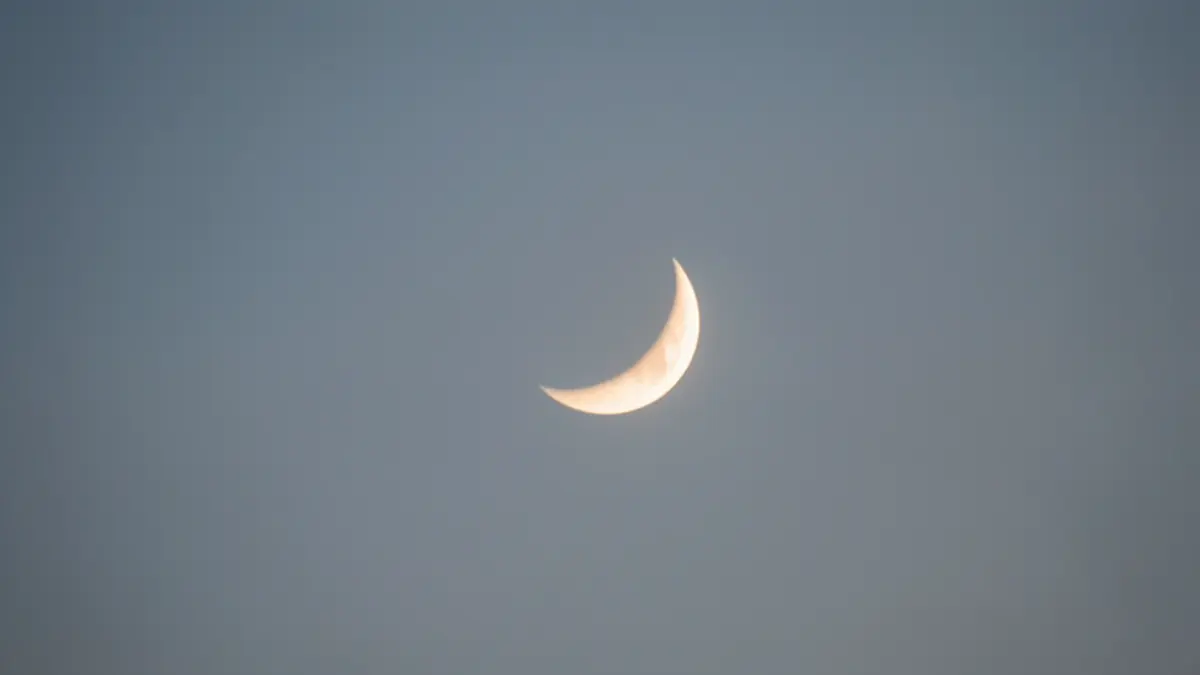
The eclipse will reach its maximum at 19:54 hours, at which point the Sun will appear as a 'golden croissant'. Experts recommend seeking a clear horizon towards the west or northwest, and positioning oneself above cloud cover for better visibility.
Although the totality phase, which allows observation of the solar corona, will not be visible in the Canary Islands, the partial phase remains valuable for science. According to González, these events can be used to study other astronomical objects, such as asteroids or planets, by temporarily obscuring objects located behind the Sun.