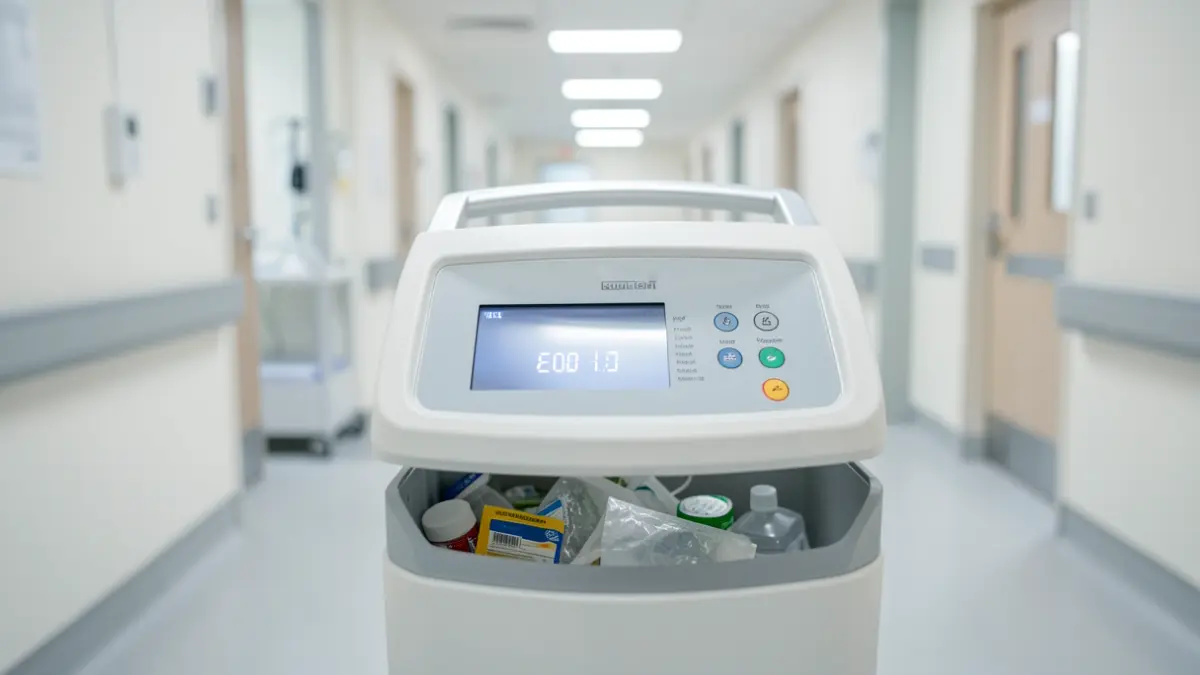
This initiative, part of the Health Strategy Zero Net Emissions 2030 of the Canarian Health Service (SCS), aims to reduce biological risks associated with infectious and cytotoxic waste, contributing to more sustainable management. Following a successful pilot experience in 2025, the solution is being extended with the installation of forty units at the Ofra Hospital and the Sur Hospital, in addition to the main facility.
The project, declared a Strategic Project for Canarias, involves implementing containerized systems for storing approved medical waste at -12º C. This technology reduces biological activity, minimizing exposure risk for professionals and improving biosecurity in care areas until collection by authorized managers.
The units also feature an environmental purification system using titanium dioxide, which eliminates potentially hazardous emissions and sanitizes the air within a 25-square-meter radius around each device. This enhances the environmental quality of hospital spaces and strengthens preventive measures against potential biological risks. It also optimizes waste handling and storage, reduces management incidents, and lowers the carbon footprint associated with waste transport and treatment.
The Health Strategy Zero Emissions 2030 of the SCS aims to reduce greenhouse gas emissions from Canarian health services by 2030. It includes the implementation of green hydrogen, renewable energy, intelligent carbon footprint management systems, lighting, and climate control, as well as the self-management of highly infectious waste.
This strategy has been declared a Strategic Project for Canarias, reinforcing the regional government's commitment to a more sustainable and innovative public healthcare system, aligned with the Canarian Agenda 2030 and the fight against climate change.