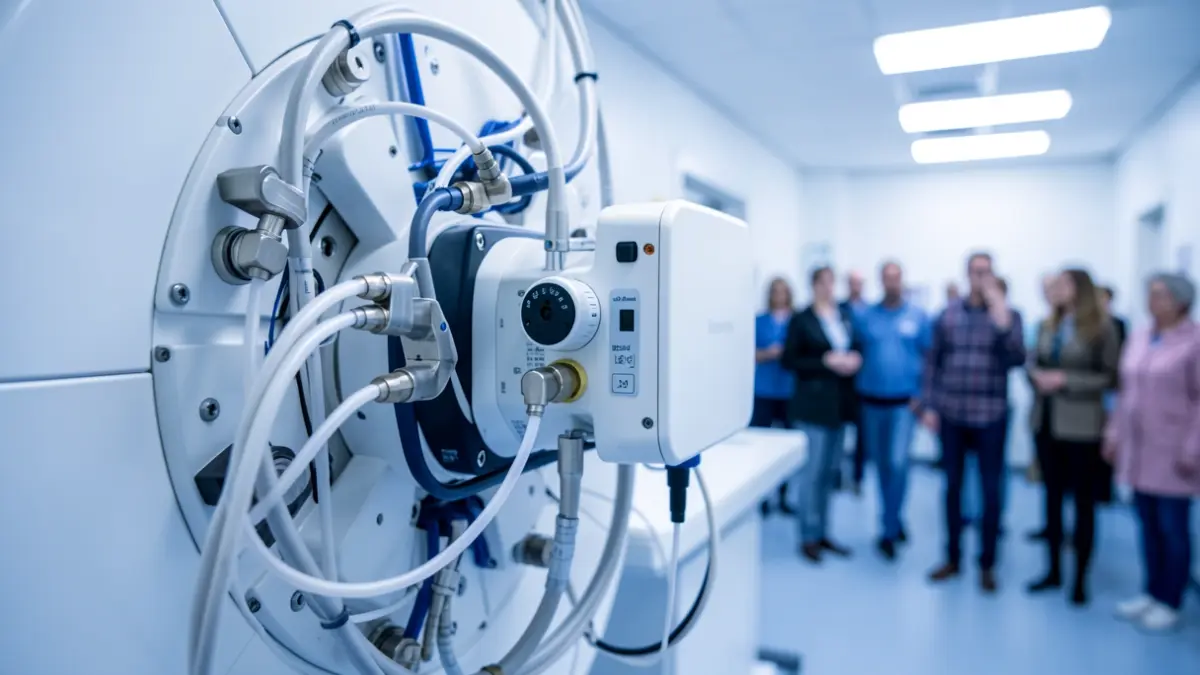
The Radiation Oncology service at the Hospital Universitario Nuestra Señora de Candelaria, a center affiliated with the Canary Islands Government's Health Department, began using a new ablative radiotherapy system known as Synchrony with tomotherapy in late 2025. Six lung cancer patients have already benefited from this technique with positive outcomes.
This treatment, developed in collaboration with the hospital complex's Medical Physics and Radiation Protection service, enables tumor treatment through stereotactic body radiotherapy (SBRT) using high-dose, high-precision radiation. The system tracks tumor movement in real-time, accounting for the patient's breathing and locating the tumor at all times. This enhances patient comfort during the procedure and reduces radiation exposure to healthy organ areas.
SBRT has been used at the hospital complex since 2016 to treat other types of cancer non-invasively, administered in one to five sessions depending on tumor size and patient condition. Since then, nearly 400 people have been treated with this technique. During 2025, SBRT was applied to 74 oncological patients, and so far this year to 43 patients for pathologies in organs such as the liver, kidney, lung, bones, or prostate.
The service's team comprises 56 professionals, including specialist physicians, radiophysicists, technicians, nurses, auxiliaries, and administrative staff. In 2025, they performed over 19,300 oncological radiotherapy treatments for nearly 2,000 patients, an 18.60% increase compared to the previous year.
The hospital is equipped with advanced technology, including four linear accelerators, brachytherapy equipment, superficial radiotherapy, and surface-guided radiotherapy units, along with specific equipment for ablative radiotherapy with intra-fraction control and respiratory monitoring across all accelerators. It also features a simulator CT scanner with 4D imaging capabilities for precise tumor localization.
Radiation Oncology is fundamental in cancer treatment, as 60% to 70% of cancer patients will require radiotherapy at some point, whether for curative intent, as an adjunct to surgery or systemic treatments, or for palliative purposes to alleviate symptoms and improve quality of life. State-of-the-art linear accelerators enable the destruction of tumor cells and inhibition of their growth with high-precision ionizing radiation, maximizing the preservation of healthy tissues.