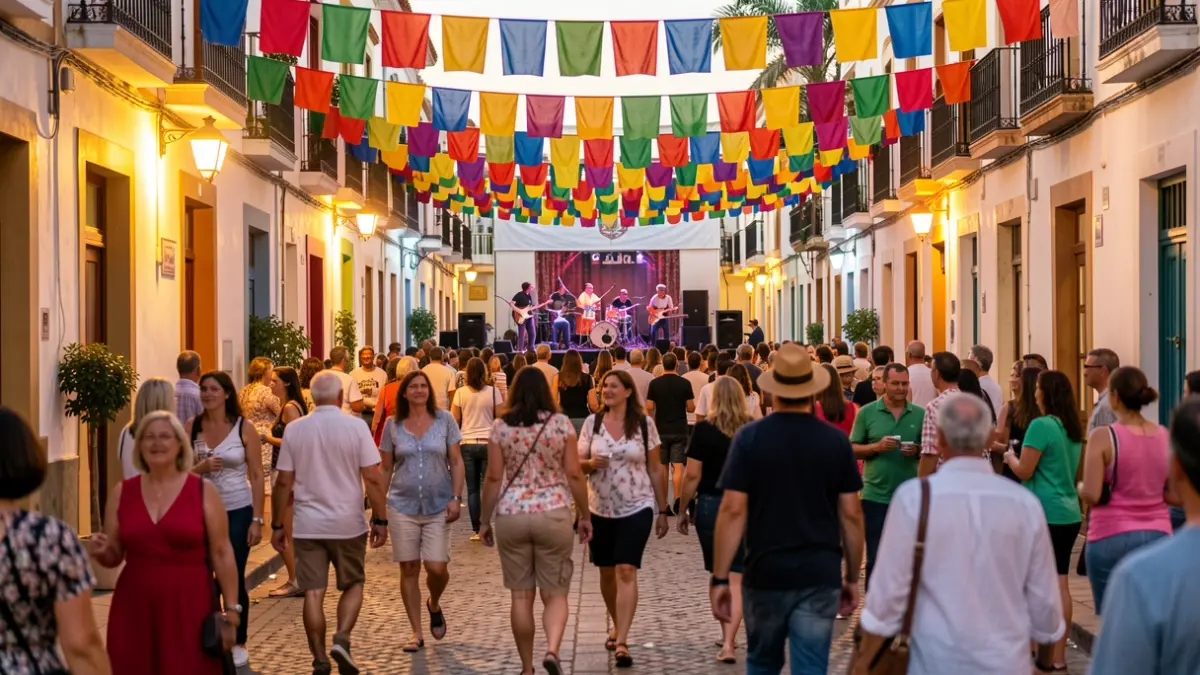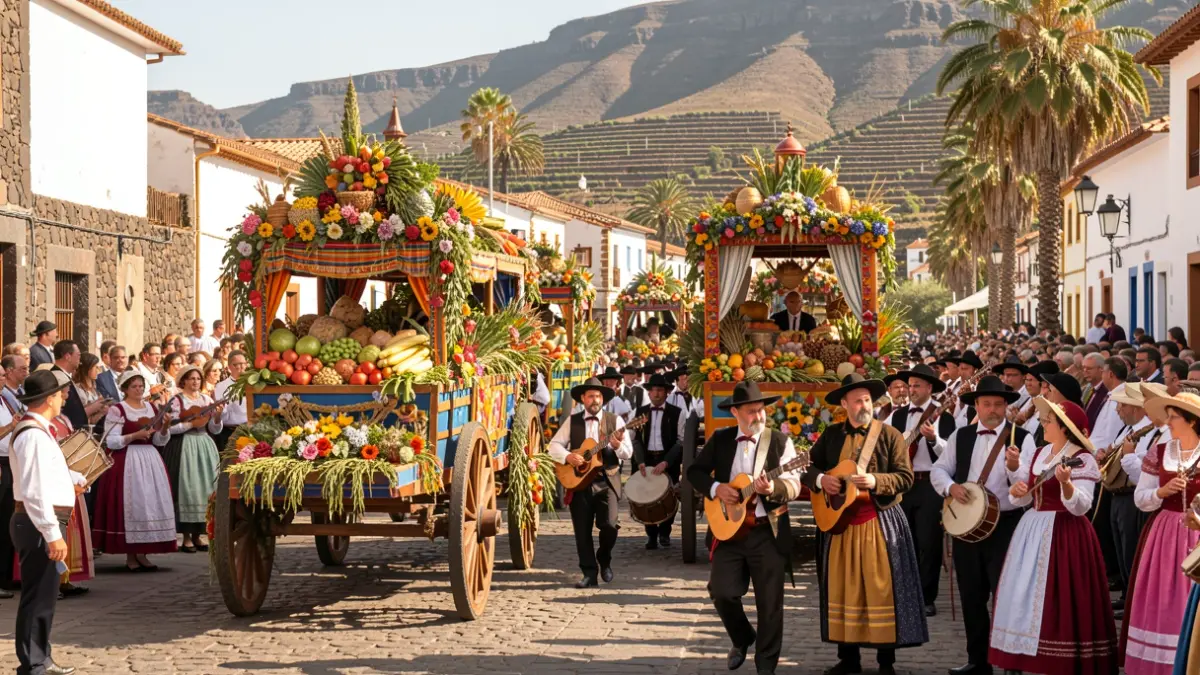
Hundreds of people dressed in traditional costumes filled the streets of La Orotava to participate in the popular festival. The event featured 77 carts and numerous folk groups parading through the historic center of the northern municipality, concluding the patron saint festivities with a significant public turnout.
The day began with a solemn mass at the Church of La Concepción, where attendees made the traditional offering of farm produce and renewed the promise of local farmers. Following the religious ceremonies, the festive parade commenced from the temple of San Francisco, proceeding through the historic quarter to the Plaza de la Paz, enlivened by musical groups (parrandas), bonfires, and the presence of livestock.
A total of 30 parrandas from the different islands of the archipelago actively participated, animating the procession of carts adorned with farming implements and horticultural products. The public crowded the sidewalks to enjoy one of the most representative celebrations in the Canary Islands.
The origin of this popular manifestation dates back to 1846 in northern Tenerife, when the then mayor, Bernardo de Ascanio y Molina, introduced the first formal romería after a trip to Madrid, financing it with his own funds. The modern structure of the festival was consolidated from 1936 onwards, under the direct management of the Liceo de Taoro, which incorporated traditional elements such as livestock, organized folk groups, and decorated floats.
The current format of the festivities has been maintained uninterruptedly each June, having only been suspended in 2020 and 2021 due to the covid-19 pandemic.