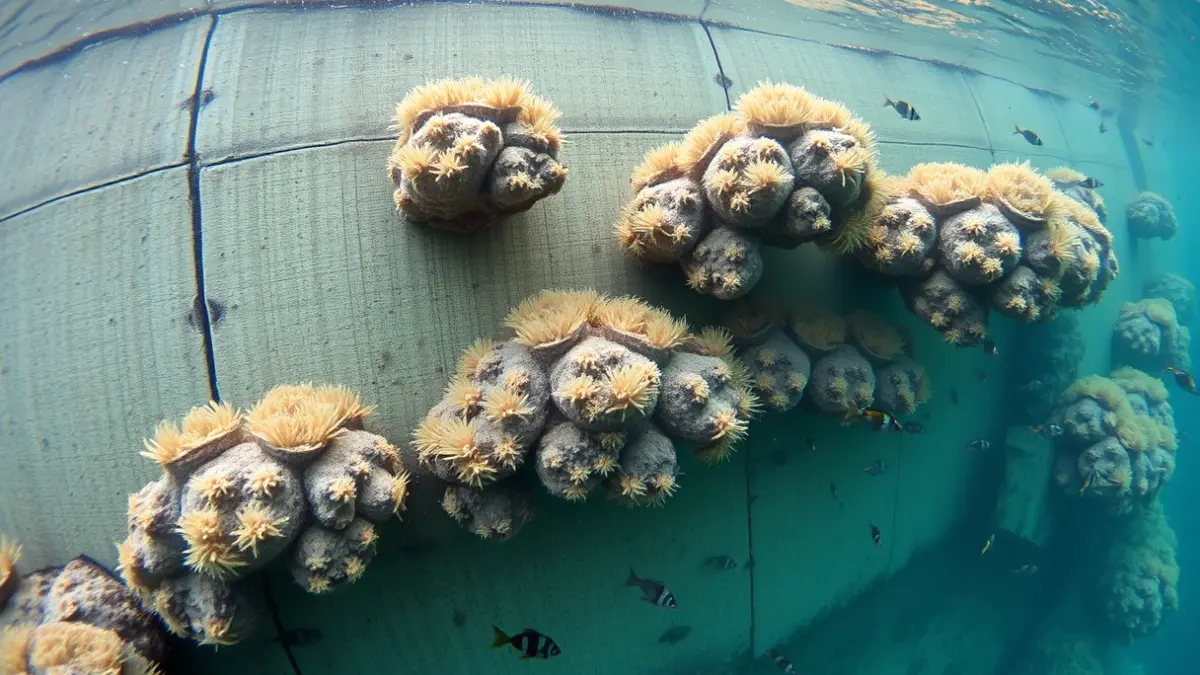
Biomimetic structures, commonly known as 'artificial reefs', have transformed the dock walls of the Port of Las Palmas. Species such as nudibranchs, gobies, damselfish, ascidians, trumpetfish, octopuses, groupers, and bryozoans have colonized these plates, which are designed to mimic the shapes and textures of natural reefs to maximize biodiversity.
Ocean Estructures, the company behind the project, conducts regular monitoring using an underwater drone and artificial intelligence technology to assess progress. The latest review, carried out a week ago in collaboration with Ecos, utilized a Chasing M2 Pro underwater robot to film the seabed of the docks.
In the first ten months since their installation in January 2025 at the Reina Sofía, Santa Catalina, and Deportivo docks, marine life increased by 35% to 106%. The Reina Sofía dock recorded the largest increase, doubling the number of species. Results from the latest monitoring, expected in about a month, are anticipated to confirm the continued growth trend in biomass.
“"The particularly positive behavior in areas like Reina Sofía demonstrates the enormous potential of this type of nature-based solutions. The decision to extend the project to other ports responds precisely to the need to leverage this knowledge and continue advancing in the renaturalization of our port spaces."
The Port Authority and Ocean Estructures anticipate that the fish population could eventually triple, based on similar experiences. The pilot project will extend to other docks in La Luz, with new plates planned for installation in the ports of Lanzarote and Fuerteventura.
These structures, made from marine-compatible mineral materials like calcium carbonate, are attached at depths exceeding five meters. They include a curved mesh that protects fry from predators, facilitating their growth and safe reproduction. Additionally, they contribute to carbon dioxide capture and act as 'ecological traps' to attract native species and detect invasive ones.
Currently, Ocean Estructures has installed nearly 400 biomimetic structures and has over 500 in progress. These renaturalization units have generated more than 5.2 tons of biomass, captured over 2.2 tons of carbon dioxide, and recovered 397 marine species, 52% of which are of commercial interest.