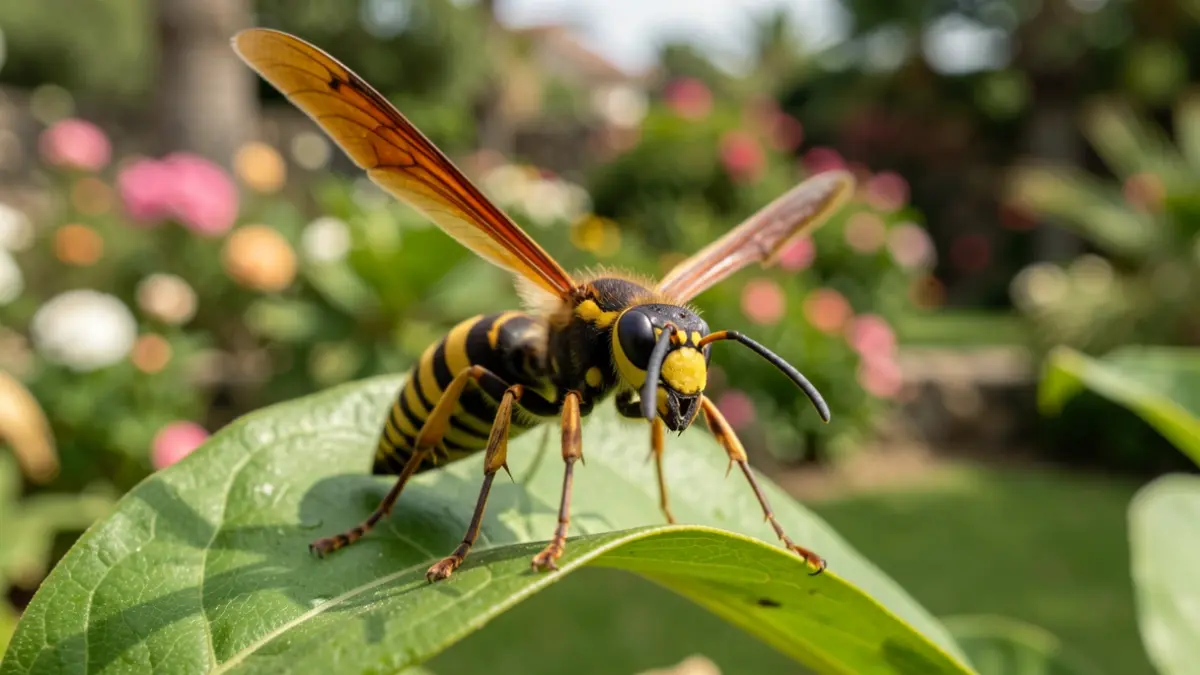
The Early Warning Network for Invasive Exotic Species of the Canary Islands Government (RedEXOS), under the Department of Ecological Transition, has initiated a control operation after confirming the presence of the Asian hornet in the capital of Gran Canaria. It is suspected that the species arrived via maritime transport.
Currently, five homemade traps have been built, with plans to construct twenty more for installation in gardens, parks, and the port area throughout the weekend and until Monday. The technical director of RedEXOS, Sonia Martín, stated that monitoring the situation will require "quite some time," with particular intensity during the summer when the hornet eggs are fertile.
Martín has called for calm, indicating that the sting of the Asian hornet, although potentially more painful due to its larger size and stinger, does not differ significantly from that of other wasps present on the islands. However, allergic individuals should be "especially alert" to possible complications.
The main risk posed by this invasive species, according to the director, lies within the beekeeping sector, as honeybees are one of its favorite prey. "Pollinators are an essential element in ecosystems," Martín recalled, emphasizing the importance of protecting them.
Although the Asian hornet has been present in Spain since 2010, mainly in the north, the islands' climatic conditions, requiring high humidity and water sources, were not initially considered the most suitable. Nevertheless, the possibility of greater impact on islands like Tenerife or La Palma is being considered.
Public collaboration is requested to combat the species. If a nest is detected, people are asked not to handle it, to take a photo or video if possible, and to report it through official channels such as the RedEXOS WhatsApp number (646 601 457) or 112.