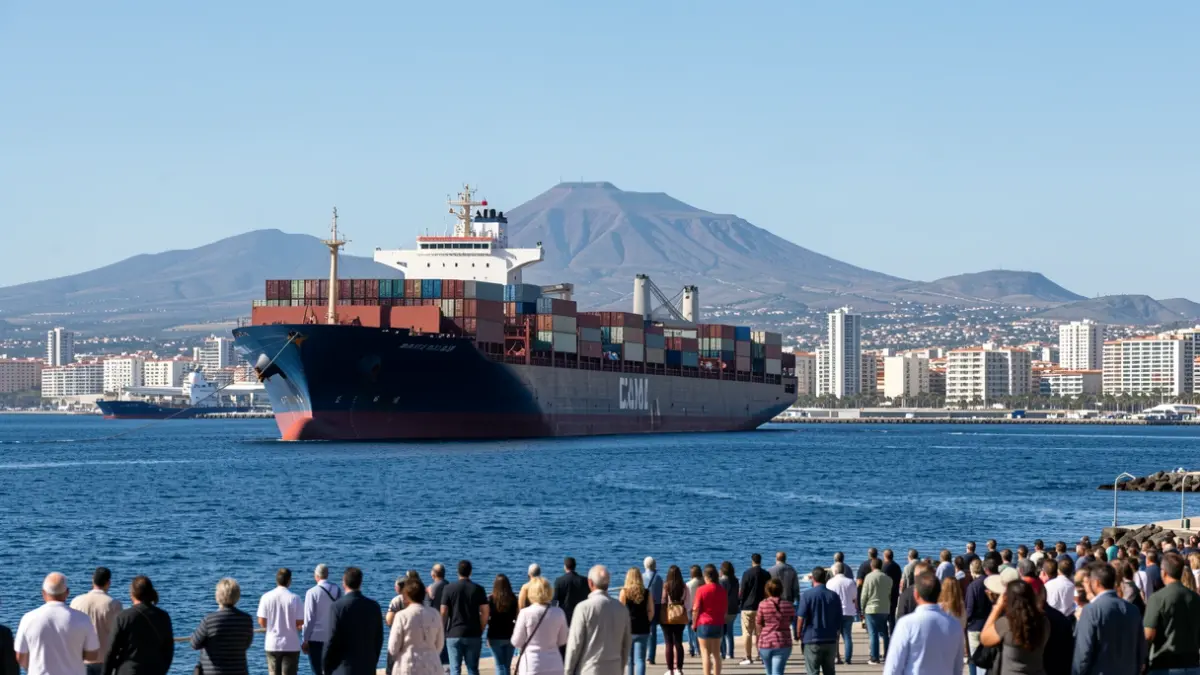
The Port of Las Palmas has established itself as a significant maritime hub in the Atlantic, increasing the workload for the Maritime Captaincy, particularly in bunkering operations. Maritime Captain Ignacio Gallego notes that while increased traffic raises safety responsibilities, the port demands "an extra level of safety" compared to others in the country. Safety in the northern anchorage, designated for ships with dangerous goods, is considered adequate due to its distance and design. The Captaincy conducts rigorous inspections, including the use of satellite technology to detect potential illegal spills, and has imposed sanctions for regulatory breaches, although serious pollution cases are rare.
Regarding the controversial arrival of the vessel 'Hondius', Gallego asserts that the authorities' response was "correct and agile." Initially, the ship had unofficially communicated its intention to dock in Las Palmas, but the final decision to divert it to Granadilla, in Tenerife, was based on technical and health criteria, such as the availability of a specific contagion unit at the Hospital de La Candelaria. Gallego emphasizes that the ship's insurer preferred Las Palmas due to its logistics, but safety and public health took precedence. He stresses that the Canary Islands are considered a top-tier hub for responding to complex maritime situations, which should be a source of pride.
The Maritime Captaincy closely monitors bunkering operations, inspecting barges and requiring internal maritime plans to minimize pollution risks. Although bunkering itself causes minimal pollution, other sources such as illegal discharges or daily incidents are investigated. In 2025, 152 reports and 107 sanctions were recorded, including four for pollution and three for waste. So far in 2026, there have been 48 reports, one for pollution and three for waste, generally minor incidents but subject to the "polluter pays" principle, with guarantees potentially reaching 10,000 euros.
Gallego also addresses the "cunning practices" in the fishing sector and issues with flag registration in some vessels seeking to evade regulations. He highlights the good relationship and coordination with other administrations, calling it one of the most significant improvements during his tenure. The Canary Islands' capacity to manage risk situations, like that of the 'Hondius', reaffirms its status as a top-tier European region and a strategic point for international maritime safety.