This initiative is part of the Affordable Housing Plan, seeking to expand the state housing stock in one of the areas with the highest housing demand in the country. The company Gadap Bordes S.L. will be responsible for developing both the basic and execution projects, as reported by the entity attached to the Ministry of Housing and Urban Agenda.
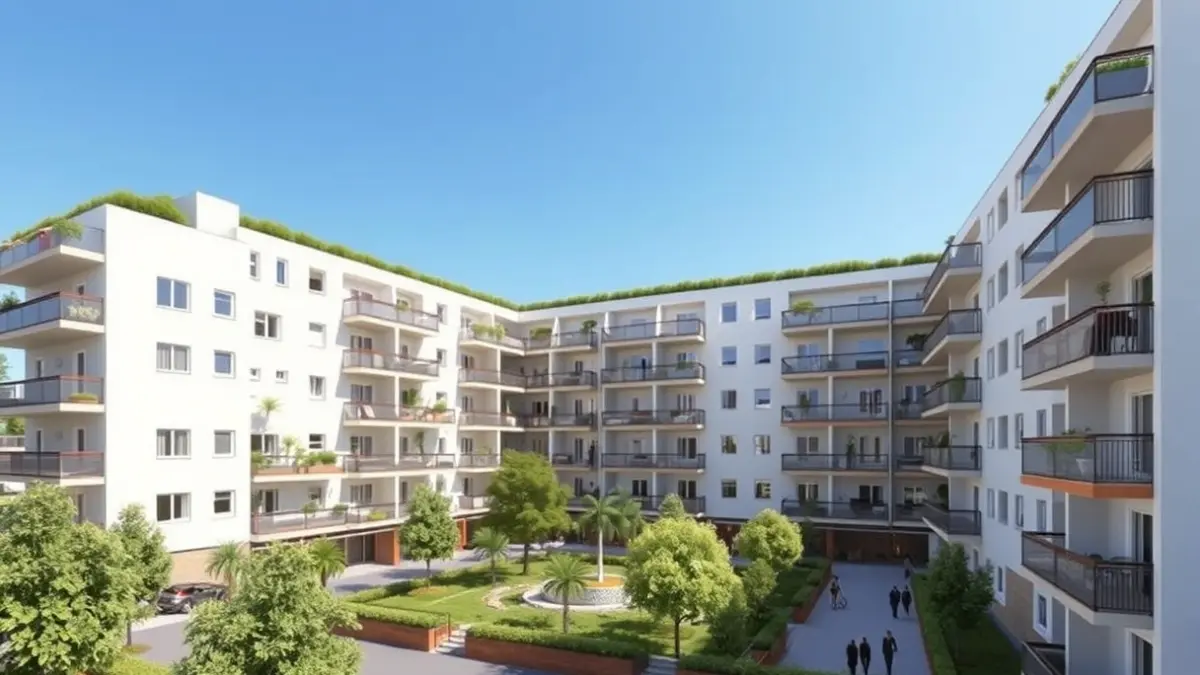
The development will be located in the Explanada de San Francisco, specifically on Sierra Nevada street s/n, on a plot of 2,544 m² that previously belonged to the Ministry of Defense. The architectural design of the project stands out for its integration with the environment, environmental sustainability, and the incorporation of bioclimatic techniques.
The residential complex will be organized around a large central courtyard, conceived as a protected and tree-lined space that will foster coexistence and serve as the main access. Each of the six-story blocks will have its own vertical communication, distributing access to the homes through a system of exterior corridors.
Regarding sustainability and energy efficiency, the project incorporates passive strategies such as favorable orientation, cross-ventilation, solar protection, and continuous thermal insulation. This bioclimatic approach is complemented by responsible water management, through a system for collecting and storing rainwater for irrigating green areas and cleaning tasks.
Furthermore, the project is committed to modular optimization and resource efficiency through an integral industrialized construction model, both in facades and interior elements, which will optimize the use of materials and reduce construction times.