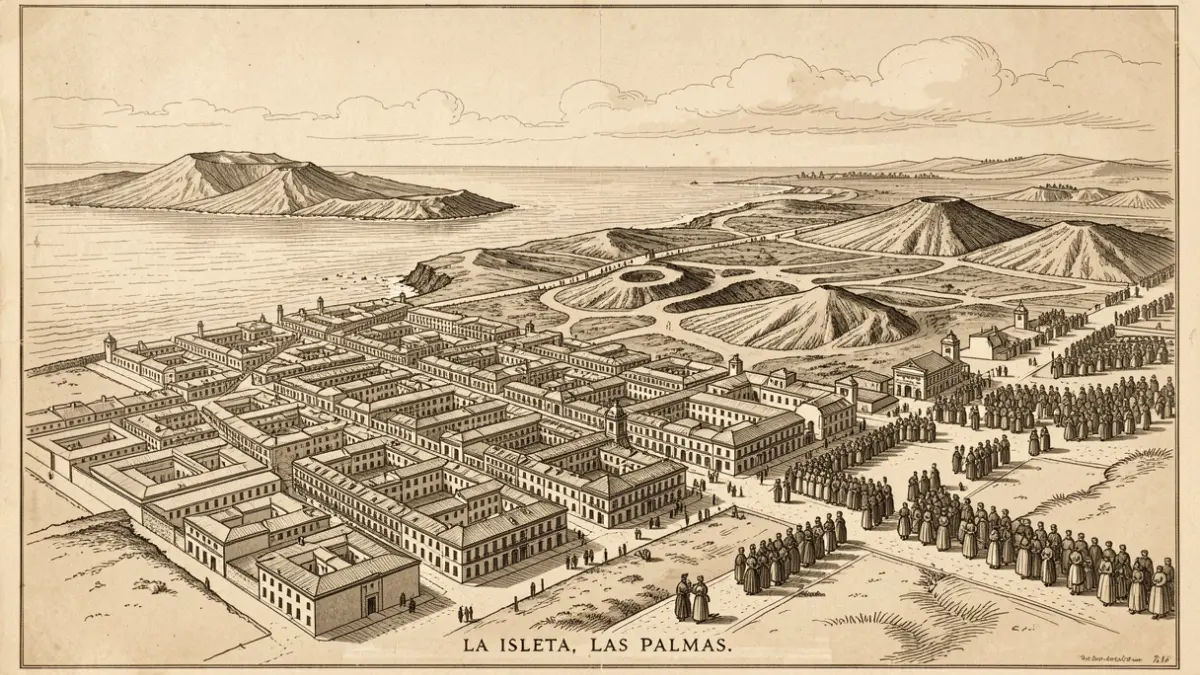
Engineer Juan León y Castillo conceived a plan for the future development of La Isleta, prioritizing modern advancements in health and hygiene. This project, which included fieldwork and detailed leveling, was developed with the collaboration of Julián Cirilo Moreno Ramos, who recounted the story in his memoirs. The plan envisioned comprehensive urbanization and an efficient sewage system, utilizing the natural topography of the land.
After completing the preliminary project, León y Castillo presented it to Mayor Fernando Delgado Morales. However, the project received little interest and was dismissed, leading the engineer to withdraw his proposal. The area of La Isleta, historically belonging to the State and granted by concession, had several owners throughout the 19th century, including Dámaso de Hermosilla, Domingo J. Navarro, and General Pedro Bravo de Laguna y Joven, who attempted to cultivate and develop the arid lands with varying success.
The history of La Isleta was also marked by the massive influx of workers and their families, leading to uncontrolled growth and the emergence of shantytowns. The lack of hygienic conditions fostered epidemics that caused numerous deaths. The press and the mayor's office attempted to conceal the severity of the situation, while disagreements between authorities and doctors Abreu and Ruano exacerbated the spread of diseases.
Faced with the health crisis, doctor Gabriel Ferret y Obrador recommended burning the existing 1,200 shacks. The City Council, compelled to act, implemented a self-construction plan for landowners upon payment of 500 pesetas. This plan resulted in intensive building throughout the area, saving only the symbolic 'barquillos' and a plot purchased by coal dockworkers for the Casa del Pueblo.
Juan León y Castillo's preliminary project, had it been realized, could have significantly altered the appearance and character of La Isleta. Nevertheless, its legacy lies in the distinctive character it forged among its inhabitants, setting them apart from other city neighborhoods.