The event, taking place on November 4th and 5th, has over 200 registered participants per day, joined by several dozen attendees for practical workshops. Participants come from public administrations, companies, universities, entities, and the general public.
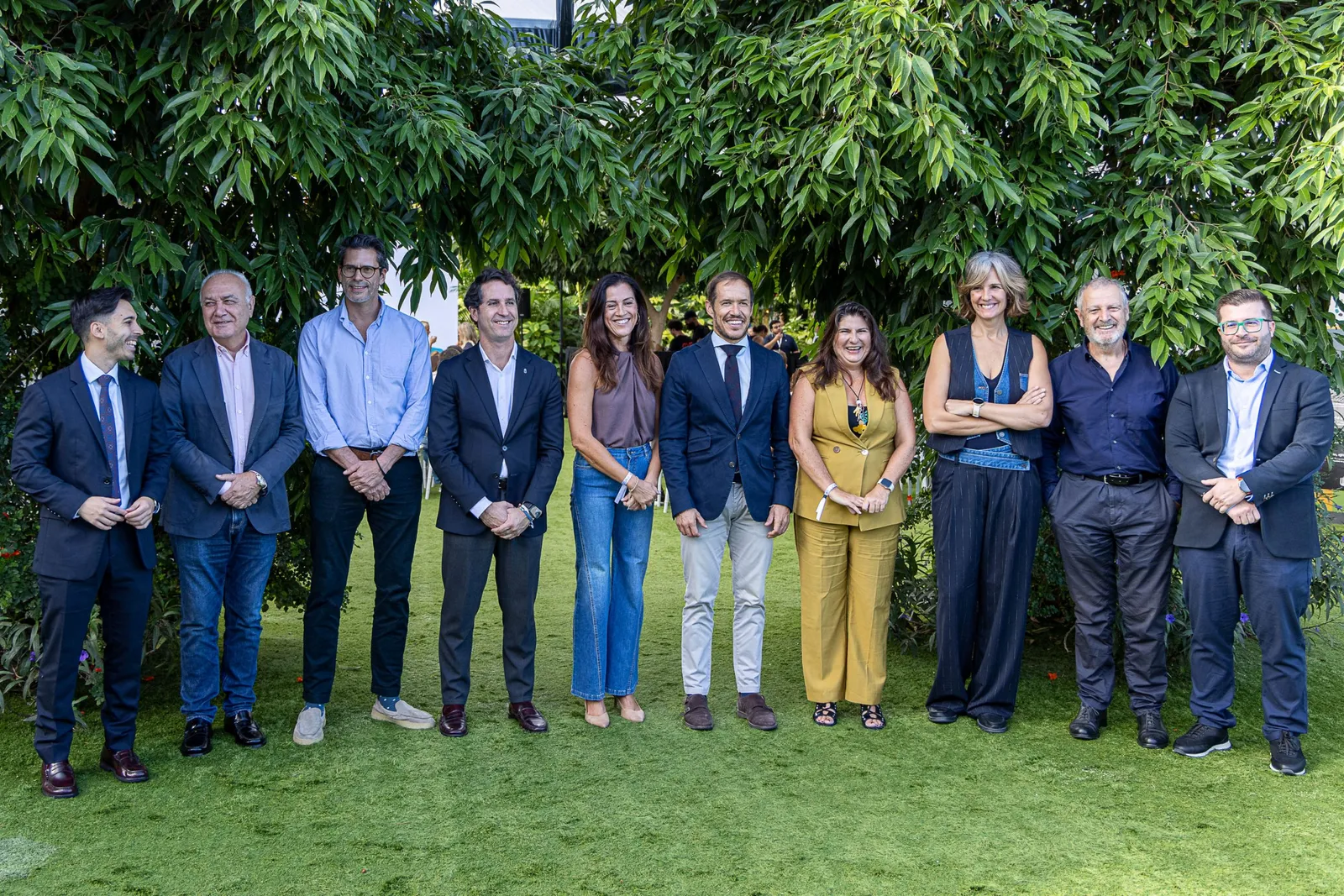
The Minister of Ecological Transition and Energy, Mariano H. Zapata, highlighted the forum's importance in gathering and giving visibility to projects developed in the Canary Islands concerning climate action, fostering research and citizen participation. "The fact that so many people, with such different profiles, are participating in this Forum confirms that climate change is a matter of great interest," he stated.
Zapata recalled that it is "fundamental to bring together as many initiatives as possible in one space to facilitate those working in different areas to learn about what is happening around them, share experiences, and establish collaboration pathways." He thanked all stakeholders for their involvement, including the Vice-Ministry for Climate Change, which coordinated the event.
Aridane González, president of the Expert Committee for the Study of Climate Change, Circular Economy, and Blue Economy of the Canary Islands, also participated in the opening, stating that "climate change in the Canary Islands is no longer a future threat, it is a reality that affects us, and we need scientific and political knowledge and tools to fight it on all fronts."
The program combines expert presentations, round tables, and dialogue sessions on key climate challenges such as the link between climate change and health, climate projections, impacts on the economy, tourism, agriculture, and fishing, as well as decarbonization, biodiversity, water, and oceans. Experts include meteorologist Mónica López, urban ecologist Salvador Rueda, and professor Alonso Hernández Guerra, along with Vice-Minister Julieta Schallenberg.
The first day focused on decarbonization, climate change and health, climate refuges, and economic impacts, along with a podcast recording and the presentation of social participation projects. The second day will address the role of oceans, blue carbon, biodiversity, water, desertification, transport decarbonization, biofuels, waste, the Canary Carbon Footprint Registry, and the educational dimension of climate change.
The Forum features exhibition spaces showcasing climate action projects from the eight islands and a poster session. It will conclude with practical workshops for various audiences, including one for children aged five and up, and others on urban renaturalization and carbon footprint calculation.