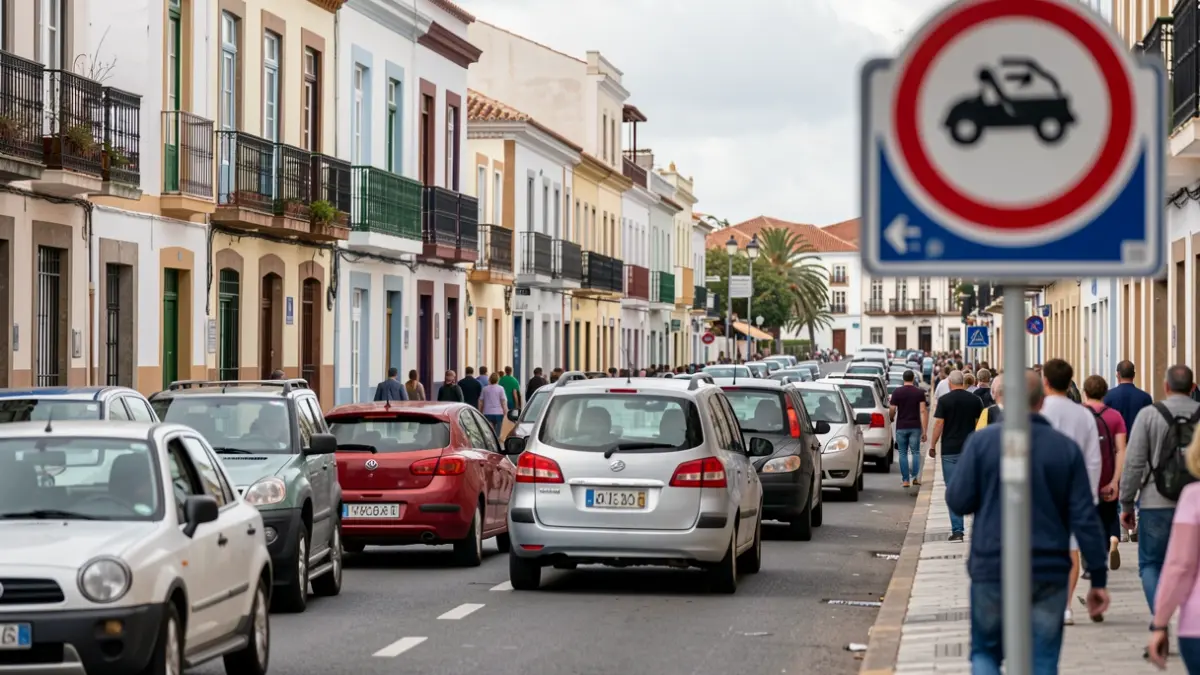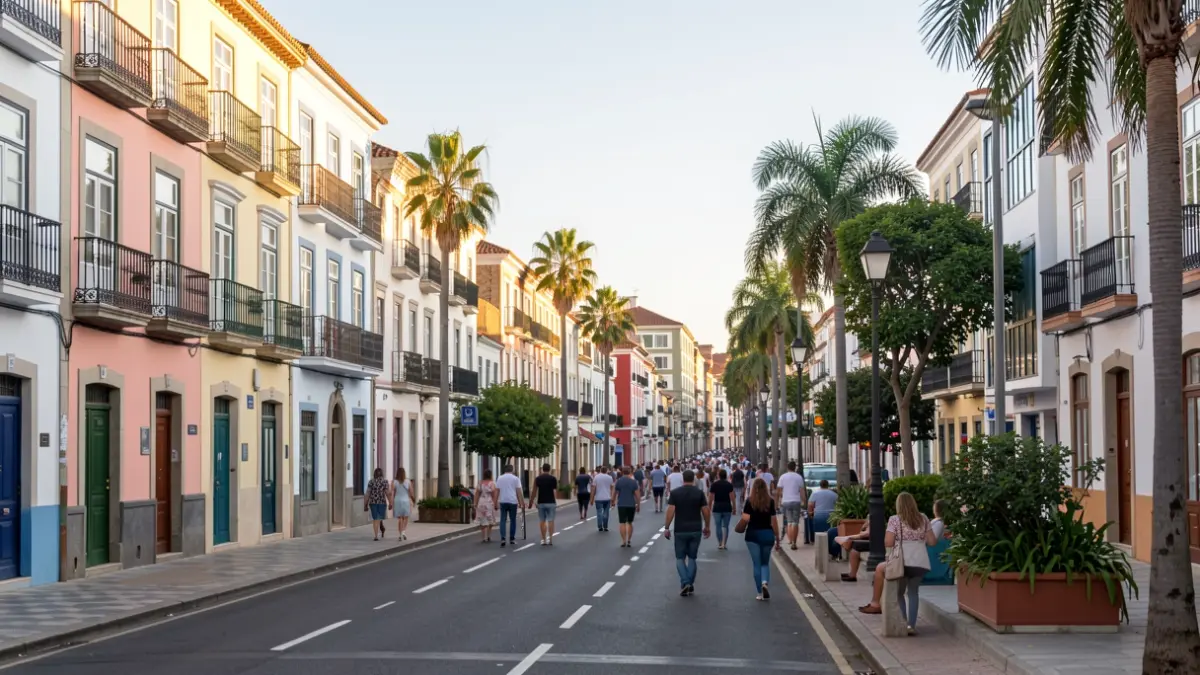
The Low Emission Zone (ZBE) in Santa Cruz de Tenerife now has its definitive regulation, published in the Official Gazette of the Province (BOP) on August 24th. This ordinance will determine which vehicles can access, circulate, and park in a large area of the city center and under what conditions.
The implementation of restrictions and fines will not be immediate. The regulation foresees a progressive rollout: 18 months until the operational regime begins and 36 months until the sanctioning regime comes into effect. During the intermediate phase, non-compliance will result in informative communications.
The ordinance, approved by the Municipal Plenary on July 24th, includes numerous exceptions for residents, garage owners, workers, the self-employed, large families, students, patients of medical centers, hotel guests, workshops, and parking facilities, among others.
The ordinance will come into effect 15 working days after its full publication in the BOP. The operational regime, which includes the Municipal Vehicle Registry and the authorization system, will start 18 months after the ordinance's entry into force. Fines will not be applicable until 36 months after publication.
The ZBE will affect a large area of central Santa Cruz, encompassing 92 streets, squares, and passages. The scope is justified by factors such as traffic-related atmospheric and acoustic pollution, high traffic density, and existing public transport and non-motorized mobility alternatives.
Vehicles with environmental badges 0 emissions, ECO, C, or B will have free access, as will mopeds, bicycles, and personal mobility vehicles, without prior registration. Restrictions primarily target vehicles without these environmental categories, mainly gasoline vehicles registered before 2001 and diesel before 2006.
Residents within the ZBE can gain access after registering in the Municipal Vehicle Registry if they are listed in the Vehicle Traction Tax census for that area. Vehicles owned, leased, or used as company cars by residents can also be registered.
Owners or lessees of private parking spaces within the ZBE can obtain authorization for up to three vehicles per space. Users with subscriptions to public parking facilities within the ZBE can also obtain authorization.
Vehicles will be authorized to drop off or pick up students from Early Childhood, Primary, and Secondary Education, upon presentation of proof of enrollment. Access for medical consultations, veterinary centers, car repair shops, and the delivery of medicines or collection of pharmacy waste is also contemplated.
The ordinance includes a specific provision for caregivers of elderly or dependent persons residing in the ZBE, with nominal authorizations for up to two license plates per person cared for. Temporary authorization is also available for those who can prove limited income and do not own another permitted vehicle.
Large families can apply for authorization if they reside in the ZBE or need regular access for family, educational, or work reasons, with authorization for up to two vehicles per family unit.
Companies and self-employed individuals with activities in the ZBE, municipal market traders, and commercial vehicles for Urban Goods Distribution can also obtain authorizations, with simplified registration systems.
Authorizations will be granted for transfer vehicles, tourist transport, VTCs linked to accommodations, goods and service providers, maintenance companies, congresses, events, receptive operators, and outsourced services. This also includes hotel guests and vehicles attending ITV (vehicle inspection) stations.
The general restriction hours will be Monday to Saturday, from 7:00 AM to 8:00 PM. Outside these hours, any vehicle can access and circulate within the ZBE without limitation.
Vehicle control will be carried out through image capture systems. Fines, which will apply after 36 months from the ordinance's entry into force, will be 200 euros for serious infractions, with a reduction for prompt payment.
Authorization requests will be preferably made online via the municipal website, with a resolution period of ten working days. Provisions are made for the regularization of unforeseen access up to five working days afterward.