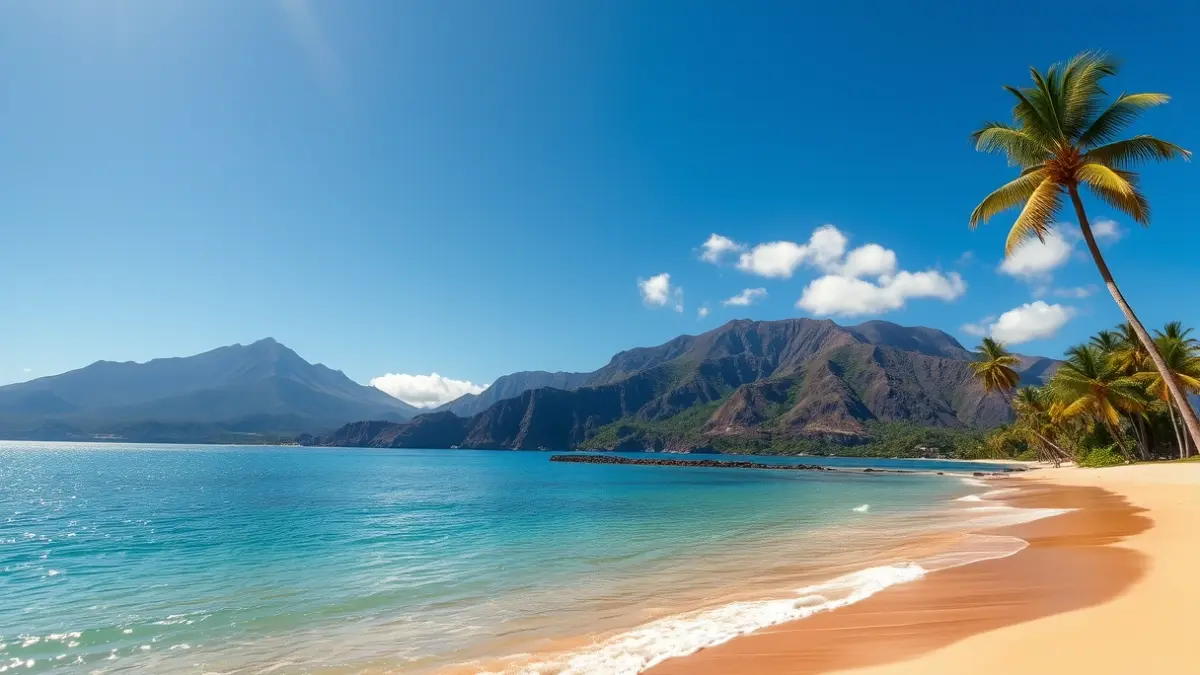
Few of the thousands of bathers who enjoy Las Teresitas Beach every weekend know the mysteries this artificial enclave holds beneath its tons of African sand. What is today a postcard paradise, just five decades ago was a hostile landscape of pebbles and dangerous currents.
Before the great transformation of 1973, the coast of San Andrés was divided into three sectors: “Tras la Arena”, “Los Moros” and “Barranco de Las Teresas”. The oldest residents of the capital clearly remember that the original Las Teresitas Beach was a place where the sea violently crashed against volcanic stones, causing numerous drownings.
This danger prompted the City Council to plan an unprecedented engineering work in the Canary Islands: a one-kilometer-long breakwater that forever changed the dynamics of the tides in the area, turning it into the peaceful haven it is today.
One of the most striking facts is the “secret” resting beneath the northern end of the beach. Before the conditioning works, the old San Andrés cemetery was located in the coastal easement zone. During the remodeling and sand contribution, the remains of the cemetery were buried, remaining today beneath the surface where tourists walk.
Regarding its famous aesthetic, it is a fact that more than 270,000 tons of sand were imported from the Sahara. This sediment migration gave rise to one of the most widespread hoaxes in the history of the Canary Islands: the supposed arrival of a plague of African scorpions. Although the urban legend terrified many for years, the presence of these arachnids was never confirmed, proving to be a popular myth without scientific basis.
It is difficult to imagine that among the current beach bars and hammocks, there was once a refuge for European high nobility. In the central sector of the beach, an elegant small palace served as a summer residence. This property was the chosen setting for Princess Diana of Orléans and Duke Karl of Würtemberg to enjoy their honeymoon in 1960.
Although the construction was demolished to make way for the current project, historical vestiges can still be seen today near accesses 7 and 8. The old walls and the majestic Indian laurels that still provide shade in the area are the last silent witnesses of that era of aristocratic glamour facing the sea of Tenerife.
Today, Las Teresitas Beach is not just a bathing spot; it is an economic and cultural engine. With more than 400 tropical palm trees and free parking that facilitates access from Santa Cruz (just 7 kilometers away), it has established itself as an international filming location. Its Caribbean appearance in the middle of the Atlantic has served to record advertisements for global brands and music videos, thanks to the outer breakwater that guarantees a constant “pool effect”.
Unlike neighboring beaches such as Las Gaviotas or Taganana, which maintain their volcanic and wild essence, Las Teresitas represents the triumph of urban design over the island's orography, always maintaining that balance between being the beach for the “chicharreros” (locals) and the capital's ultimate tourist attraction.