The new forest plan for the Canary Islands, set to span the next 21 years, includes a total investment of 1.272 million euros for prevention, restoration, reforestation, and silviculture activities. However, the document is presented as a guide of non-binding recommendations, whose effectiveness will depend on the development of specific regulations and technical projects.
The main challenge is to surpass the low compliance rate of the previous strategy (1999-2026), which barely materialized 11% of its measures. The new framework faces hurdles such as a shortage of environmental personnel, the large extent of forest land in private hands (83%), and the growing threat of global warming, which increases the risk of fires and desertification.
The nearly 1,000-page document specifies that the proposals are “non-binding” and their implementation is “convenient” for public administrations, allowing for the development of other plans and regulations. The Government of the Canary Islands asserts that this condition preserves the prevalence of existing instruments such as the planning for protected natural areas or Natura 2000 sites.
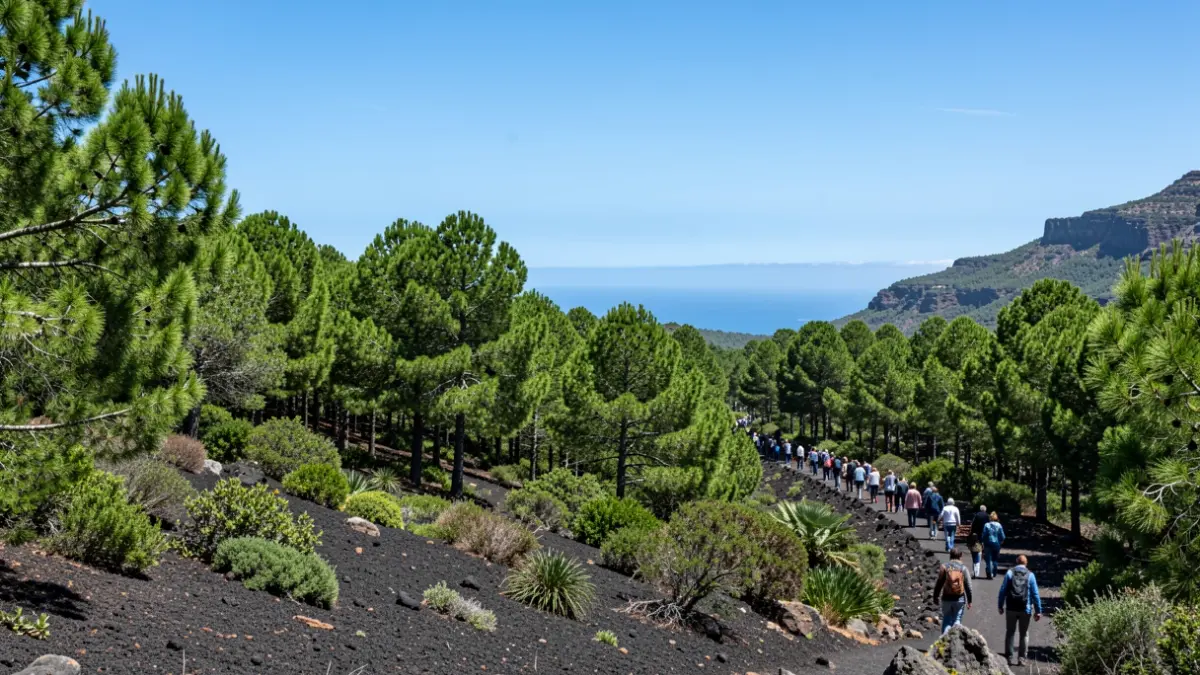
In the first seven years, an investment of 405 million euros is planned for “active sustainable” forest management, moving away from passive protection and focusing on preventive treatments. The objective is to improve the vegetation cover (77.68% of the surface is forest) and balance its ecological, economic, and social functions.
The actions with the largest allocations will be those for fire prevention, fighting, and restoration (115 million), followed by reforestation and genetic resources (78.5 million), creation of forest infrastructure (47 million), and adaptive silviculture (45.2 million).
The plan acknowledges that the Canary Islands do not meet the UNEP recommendation to allocate two-thirds of the fire budget to prevention. Historically, the islands have dedicated 76% to extinction and only 25% to prevention. In 2024, the investment was 25.8 million, of which 17 million went to fire extinction and only 4.6 million to prevention.
The plan's diagnosis reveals an alarming shortage of personnel in the environmental agents corps, particularly on islands like La Palma. Furthermore, the number of fire personnel triples in summer, but compensation for hours worked leaves a minimal winter staff insufficient for prevention tasks.
Forest management is hindered by the fact that 83% of the forest area is privately owned, divided into thousands of small plots often abandoned. The lack of a coordinated forest statistical information system and poor inter-administrative coordination among the island councils are also noted.
The main funding sources for the plan include own funds from the Government of the Canary Islands and the island councils, the FEDER Canarias 2021-2027 program, Next Generation funds, the EU Forest Strategy for 2030, and FEADER co-financing funds.