The Volcanological Institute of the Canary Islands (Involcan) has confirmed a significant rise in seismic activity on the island of Tenerife. The Canary Seismic Network has located more than 200 volcano-tectonic micro-earthquakes in the past 48 hours, exceeding initial estimates from the National Geographic Institute (IGN).
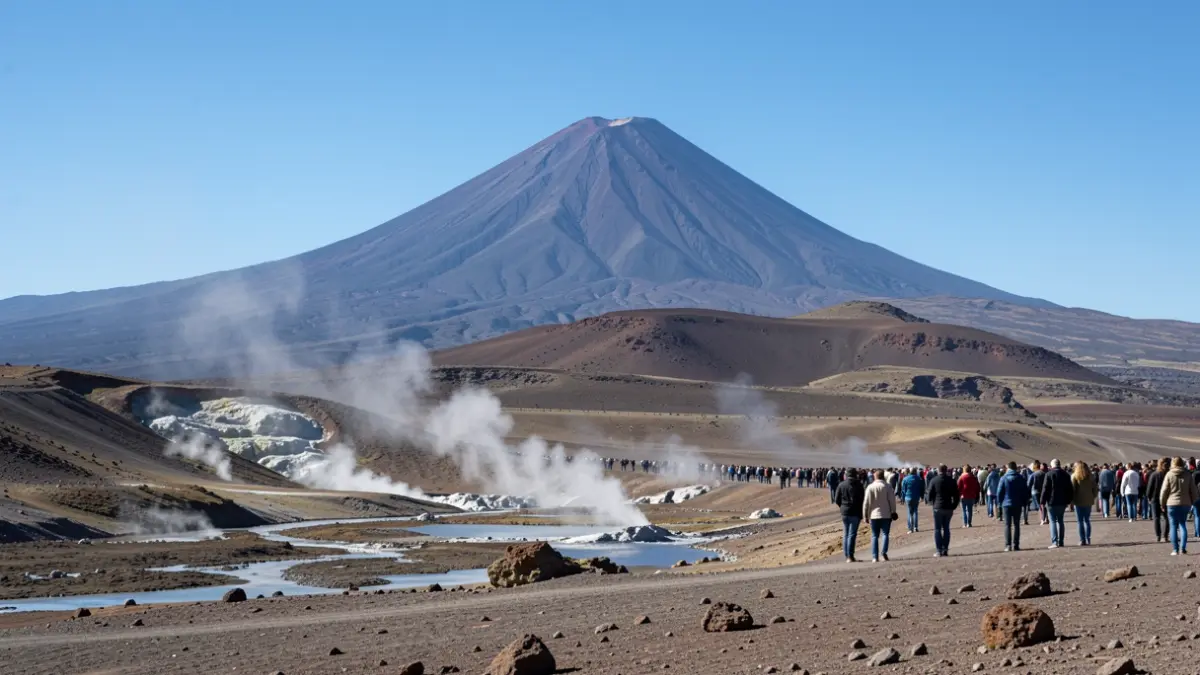
The epicenter of this seismic swarm is situated in the southwestern sector of the Las Cañadas caldera, at an approximate depth of 10 kilometers. The maximum magnitude recorded during this episode reached Ml 1.1 on the Richter scale.
Involcan scientists explain that this phenomenon is part of the recurrent activity observed in Tenerife since June 2017. The origin of the tremors is associated with a pressurization process within the island's volcanic-hydrothermal system, caused by the injection of magmatic fluids.
This process, under surveillance since 2016, is supported by two key geophysical indicators: a sustained increase in diffuse CO₂ emissions from the Teide crater and a slight ground deformation detected since 2024 in the northeastern sector of the Teide–Pico Viejo volcanic complex.
Despite the figures and indicators of deep magmatic activity, experts are conveying a message of calm to the public. The available scientific information does not indicate an increased probability of a volcanic eruption in the short or medium term in Tenerife.