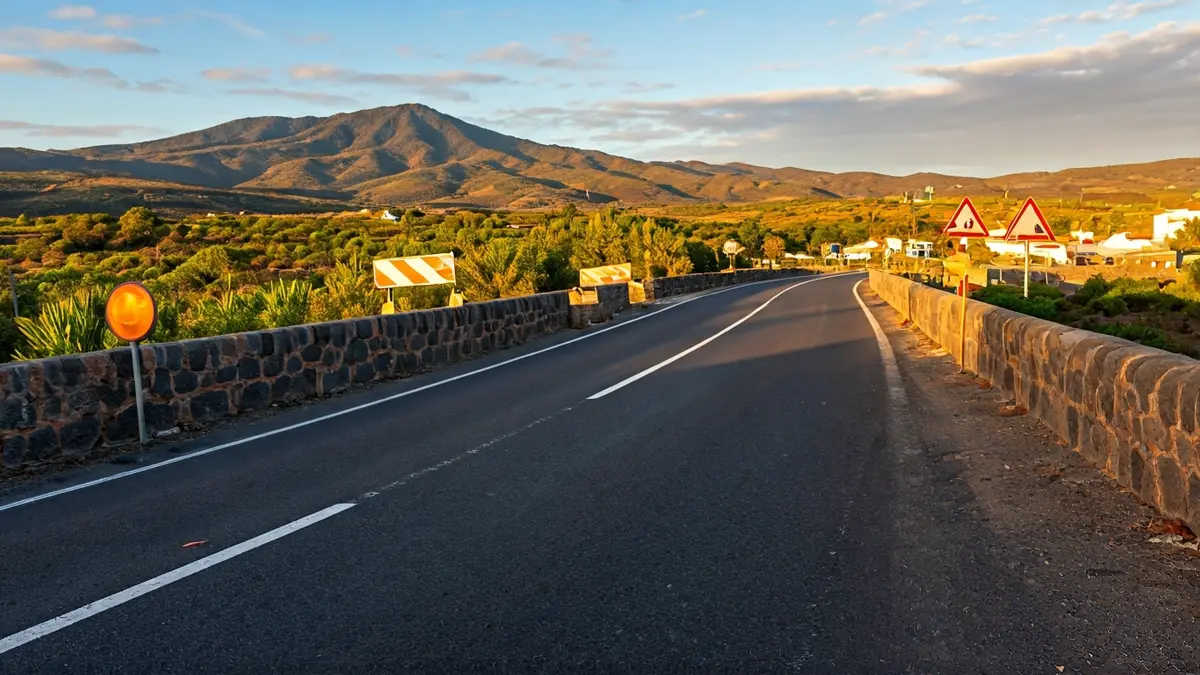
The project to widen the centenary Miraflor bridge, located on the GC-21 road as it passes through Teror, will require the closure of this route for an estimated period of four to five months. This intervention, promoted by the Cabildo de Gran Canaria through the Public Works department, aims to significantly improve road safety in the area by expanding the viaduct from five to nine meters wide.
The work, with an anticipated investment of 3.2 million euros, includes the expropriation of small plots of land from about 45 owners and the construction of sidewalks to protect nearby residents. The bridge, built in 1828, currently does not allow two vehicles to pass simultaneously, creating hazardous situations on a road used by nearly 8,000 vehicles daily.
“"This is a long-standing demand from residents, on a route with heavy car traffic and used by numerous pilgrims walking to the Basílica del Pino, in addition to improving safety for the residents."
To mitigate the inconvenience of the closure, the San José del Álamo road (GC-211) will be conditioned as an alternative route connecting to Las Palmas de Gran Canaria, incurring an additional expenditure of 3.5 million euros. The Miraflor bridge widening project, which will maintain the original design of the structure for “aesthetic and ethnographic reasons,” according to island councilor Augusto Hidalgo, plans for the creation of an upper platform that will allow two trucks to pass simultaneously.
The new infrastructure will ensure the preservation of the original bridge, which is almost two centuries old, by constructing micropiles and abutments to support the load. Additionally, sidewalks one and a half meters wide will be built on both sides, with bollards for pedestrian safety and a drainage system. The total execution period for the work is 20 months, with the project expected to be completed by 2029 in the best-case scenario.