
The President of the Canary Islands, Fernando Clavijo, held a working meeting on Thursday with officials from the Spanish Commission for Refugee Aid (CEAR), Mauricio Valiente and Mónica López. They presented a report on the initial months of the European Migration and Asylum Pact (PEMA) implementation in Spain. The meeting, held at the Government Presidency headquarters in Santa Cruz de Tenerife, also included the Minister of Social Welfare, Equality, Youth, Childhood and Families, Candelaria Delgado; the Vice-Minister of the President's Cabinet, Octavio Caraballo; and CEAR's territorial coordinator in the Canary Islands, Juan Carlos Lorenzo.
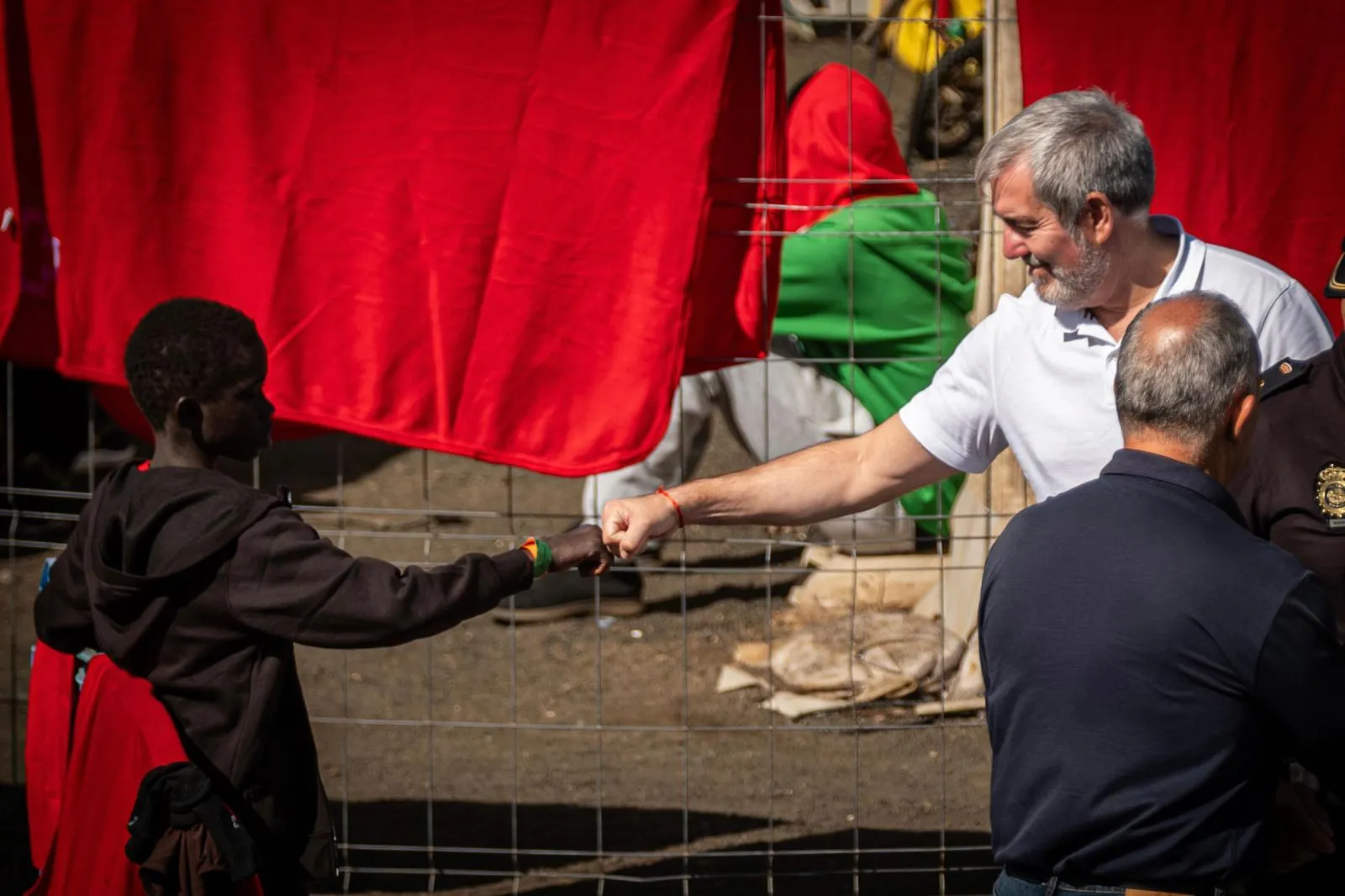
CEAR's report, titled 'First Steps in the Implementation of the European Migration and Asylum Pact in Spain,' identifies difficulties in regulatory adaptation, processing of international protection applications, detection of vulnerability, and ensuring adequate reception. These findings are particularly relevant for the Canary Islands amid the reactivation of the Atlantic route, with nearly 4,000 arrivals in October, a 240% increase compared to the same period last year. This has heightened pressure on reception resources and health services, especially on El Hierro, which has received around 3,000 people this month.
Clavijo thanked CEAR for their collaboration and highlighted the support of humanitarian organizations. He warned that the challenges posed by the new European framework confirm concerns previously raised from the Canary Islands, stating that the application of the new Migration Pact is "more complex, less protective of people's rights, and, above all, makes the work of civil servants and NGOs more difficult." He emphasized the "lack of planning and, certainly, the lack of necessary resources" to handle increasingly complex procedures.
The president expressed concern that administrative difficulties might prolong the stay of migrants in the Canary Islands, as international protection procedures are concentrated in border territories. He recalled that the regional government has yet to receive a response to the letter sent to the President of the Government of Spain, Pedro Sánchez, requesting urgent measures due to the migratory upsurge. "The objective is not to create controversy or confrontation or to exploit the situation. The goal is that we can provide a service with guarantees, with the necessary resources, that human rights are respected, and that the Canary Islands do not have to bear, simply because of where it is geographically located, the entire migratory pressure," he stressed.
For his part, CEAR's Secretary-General, Mauricio Valiente, acknowledged the work done by the Canary Islands Government in assisting migrants, particularly minors and asylum seekers. "We agree that there has been neither the training, nor the staffing, nor the clear instructions for a uniform application," he stated, warning that the lack of resources and precise instructions hinders the work of officials and could lead to delays in international protection procedures, especially for minors and vulnerable individuals.
Valiente also voiced concern over the rise in xenophobic discourse, noting that "immigration is a reality that will not change, it is a structural fact, and it is important to address it with rationality." He thanked the Canary Islands Government for "always framing the migratory debate in terms of rationality and proposals."
The meeting also addressed the strain on first reception resources, particularly in El Hierro. Clavijo reiterated the need for the State to ensure a stable provision of health and social care personnel in temporary centers for foreigners (CATE), preventing assistance to migrants from diverting resources from ordinary health services. He also called for improvements in facilities and transportation. He emphasized the urgency of restoring stable dialogue with the competent ministries to anticipate needs and coordinate resources, mentioning the need to hold a Security Board meeting, requested over a month ago.