
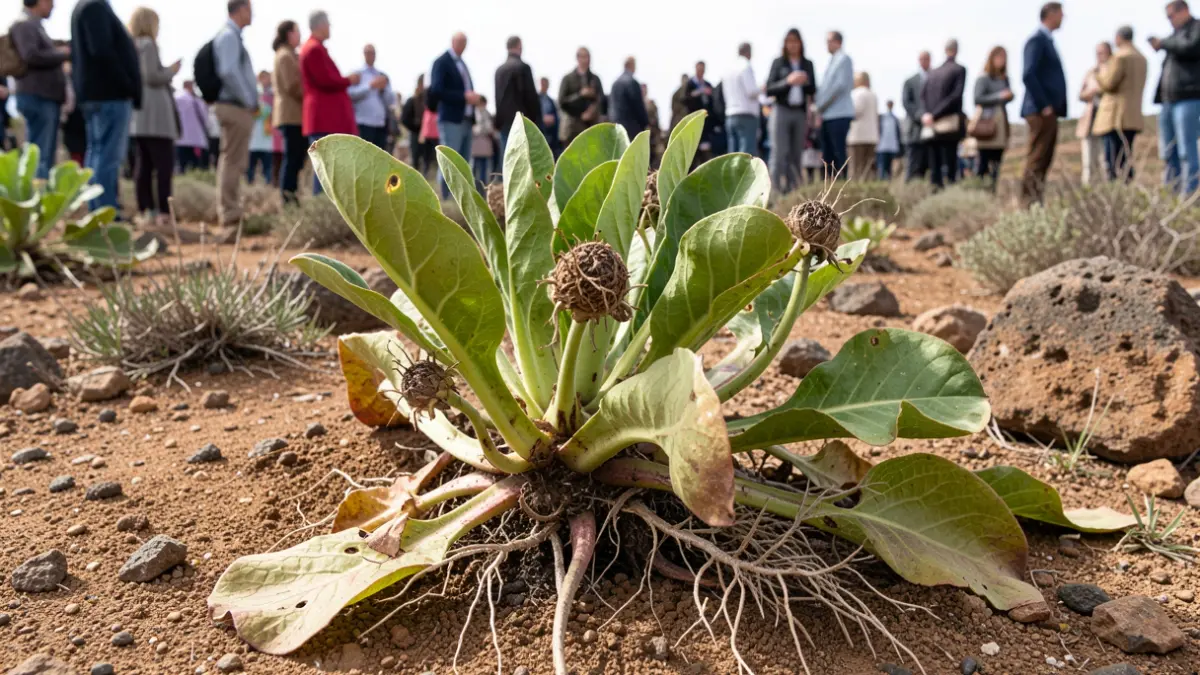
The actions, carried out since December 2025, focused on locating, controlling, eliminating, and monitoring these exotic species, including waste management, cleaning, and environmental restoration to limit regrowth. Priority areas included the surroundings of Pozo Negro and areas within the municipalities of Antigua, Tuineje, and Pájara.
Calotropis procera, classified as invasive, was the main focus, severely threatening the arid ecosystems of the Canary Islands due to its ability to displace native flora and alter habitats. The president of the Cabildo, Lola García, and the Minister of Environment, Carlos Rodríguez, highlighted the importance of these actions in promoting the recovery of native species.
The project, executed by GESPLAN, involved the manual removal of flowers, fruits, and seeds before eliminating branches and trunks. Actions were taken on the stump and root system, resorting to complete uprooting or desiccation treatments with black plastic and salt when total extraction was not feasible. Periodic checks were conducted to prevent new sprouts.
Additionally, a specific line of action was developed for carrizo (Phragmites australis) in the Saladar de Jandía starting in June, through mechanical and manual clearing and the placement of black anti-regrowth plastic sheeting. The generated plant material and collected urban waste were managed at authorized facilities such as the Zurita Environmental Complex.
This initiative is part of the Canarias FEDER 2021-2027 Program, co-financed by 85% by the FEDER.