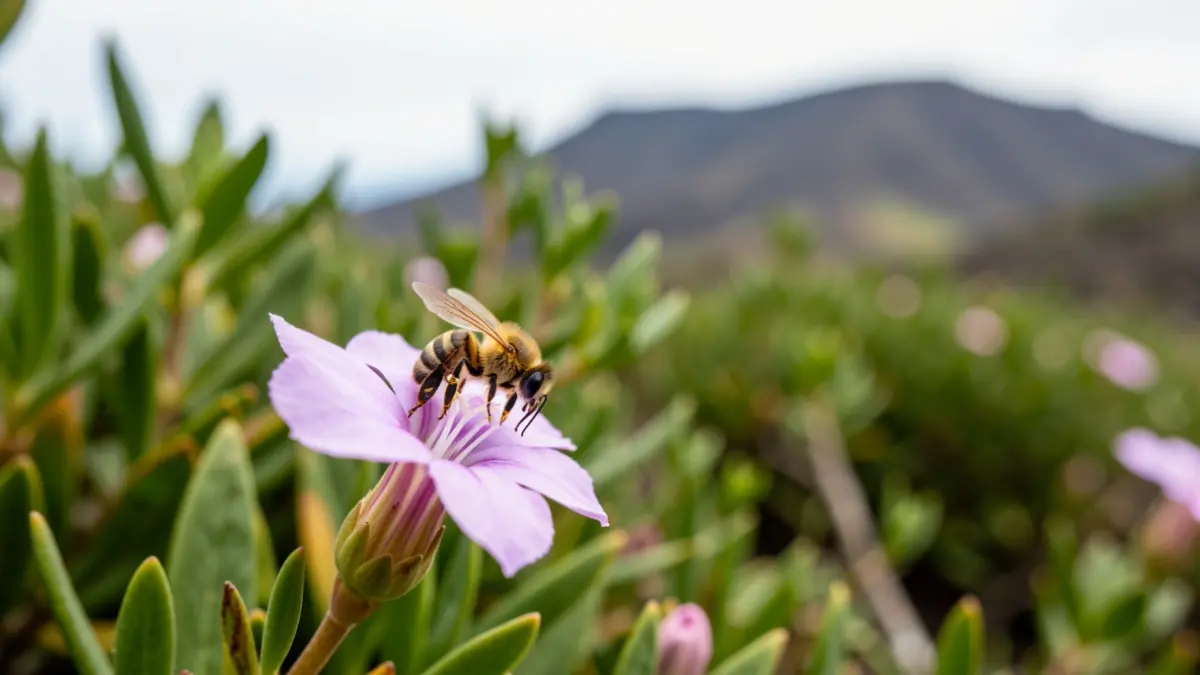
The island of Fuerteventura, through Oasis Wildlife Fuerteventura in La Lajita, has joined an unprecedented community initiative. The Zoo LIFE Pollinators project, involving Sweden, Croatia, Denmark, Romania, Hungary, and Italy, primarily aims to monitor and collect data on wild pollinator insects.
Linear transects, ranging from 500 to 1,000 meters in length, have been established at each participating zoo. Operators along these transects will record the presence of bees, butterflies, and hoverflies, contributing to an accurate snapshot of the current state of these populations and supporting habitat restoration efforts.
This campaign, which began on May 20th with the first Pollinator Ambassador Day, will continue until the end of September. The 16 project partners seek to halt the worrying decline of these insects, which are vital for ecosystems.
The data collected is crucial, as according to the European Environment Agency, a significant percentage of wild bee, hoverfly, and European butterfly species are endangered or critically endangered, raising growing concern.