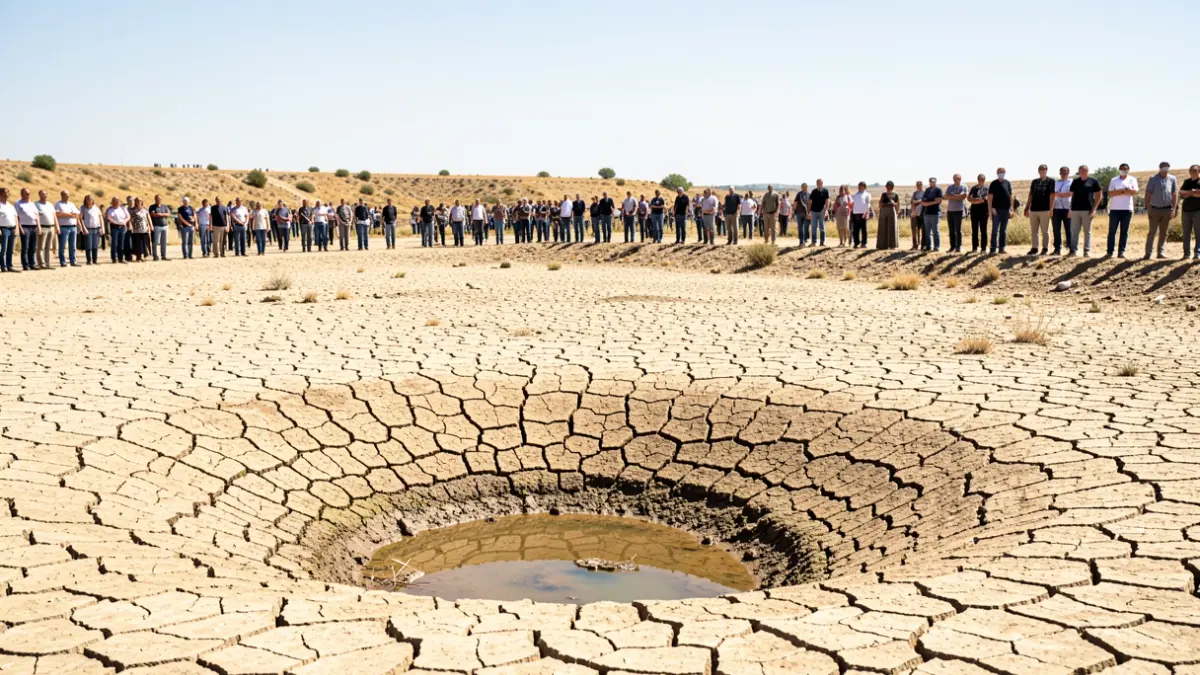
Following the relief provided by Storm Therese in March, which left nearly 40 million cubic meters in public and private reservoirs, summer heat and irrigation use have depleted supplies. The decrease across the seven operational public dams amounts to approximately 911,000 cubic meters in three months.
The current scenario is a far cry from the extreme drought of previous years, when public reserves barely reached 3.9% capacity. Storm Therese, between March 18 and 25, was crucial in reversing the situation, bringing up to 426 liters per square meter to the island's summit.
Dams such as Chira in San Bartolomé de Tirajana have gone from 52.7% to 49.3% capacity. Others, like Gambuesa, remain nearly full (99.4%), but Ayagaures has dropped to 78.8%, and Fataga has lost 21.6%. In Mogán, the El Mulato dam is at 93.3%, while El Vaquero (between La Aldea de San Nicolás and Agaete) is at 88.2%, and Candelaria (in Artenara) has fallen from full to 57%.
Juan Leonardo Suárez, a farmer and president of the Salto del Perro dam's Irrigation Community, acknowledges that without recent rains, the agricultural season would have been unviable. "We would have had to abandon crops," he states, emphasizing that the altitude of his area (600 meters) makes reservoirs the only solution.
Suárez explains that previously, water had to be pumped from the El Mulato dam over a significant elevation difference, drastically increasing irrigation costs. Now, the situation allows for a calm approach to the September and October campaign, although he warns that the final outcome will depend on summer heatwaves.
On the other hand, José Lorenzo, a farmer managing 35 hectares of banana plantations in the northwest, notes that the rains also caused damage. The greatest losses were concentrated in potato and vegetable farms in the central and northern regions of Gran Canaria, where excessive moisture prevented planting or caused rot in established crops.
Water consumption for irrigation in these areas is expected to recover between August and September. For bananas, previous cold temperatures slowed plant development, but moderate heat and recent drizzles are now allowing the crop to regain its pace.