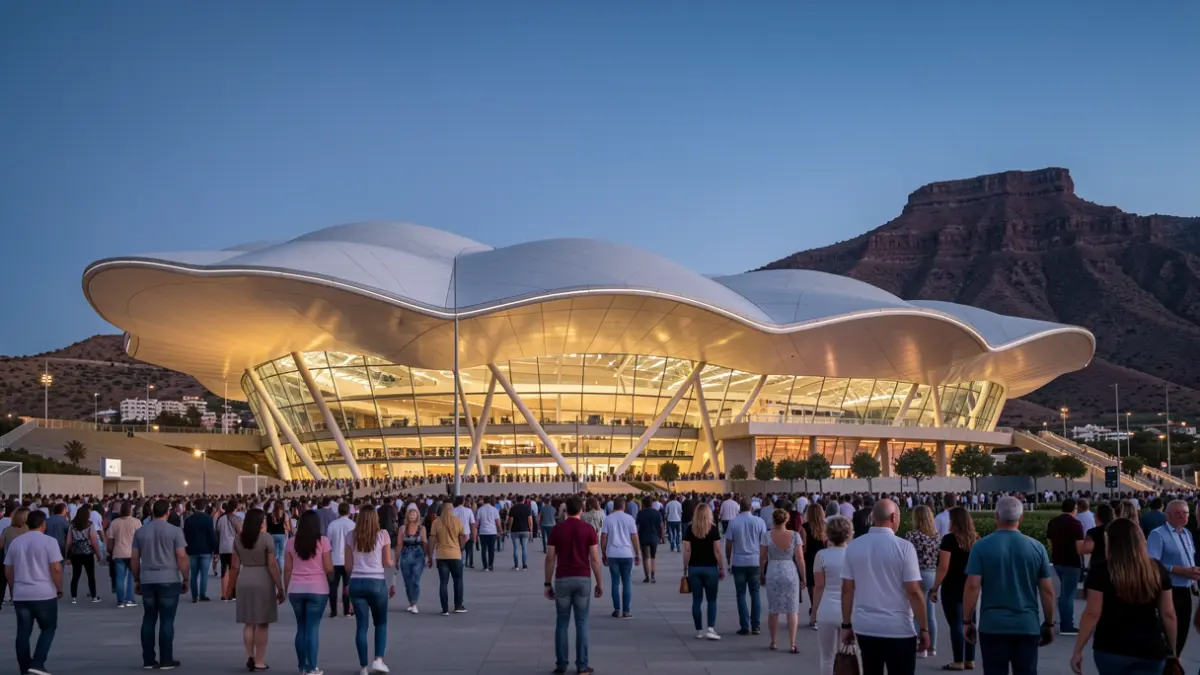
The architectural project, known as 'La Nube' (The Cloud), aims to transform the sports venue for the 2030 Football World Cup, with the goal of providing the island with a modern infrastructure with economic, social, and urban impact.
The budget has increased by 60 million euros compared to the first tender (174 million). New funding includes 25 million from the Government of the Canary Islands, 15 million from the Las Palmas de Gran Canaria City Council, and 60 million committed by UD Las Palmas. The Cabildo will contribute 134 million and is negotiating potential participation from the State.
The president of the Cabildo, Antonio Morales, and the Minister of Sports, Aridany Romero, state that the new roadmap meets FIFA's deadlines. They highlighted institutional collaboration to advance a strategic infrastructure for the island, replicating the model that led to Gran Canaria being chosen as a World Cup host.
The stadium's modernization was already a commitment of the current insular government. Following the 2026 World Cup, the bid for 2030 was promoted, emphasizing the economic boost and improvement of public spaces. The international ideas competition was won by the L35 architecture firm with the 'La Nube' proposal, focusing on a new roof and sustainability.
Initial technical studies revealed that the terrain's characteristics necessitated a significant increase in investment, raising the budget from the initial 114 million euros to the 174 million for the first tender.
Faced with rising costs, the Cabildo negotiated with UD Las Palmas, which will contribute 60 million euros and lay the groundwork for future public-private co-management of the stadium, although ownership will remain entirely public.
The first tender received no bids due to various international factors affecting the construction market, including US tariffs, the conflict with Iran impacting maritime traffic, increased international transport costs, and higher prices for materials and specialized labor.
The price of steel, essential for the roof, doubled. Aluminum, concrete, and labor costs also saw significant increases, with the hourly rate for specialized profiles rising from 16-17 euros to an average of 25-30 euros.
Consequently, after initially attempting to maintain the budget through a negotiated procedure, the Cabildo decided to update the price study and prepare a second tender for 234 million euros, to be published in the first half of August.