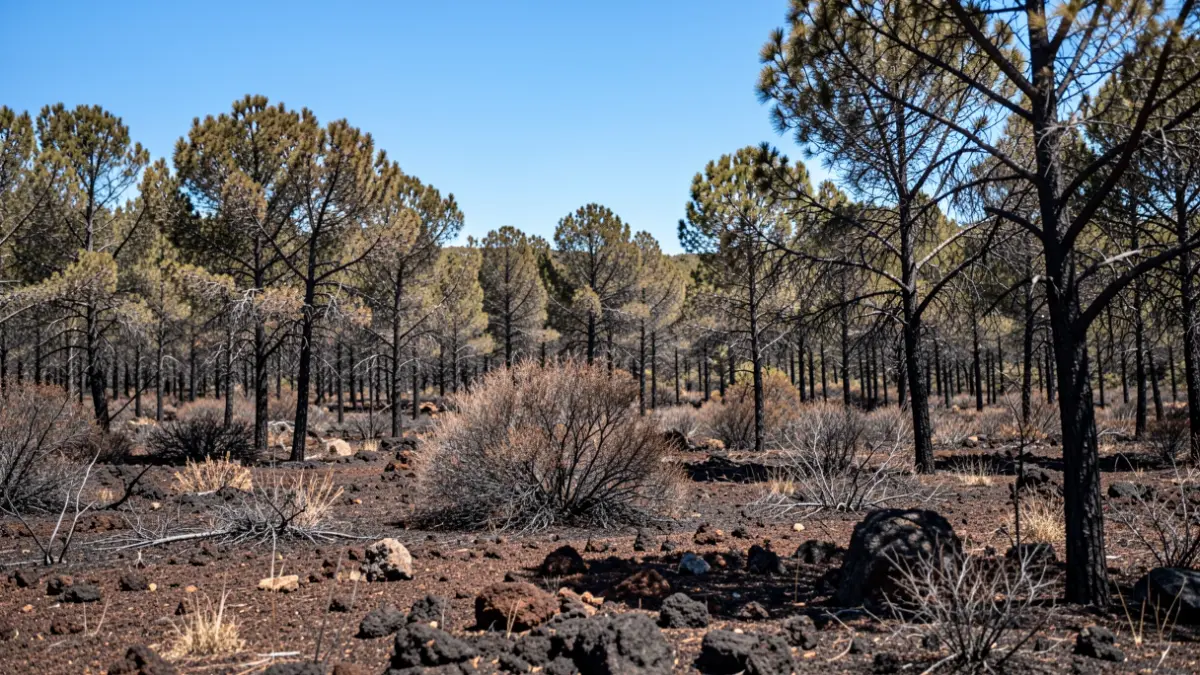
The island of Gran Canaria is preparing to face a new maximum risk wildfire season, marked by an exceptional fuel load. Heavy rains last winter have increased vegetation, presenting an unprecedented challenge for operations. To address this situation, a force of over a thousand personnel has been deployed, including the Operational Unit for Forest Fires (UOFF), Civil Protection staff, and firefighters from the Island Consortium.
The President of the Cabildo, Antonio Morales, highlighted the operation's preparedness during the presentation of the 2026 device. This includes ten ground brigades, six Presa teams, and five operational patrols active from March 15 to December 31. Morales reiterated the insular government's commitment to applying the Forest Firefighters Law to this group.
The Cabildo's Environment department is implementing various prevention measures, such as prescribed burns, silviculture tasks, and paid grazing in high-risk areas. A call for citizen collaboration has been made, requesting vegetation clearing within a 15-meter perimeter around homes and caution with machinery that generates sparks in rural areas. The Gran Canaria Cabildo, along with Tenerife's, is the only one dedicating the revenue from the green forest cent, approximately four million euros annually, to reforestation policies.
The Insular Water Council is also involved in preventive work, having cleared one million square meters of ravine beds in the last five years. Additionally, two helicopters chartered by the Cabildo are available at the Environment base in Artenara for fighting forest fires. One of these helicopters operates year-round and has already intervened in four incipient fires.
Morales recalled the request to the Central Government for the 80 members of the Military Emergencies Unit (UME) in Gran Canaria to be deployable by the insular corporation during the initial stages of fires (level 1), without waiting for the emergency to escalate to level 2.
María Matilla, head of the Forest Management Technical Service, described the situation as "exceptional" and "the most concerning" for the 2026 device, due to the increased fuel load. Prescribed burns during the winter have focused on the pine forest areas of the peaks, increasing the treated surface, and surveillance is intensified in areas with the highest fuel load.
“"I know there is frustration and fatigue. And I want you to know that this discontent is legitimate, that I understand it, and that I am not here to ask you to ignore it"
Morales addressed the personnel of the Operational Unit for Forest Fires, the forest firefighters of Gran Canaria, to discuss their labor demands. He assured that the inclusion of all personnel for them to contribute as forest firefighters is being processed and that economic improvements are underway, including the review of bonuses, modification of the RPT, and a real salary increase, acknowledging that the risk they assume "must be recognized in their paychecks."