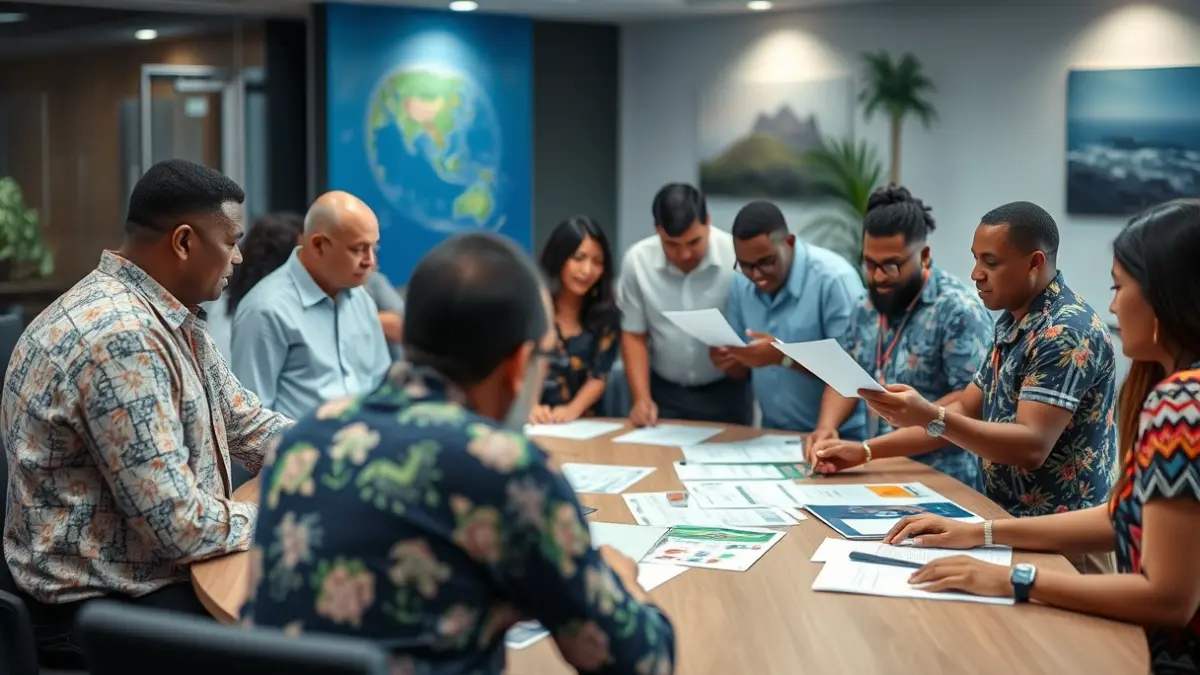
Organized by the Island Energy Council, the Environment, Energy, Climate and Knowledge area of the Cabildo de Gran Canaria, Infecar, SPEGC, and Island Innovation, this summit aims to delve into shared challenges such as climate vulnerability, energy dependence, and resource limitations.
Historically, islands have been perceived as refuges and places of imagination, from Thomas More's Utopia to Treasure Island. Today, this vision transforms into a political reality, where islands not only imagine the future but actively build it. Despite representing only one to two percent of the global population, they concentrate some of the planet's greatest challenges.
“"The horizon is our measure."
During the meeting, crucial topics such as energy transition, climate change adaptation, water management, blue economy, biodiversity, sustainability financing, and governance innovation have been discussed. This forum has established itself as a global workspace where islands share experiences and develop joint solutions.
This is the fourth edition of the Global Summit, following previous events in Madeira, Prince Edward Island (Canada), and Saint Kitts and Nevis. The event's trajectory demonstrates a common goal: to create a global space for dialogue among islands, addressing everything from economic decarbonization to resilience against extreme weather events.
Gran Canaria has presented its Ecoísla model, a strategy developed over the last decade to transform the island into a living laboratory of sustainability. This model has more than tripled the installed capacity of renewable energies and has promoted energy communities, as well as key infrastructures like the Salto de Chira for energy storage.
The island's transformation is not limited to energy but encompasses a redefinition of the economic model towards a circular economy and sustainable tourism, with projects such as MasDunas and ImpulsaMaspalomas. The blue economy is also being promoted, with initiatives like BIOASIS Gran Canaria, aiming to turn the island into an experimental space for bioeconomy and innovation.
In addition to mitigation, climate change adaptation is central, with tools such as the ALERTAGRAN-5 system, an investment of over 1.2 million euros for early flood warning. This proactive approach, based on data and technology, seeks to protect citizens and the natural environment, strengthening alliances among island territories.