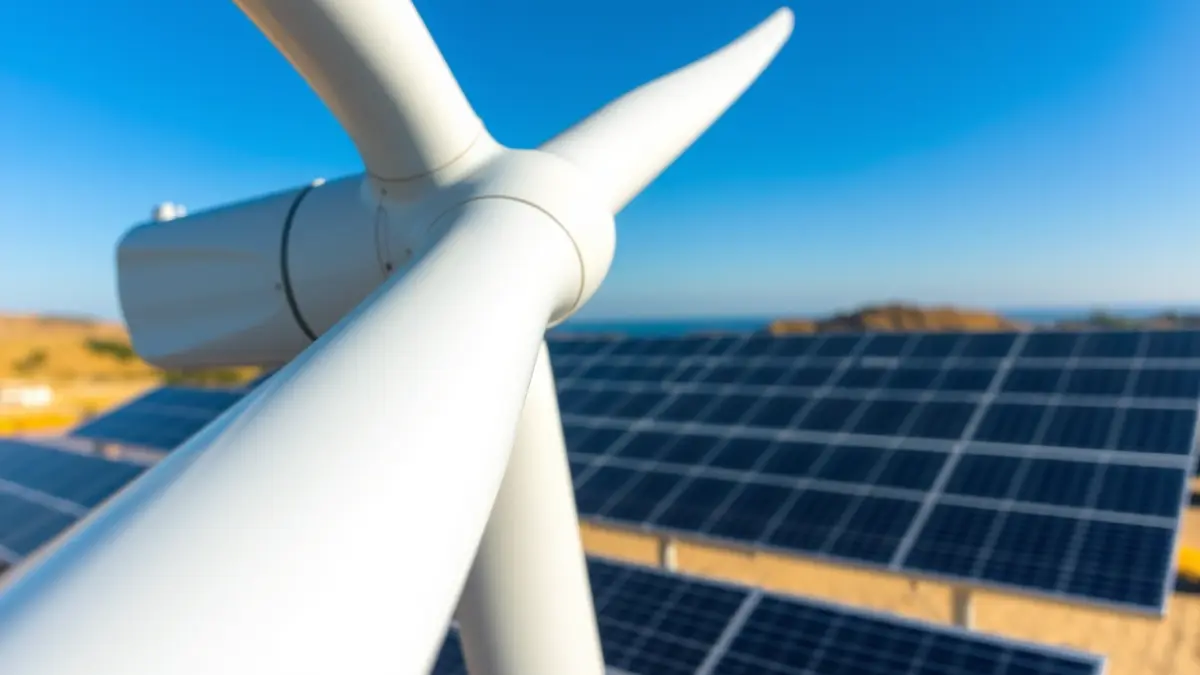
The Cabildo de Gran Canaria has commemorated a decade of efforts in energy transformation, a process that began in 2015 with the vision of turning the island into an “eco-island.” This comprehensive strategy aimed for energy sovereignty, circular economy, sustainable mobility, and territorial resilience, and is now supported by tangible results.
“"In these ten years, Gran Canaria has experienced very significant growth in renewable energies, increasing from 120 megawatts installed in 2015 to 440 today."
The island accounts for 44% of the renewable capacity installed in the Canary Islands, which is close to 1,000 megawatts across the entire Archipelago. This progress has allowed for a decoupling between economic growth and energy consumption, maintaining stable electricity demand despite increased economic activity and population, as highlighted by Raúl García Brink, Counselor for Environment, Climate, Energy and Knowledge.
The transformation is also reflected in greater citizen participation, with Gran Canaria hosting one in three self-consumption installations in the Canary Islands and 40% of installed domestic power. Furthermore, the island leads the implementation of electric vehicles, concentrating more than half of sales and planning a hundred operational charging points by 2025.
Among future strategic projects, the Cabildo is committed to energy storage, with initiatives such as the Salto de Chira, which will have a capacity of 200 megawatts. The Gran Canaria Energy Transition Agenda sets ambitious goals for the coming years, such as achieving between 60% and 70% renewable generation by 2030 and a virtually decarbonized system by 2040, promoting deep geothermal energy, green hydrogen, and energy communities.