
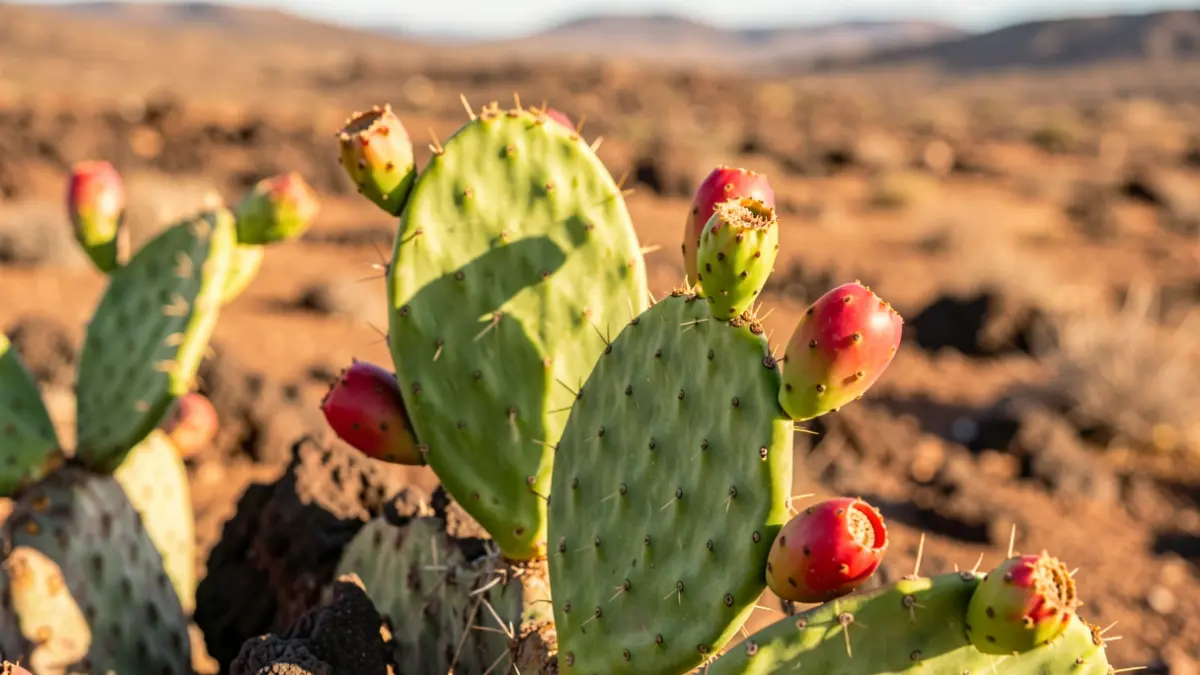
The study focuses on prickly pear cacti (genus Opuntia) and proposes a more specific classification for each based on its invasive potential. It advocates for assessing the real ecological impact of each population, its cultural or productive value, and the relationship of these variables with the environment's characteristics, all within the context of climate change. This phenomenon is rapidly altering ecosystems, making full recovery of their previous state impossible in many cases.
Traditionally, policies have aimed at restoring ecosystems to their original state. However, factors like global warming, higher temperatures, and water stress, which promote aridification, hinder this goal. Regions like the Canary Islands or Andalusia, the focus of this study, may no longer be able to sustain their historical plant communities.
The researchers argue that conservation must look to the future, deciding which ecosystems will be viable. Prickly pear cacti, used in the Canary Islands for cochineal farming and in Andalusia as fodder, exemplify an invasive species with significant productive value and water efficiency. They propose adapted management: control or eradication if proven ecological damage exists, and evaluation of its value if the risk is reduced or manageable.
Juan Olvido Perea García, a distinguished professor and researcher at ULPGC, states, "we need to move beyond simple labels like 'invasive'; we propose evaluating which population, of which taxon, is producing what effects and in what context." He adds, "elimination may be fully justified in sensitive habitats, but in others, conserving these invasive species can help maintain ecological functions on which native species also depend."
The study, published in the journal Discover Ecology, is co-authored by Perea García and Emilio Medina Lorenzo, a researcher at ULPGC's Institute of Oceanography and Global Change (IOCAG).