The study, published in the scientific journal ‘Environmental Microbiome’ and supported by the Consejería de Universidad, Investigación e Innovación, details which microorganisms arrive first in these newly created spaces by volcanic activity, how they adapt to extreme conditions, and their role in ecosystem recovery.
Researchers observed the beginning of life in a completely new and sterile environment, describing the lava tubes as a "newborn world." These environments have become a natural laboratory for studying the limits of life under extreme conditions, opening research avenues into habitability on other planets, such as Mars.
The findings suggest that the first microorganisms primarily arrive from the outside, transported by air or associated with animals. These contributions introduce organic matter, fostering the emergence of the first biological communities.
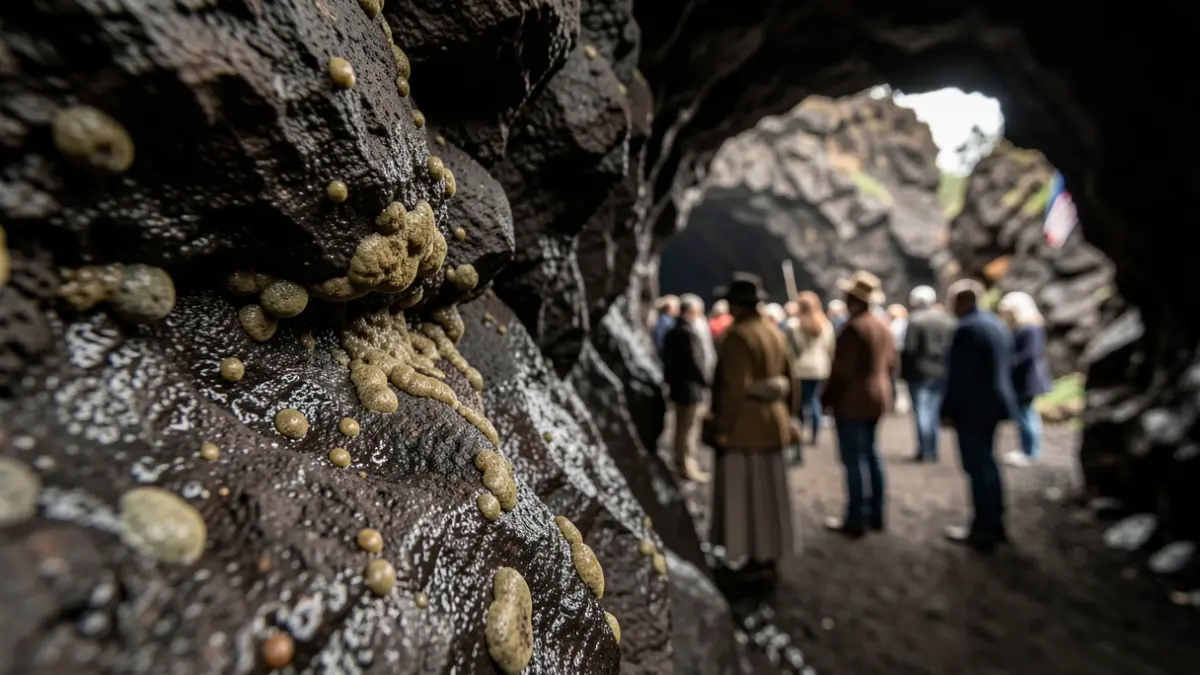
The scientific team accessed the lava tubes one to two years after the eruption, encountering extreme conditions with air temperatures up to 60 degrees Celsius and rock surfaces exceeding 90 degrees. They conducted three sampling campaigns, combining DNA analysis with studies of minerals and environmental conditions.
Factors such as temperature, salinity, ventilation, and mineral composition determine which microorganisms manage to establish themselves. The study also shows that these microorganisms not only inhabit the environment but also contribute to transforming it, forming biofilms that modify minerals and lay the groundwork for fertile soil formation.
The research, involving IRNAS-CSIC, IGME-CSIC, the University of Almería, the University of Huelva, the University of Évora, and INESCTEC, will continue to analyze the evolution of these communities and their potential for producing bioactive compounds.