
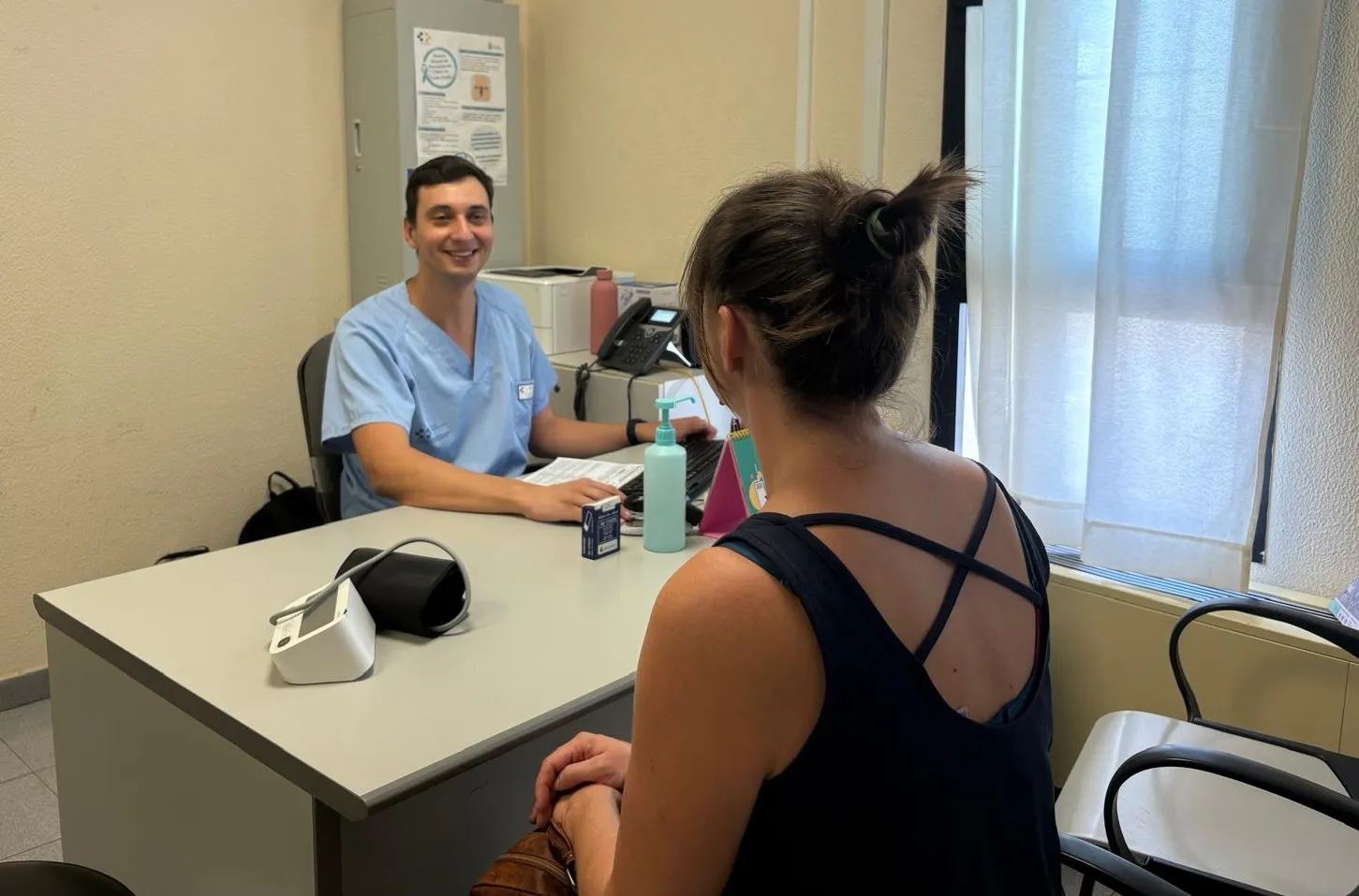
Two primary care healthcare professionals from the Lanzarote Health Area, part of the Ministry of Health of the Government of the Canary Islands, have participated in a study on oral health during pregnancy published in the high-impact international scientific journal Frontiers in Oral Health.
The research, developed by midwife Francisco Suárez and dentist Beatriz Prieto, analyzes the knowledge, attitudes, and oral hygiene habits of a sample of 293 pregnant women attended at the health centers of Titerroy and Valterra, in Arrecife, as well as their relationship with clinical indicators of oral health.
The work, titled ‘Knowledge, attitudes, oral health practices, and behavioral factors associated with clinical indicators of oral health in pregnant women: a cross-sectional study in Spain’, seeks to provide scientific evidence that contributes to improving prevention and oral health education during gestation.
During pregnancy, hormonal, immunological, and metabolic changes can increase susceptibility to oral health problems such as gingivitis, cavities, and other periodontal diseases.
Among the main results, the study indicates that the frequency of tooth brushing is the behavior that shows the most consistent association with the analyzed clinical indicators. Women who brushed their teeth more frequently had lower values of bacterial plaque, gum inflammation, and oral biofilm maturity. Likewise, nighttime brushing was associated with better results in these three indicators.
The data show that 96.6 percent of participants brushed their teeth at least once a day, while 78.5 percent claimed to do so at night. The average brushing frequency was 2.29 times per day.
The research also examined knowledge, attitudes, and practices related to oral health. In this case, the associations with clinical indicators were more modest and varied depending on the parameter analyzed. The results therefore point to the importance of accompanying health information with practical recommendations on oral hygiene habits.
In this regard, the authors highlight the value of reinforcing oral health education during pregnancy follow-up, with guidance on brushing frequency, hygiene before bedtime, and other effective preventive practices, as well as facilitating access to dental care.
The study has a cross-sectional observational design, so its results allow for the identification of associations, although not the establishment of cause-and-effect relationships.
The medical director of Primary Care, María Eugenia Perdomo, points out that the publication highlights the importance of collaboration between professionals and healthcare settings to advance scientific knowledge and strengthen health promotion strategies. It also contributes to expanding the available evidence on oral health during pregnancy and the role of daily habits in prevention.