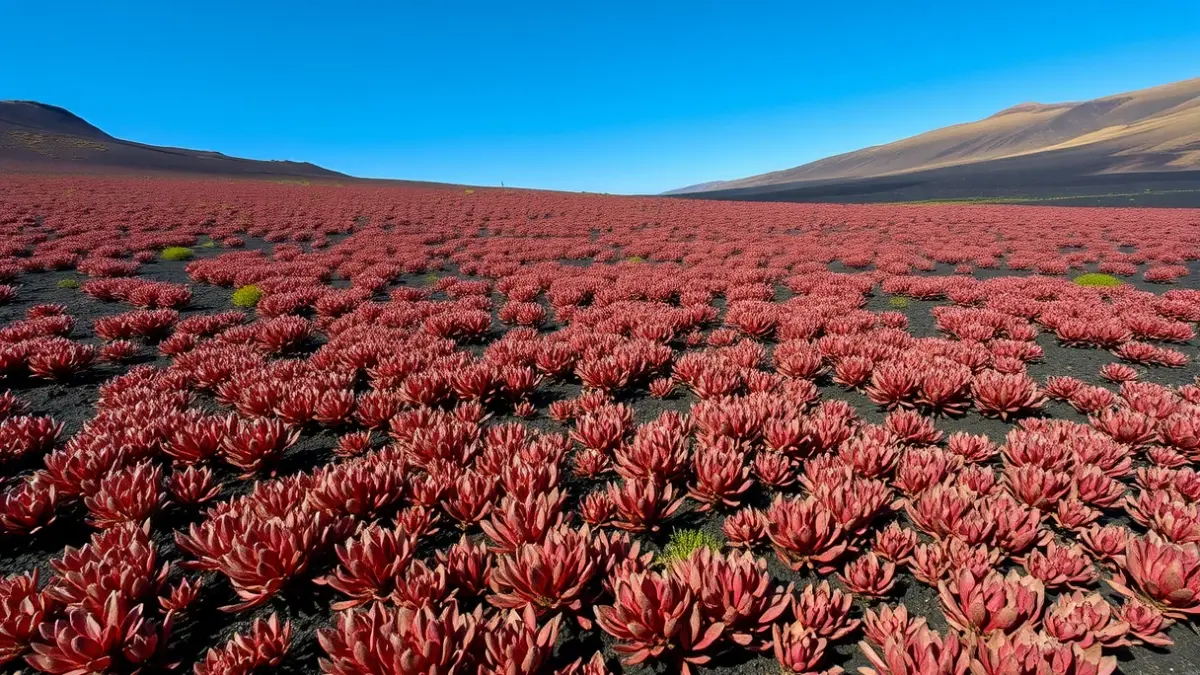
This chromatic change is attributed to the proliferation of the cosco plant (Mesembryanthemum nodiflorum), a well-known annual herbaceous species in the archipelago, particularly prevalent in coastal areas and arid terrains. Its presence is especially noticeable in the northern and southern parts of the island.
“"The cosco, like barrilla, was intensely exploited for barrilla stone, and throughout the 20th century, during periods of famine in World War I, the Spanish post-war period, and World War II, due to difficulties in importing cereals, cosco seeds were roasted and ground to make a type of gofio, a practice that persisted until the mid-20th century."
Historically, cosco seeds played a crucial role in feeding the local population during times of scarcity. They were collected, dried, and roasted to produce a type of gofio, though its bitter taste made it a food of necessity rather than preference. In addition to its dietary use, the plant was also utilized to obtain barrilla, traditionally used in soap making.
Cosco seeds have also been discovered in the Cueva Pintada de Gáldar, suggesting that ancient Canarians were already familiar with this species. Philologists also point to a possible indigenous origin for the word 'cosco' itself.
This plant, which can reach up to 30 centimeters in height, features prostrate stems and fleshy leaves that, initially green, acquire reddish tones over time. Its white flowers appear between February and July, and it produces capsule-shaped fruits containing very small seeds. Cosco adapts to harsh conditions, thriving in coastal areas, sandy or stony terrains, and saline or nutrient-rich environments. It is abundant in Lanzarote and Fuerteventura, and also found in Gran Canaria, southern Tenerife, La Palma, La Gomera, and El Hierro.
This natural phenomenon, transforming the landscape from green to red, serves as a reminder of the adaptability of Canarian flora to extreme environments and the historical importance of species that contributed to the population's survival during challenging times.