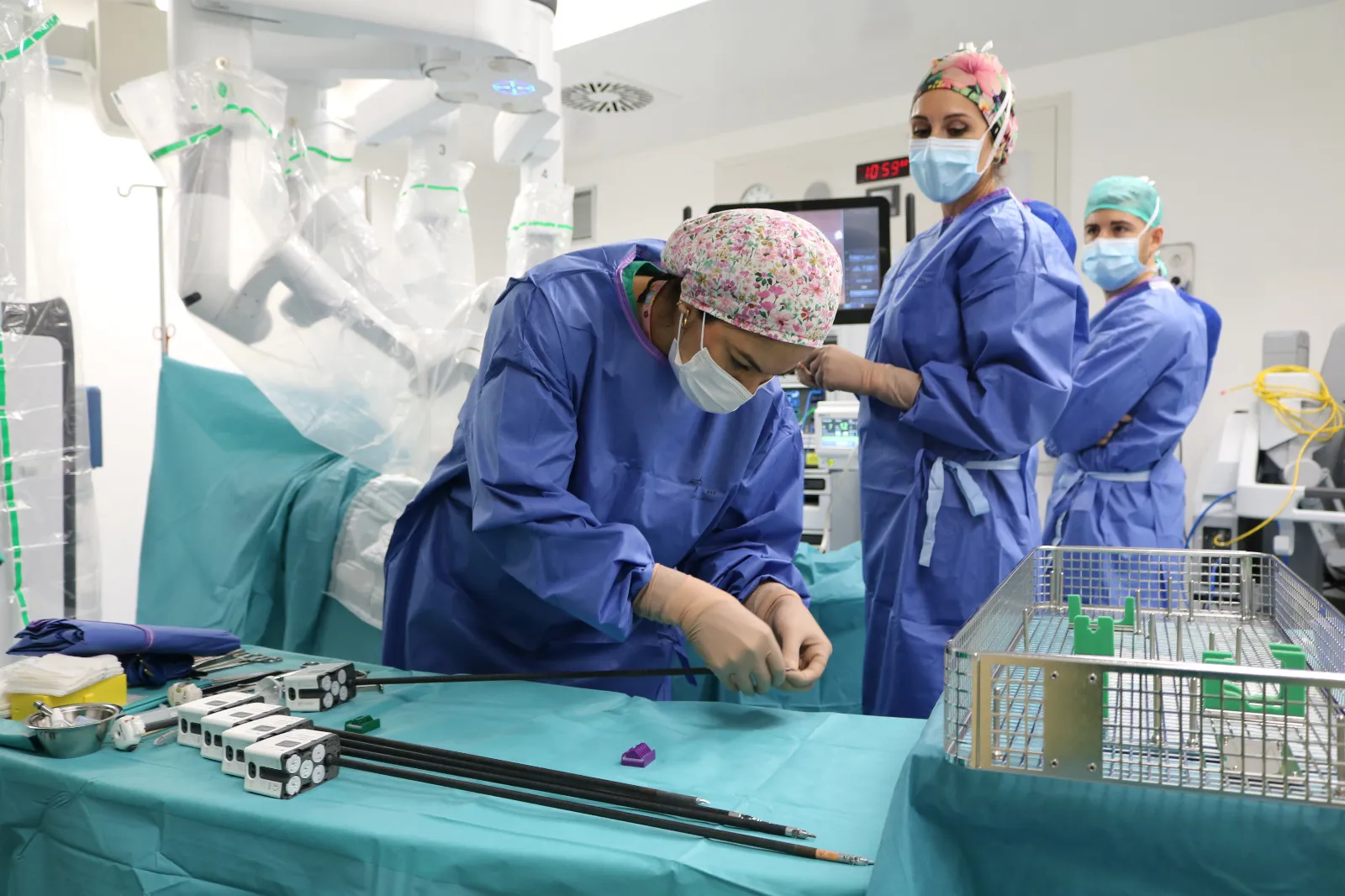
The hospital center, affiliated with the Canary Islands Government's Ministry of Health, has recorded a total of 165 patients operated on using robotic surgery since the launch of the Da Vinci robot in September 2025. Initially implemented by the General and Digestive System Surgery service, the program has expanded with the addition of the Urology service after its specialists were accredited in May of this year.
The arrival of this technology represented a significant advancement for the Molina Orosa, enabling high-precision, minimally invasive procedures. The head of Surgery, Juan de Diego, described the assessment as "very positive," highlighting the reduction in complications and the rapid recovery of patients.
The Urology service, since its accreditation, has performed over 20 robotic interventions, primarily radical prostatectomies for the treatment of prostate cancer. The head of Urology, Javier Rábade Rey, emphasized how this technology improves tissue preservation, positively impacting urinary continence and sexual function.
This consolidation of robotic surgery coincides with a general growth in the hospital's surgical activity. In the first half of this year, 6,432 interventions were performed, a 10.8% increase compared to the same period in 2023 (5,805 interventions). This rise is accompanied by the incorporation of new techniques and the modernization of the center.
The robotic surgery program officially began on September 24, 2025. The system allows the surgeon to control robotic instruments with an amplified three-dimensional view and high-precision movements, filtering physiological tremor.
The manager of Lanzarote's Health Services, Pablo Eguia, noted that the 1.7 million euro investment in the Da Vinci robot promotes the application of robotic surgery to other specialties and the technological modernization of the center, benefiting the island's patients.