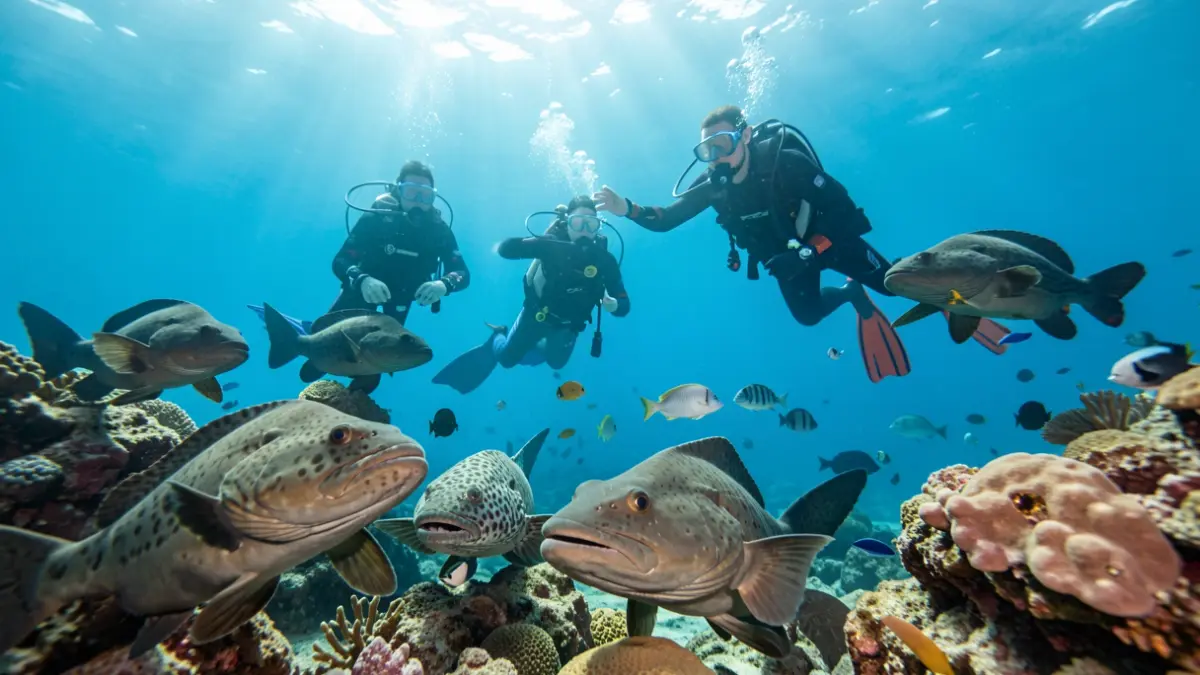
The project, coordinated by ECOAQUA researcher Doctor Rodrigo Riera, utilizes a digital application for divers to record the presence and abundance of selected marine species, along with dive details such as date, time, number of divers, and location.
The accumulation of this data allows for the creation of a continuous database to analyze distribution patterns, frequency, and relative abundance of marine species across the islands.
Currently, the Dive Reporter network in the Canary Islands includes 20 collaborating centers spread across Gran Canaria, Fuerteventura, Lanzarote, and El Hierro. Over 30 diving professionals have been trained in using the application and identifying the project's species.
Twenty-four species of interest have been established for the project in the Canary Islands, including native species like the grouper, wreckfish, or angel shark, as well as non-native species of particular interest such as the Asian algae.