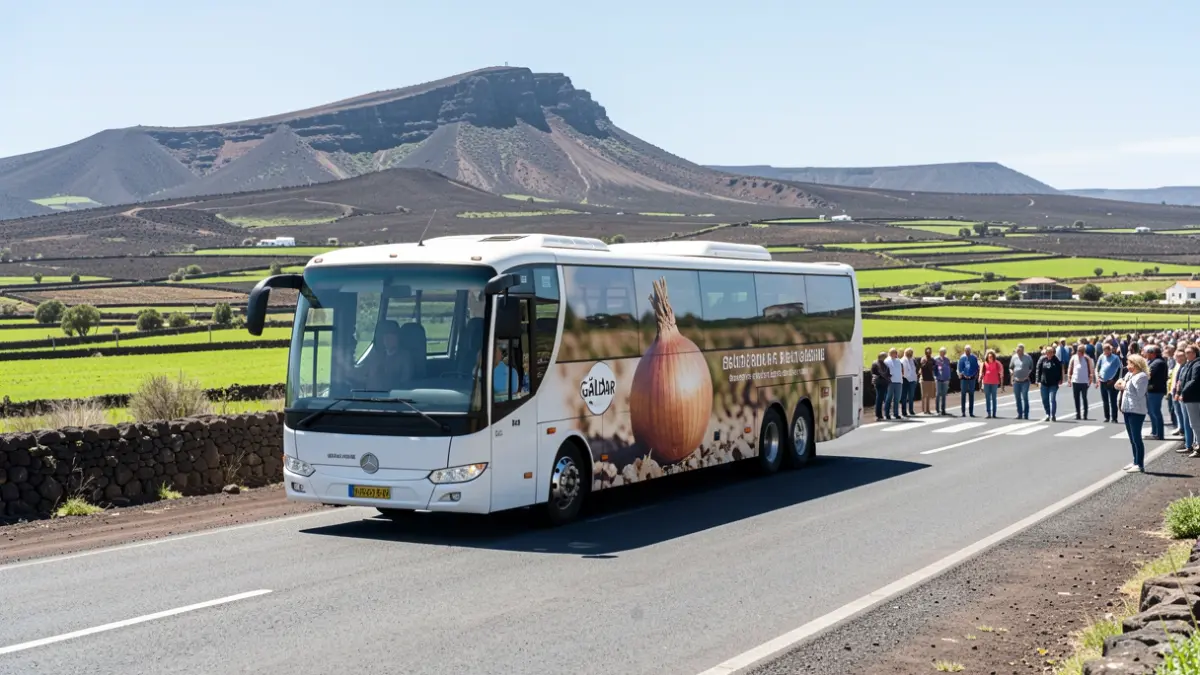
The initiative, presented at the Global depot in the island's capital, has the backing of the Island Government and aims to safeguard the future of the traditional Gáldar onion. The Minister of Primary Sector, Miguel Hidalgo, the mayor of Gáldar and insular councilor for Presidency and Sustainable Mobility, Teodoro Sosa, the general director of Global, Víctor Quintana, the Gáldar councilor for Agriculture, Agustín Martín, and representatives from Aprocegal, are working together to preserve this product and its varieties, considered part of the rural identity of Gáldar and the northern region.
This alliance has led to scientific research by the Agricultural Extension Agency of Gáldar, dependent on the Island Council, to protect and enhance the cultivation. Furthermore, the Gran Canaria Island Council has provided subsidies to boost the cultivation of its four varieties: Blanca de Gáldar, Roja de Gáldar, Chata de Sardina, and De Embarque, all adapted to the conditions of northwestern Gran Canaria.
Onion cultivation holds significant weight on the island, accounting for around 16% of the onion-growing surface in the Archipelago. These four varieties are spread across approximately 12 hectares in areas such as Piso Firme, Las Rosas, Sardina, and Los Quintana in Gáldar, and in Los Llanos and Troya in Agaete.
The collaboration began in 2015 with trials on collaborating farms and at the Island Council's Experimental Agricultural Farm, combining technical knowledge with the accumulated experience of local farmers. Testimonies from farmers regarding cultivation and agronomic management were captured in the book ‘La cebolla de Gáldar. Tradición y Ciencia’, published by the Island Council in 2018.
Following that publication, the insular government initiated procedures for official protection figures. In 2023, the Gáldar Onions Guarantee Mark was applied for; in October 2024, the Association of Producers of Gáldar Onion (Aprocegal) was established, comprising 14 young farmers. Progress is also being made towards obtaining the Designation of Origin (DO).
The Island Council has allocated funds to Aprocegal, including specific subsidies in 2026 to optimize irrigation and alleviate production costs. These are in addition to direct grants awarded in 2025 for investments in machinery and current expenses, largely used for promotion.
Maintaining the cultivation involves significant production costs, particularly for labor and water. Planting is done manually, following inherited practices, and the lack of specialized labor is a major threat to its continuity, exacerbated by rising water costs due to climate change.