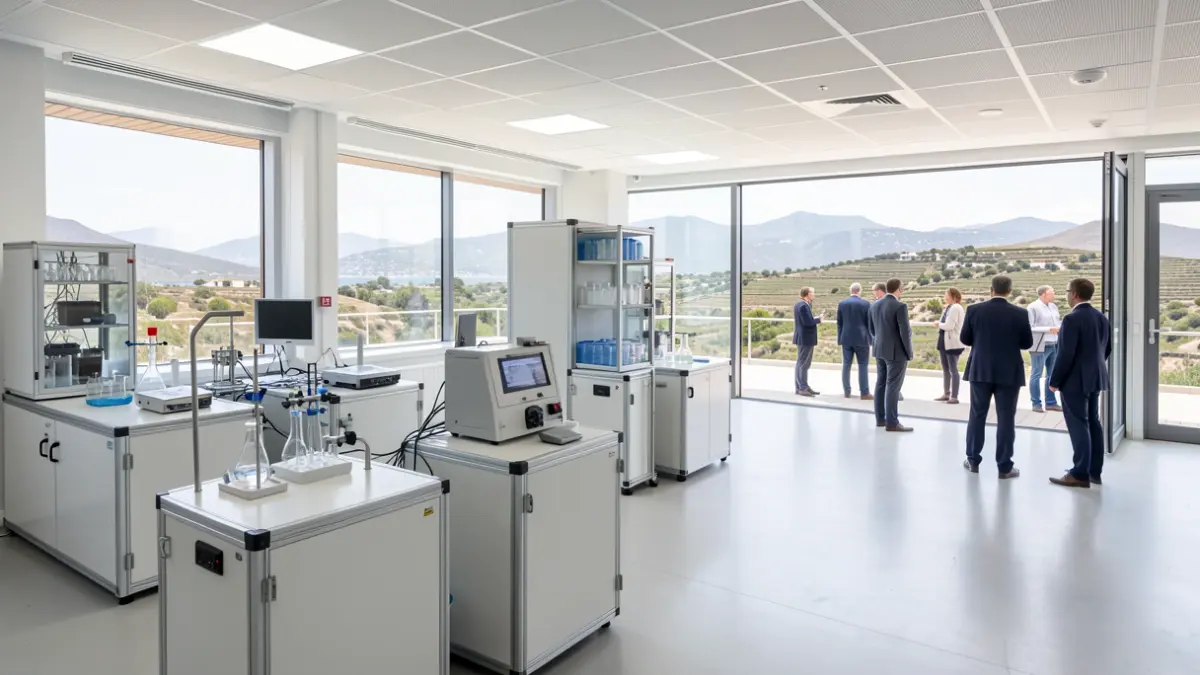
The Canary Islands Technology Institute (ITC) has officially presented its new R&D&i Space, located at the Gran Canaria Technology Park-Circular Economy Experimental Area, in Punta de Gáldar. This collaborative environment, inaugurated on July 14, is designed to expedite the creation of prototypes, pilots, and technological solutions applied to strategic sectors for the sustainable development of the Archipelago, such as agriculture, the blue economy, and digitized industry.
During the presentation, the Minister of Universities, Science, Innovation, and Culture of the Government of the Canary Islands and president of the ITC, Migdalia Machín, highlighted governmental support for the Technology Park's consolidation, emphasizing its role as a tool for collaboration and innovation. Meanwhile, the mayor of Gáldar, Teodoro Sosa, stressed that the launch of this space solidifies the park as a benchmark in innovation and technological development, creating opportunities for talent and businesses.
The R&D&i Space will enable the ITC to develop capabilities in areas such as scientific computing, renewable energies, water technologies, biotechnology, circular and blue economy, and sustainability. It functions as an open infrastructure to connect the institute's capabilities with the needs of Canarian companies, administrations, and innovative entities.
The first initiatives at this space originate from the ITC's Department of Scientific and Technological Computing. Its head, Juan Francisco Rodríguez, detailed the active technologies, including process automation, advanced data management, IoT, artificial intelligence, and robotics, aimed at improving efficiency and decision-making in productive environments.
Projects such as TEXTIL and INNOVABLUE, co-financed by the Interreg MAC 2021-2027 program, are already underway. TEXTIL focuses on sustainable models in the textile sector through image analysis, while INNOVABLUE promotes the green and digital transformation of marinas and sports ports with intelligent monitoring and management solutions.
With an interior configuration of 120 square meters and 180 square meters outdoors, this modular space facilitates real-world testing and piloting, fostering co-creation. The initiative exemplifies strategic collaboration to drive applied research, technological entrepreneurship, and generate qualified employment in the Archipelago.