La Oliva concludes 'Naturalmente La Oliva' tourism sustainability plan
The municipality finalizes a 6 million euro program funded by European funds for ecological transition and tourism enhancement.
By Jonay Mesa Rodríguez
••3 min read
IA
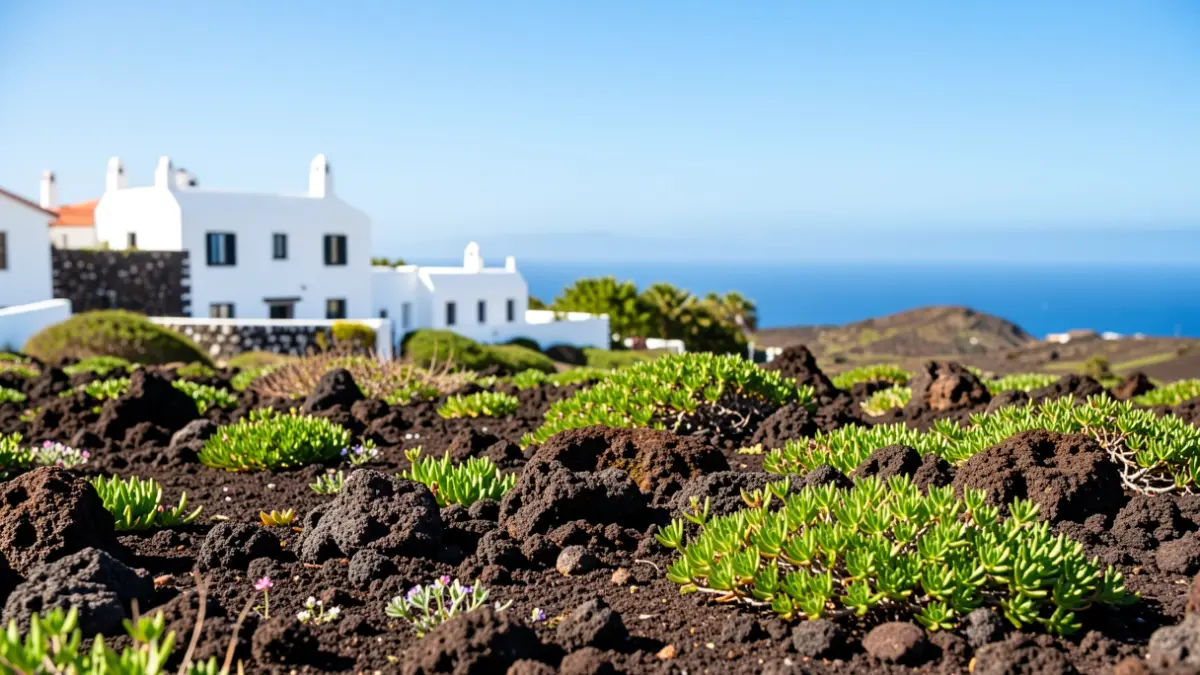
Generic image of a La Oliva landscape with traditional architecture and vegetation.
The La Oliva City Council has concluded the 'Naturalmente La Oliva' tourism sustainability plan, a 6 million euro initiative funded by Next Generation EU funds, focused on ecological transition and the municipality's competitive improvement.
The program, initiated in 2024, has enabled the execution of approximately six million euros in actions aimed at ecological transition, energy efficiency, digitalization, enhancement of tourism competitiveness, and valorization of the natural and cultural heritage of La Oliva. Driven by the Department of Tourism and Environment, the project seeks to benefit both the tourist experience and the resident population.
The acquisition of European funds was managed through the Office of European Funds, under the Department of Economy and Finance. This area defined a roadmap for a more sustainable, balanced, and innovative tourism model, securing the necessary resources for the Destination Tourism Sustainability Plan.
Among the developed actions are improvements in waste management with underground systems, environmental awareness campaigns, and the installation of photovoltaic solar systems in 15 municipal public buildings to reduce energy dependence. Progress has also been made in sustainable mobility with the incorporation of electric vehicles and planning for charging points.
A significant portion of the investment was allocated to the recovery of natural spaces such as the coast of El Cotillo, reinforcing the protection of the Lime Kilns of the old Port of Tostón, declared an Asset of Cultural Interest. Technical studies were promoted for the adaptation and protection of the Barranco de los Encantados, and protective elements were installed in sensitive coastal areas.
In the cultural sphere, the program has strengthened the offering through the rehabilitation of heritage resources, including the opening of the museum at Castillo del Tostón, improvements to the Aljibe Veneno y Redonda Interpretation Center, and rehabilitation of the Casa del Maestro in Los Lajares, in addition to a new tourist information point in La Oliva.
“
"The execution of ‘Naturalmente La Oliva’ demonstrates the plan we have for La Oliva, one in which we conserve our natural spaces, commit to environmental awareness, and value our historical and heritage assets."
“
"In this final event, we proudly present that these 6 million euros from the Tourism Sustainability Plans have been executed 100% in La Oliva, in a pairing we are as comfortable with as Tourism and Environment, aiming to make our municipality increasingly sustainable, environmentally conscious, and attractive not only to tourists but also to our residents."
“
"This plan has been very important for the City Council not only for the specific actions carried out within it, but also because since we started at the beginning of the term, seeing the possibilities offered by the Office of European Funds, it also compelled us to create a structure that, in addition to these 6 million euros, has allowed us to attract and manage over 30 million euros in external funds over 3 years."
“
"La Oliva is undoubtedly a destination that aims to be intelligent, to make appropriate use of data and digital tools, as well as to conserve its historical and ethnographic heritage, in addition to its gastronomy as an essential resource."
The program has served to organize actions related to sustainability, heritage, digitalization, energy efficiency, and the improvement of the municipality's tourism offering, thus closing a cycle of investment and development.