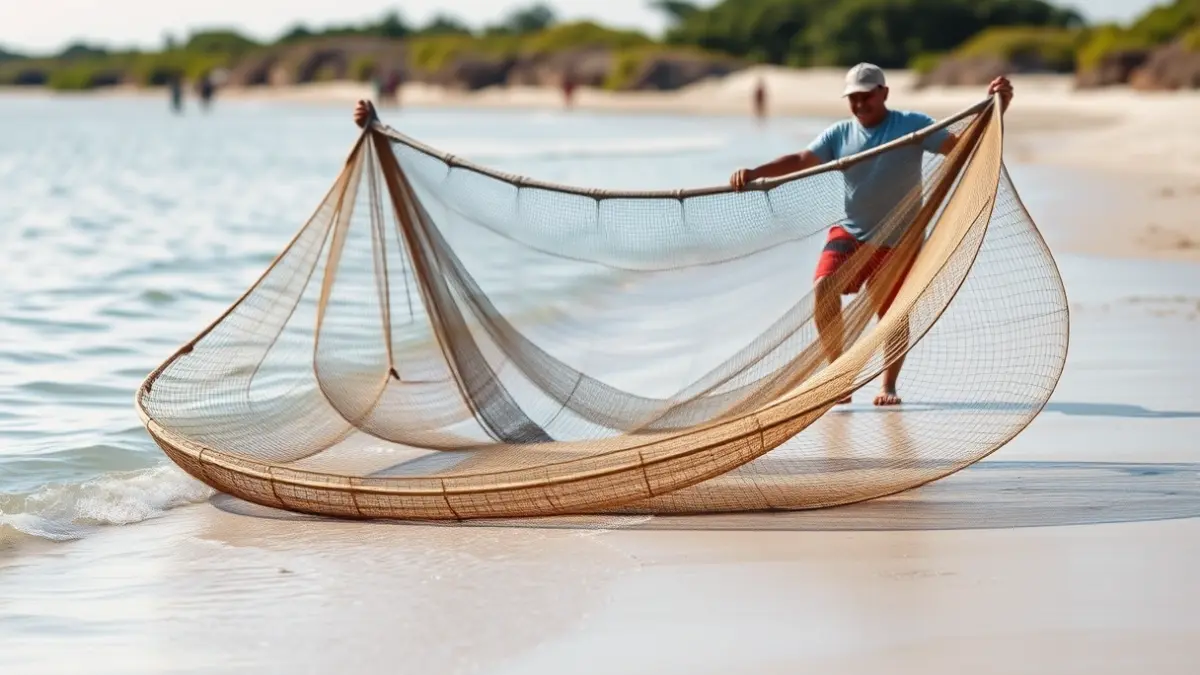
This technique, which involves dragging a large net from a boat to the shore in a semicircle, is performed manually without engines. Its use is exceptionally authorized and exclusively for research, as its low selectivity prevents its use for commercial fishing.
Initial studies have revealed the predominance of mullet, a native species, along with sargos, bailas, and lebranchos. Crabs and shrimp have also been recorded. The presence of lebrancho specimens up to 50 centimeters, observed before the storm, raises questions about their adaptation and long-term coexistence with tilapia, an invasive species.
“"This monitoring gains special relevance after the passage of storm Therese, as it will allow us to monitor the evolution of the pond by comparing pre- and post-storm ecosystem data."
In the first application of the chinchorro, 1,929 individuals were captured in a single haul. Between October 2025 and January 2026, 5,428 specimens were counted using various monitoring methods. A recent sampling yielded 1,327 mullets, 705 sargos, 38 tilapias, 18 bailas, 1 lebrancho, in addition to crabs, one shrimp, and 15 sea slugs.
Scientists indicate that the ecosystem is in a phase of ecological readjustment, with uncertainty about its future evolution. The observed changes could be the result of the specific impact of the storm or the beginning of a new stable dynamic. The Charca de Maspalomas is an ecosystem in transformation, and its medium-term behavior remains unknown.
This study, which involves the collaboration of the San Cristóbal fishermen's cooperative, aims to deepen understanding of the ecosystem's evolution and guide future management and control strategies, with a particular focus on invasive species. The technique began experimentally in February 2026 and has been optimized to improve sampling effectiveness and the quality of biological information.