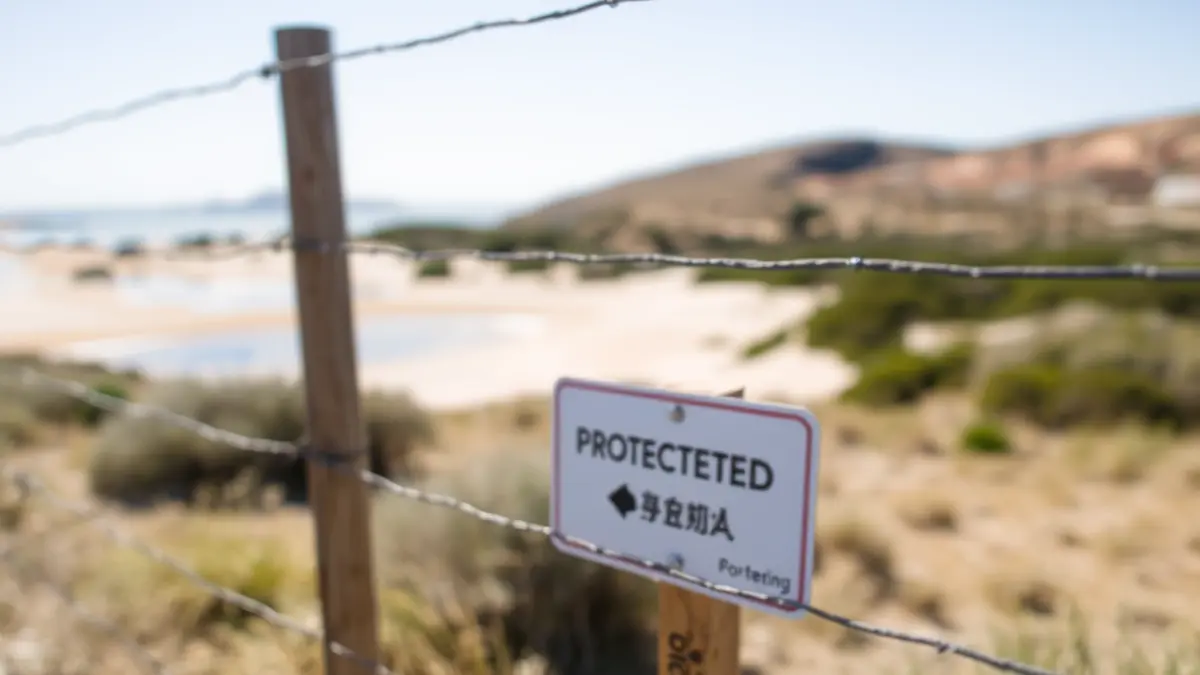
The incident, reported on Saturday, April 18, shows two individuals inside the fenced area of the Charca de Maspalomas, a restricted access zone, allegedly to take pictures. This is not an isolated event but adds to a series of behaviors that endanger one of the most delicate ecosystems in southern Gran Canaria.
There are images that alone explain a problem that in the Canary Islands can no longer be dismissed as a mere anecdote.
Despite clear signage, awareness campaigns, and the recognized environmental value of the site, some visitors continue to ignore regulations, treating the landscape as a mere backdrop for their personal albums. This attitude causes a mix of frustration, helplessness, and weariness among residents and visitors who do respect the environment.
This event is linked to a similar one that occurred on April 9 in the Dunas de Maspalomas, where people were also seen walking in prohibited areas in search of the
perfect image.
The repetition of these episodes highlights a fundamental problem: a lack of understanding by some that they are entering a protected natural space, not a rule-free theme park.
The Special Natural Reserve of the Dunas de Maspalomas, covering about 400 hectares, is a unique ecosystem in the Canary archipelago. It integrates a dune system, a palm grove, and a brackish lagoon like the Charca itself, habitats of immense ecological value recognized by regional legislation and specific conservation plans.