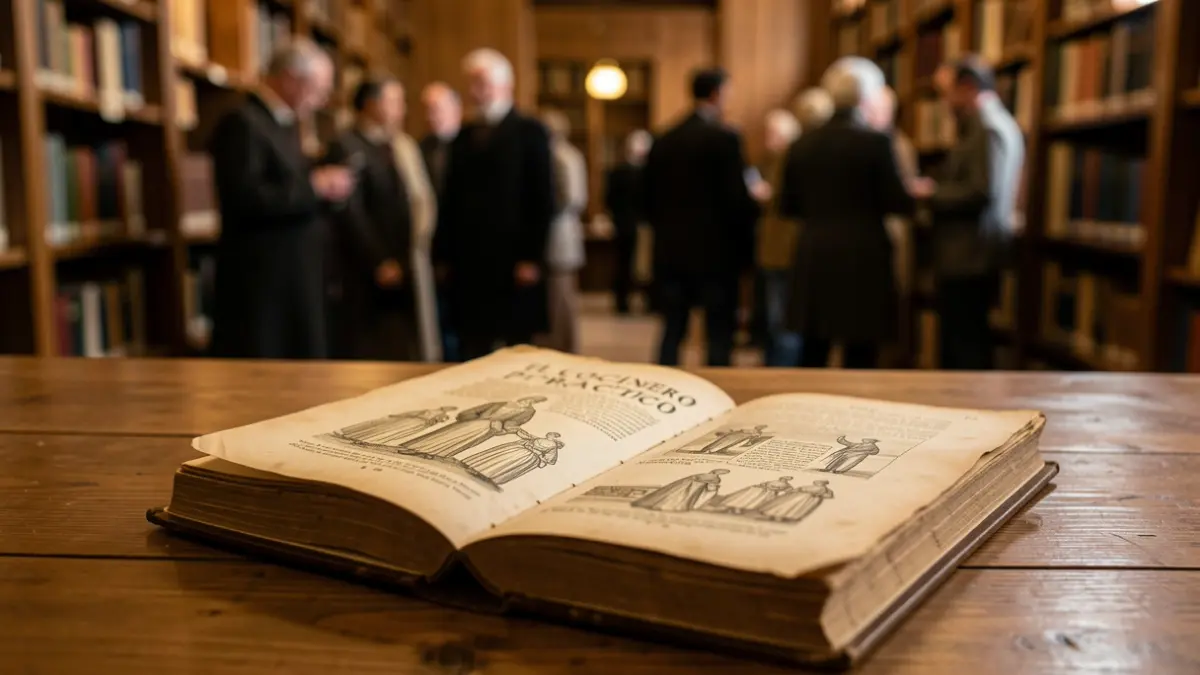
The Center for Documentation of Canaries and America (CEDOCAM) has unveiled a bibliographic gem from its old collection: El cocinero práctico. Nuevo tratado de cocina, repostería y pastelería. Published in Madrid in 1892 by Saturnino Calleja, this work of approximately 700 illustrated pages presents itself as a comprehensive manual, showcasing how cooking at the end of the 19th century was much more than just preparing food, involving organization, technical knowledge, resourcefulness, and a good dose of creativity.
The publication begins with fundamental practical aspects such as kitchen organization, provision selection, and food preparation techniques. It then delves into an extensive repertoire of recipes, including sauces, broths, meats, fish, seafood, vegetables, eggs, appetizers, and game dishes.
Beyond haute cuisine, El cocinero práctico also pays attention to economical and domestic cooking, highlighting the importance of saving, food preservation, and resourcefulness. It includes guidance on bread making, preserving animal and vegetable products, pork salting, and even identifying potentially harmful meats.
Confectionery and pastry also hold a prominent place in the work, with recipes for jams, compotes, candies, syrups, and desserts that offer a glimpse into the flavors of a bygone era. The instructions suggest that pastry chefs and confectioners were considered professionals with their own distinct techniques and knowledge.
The book also incorporates recipes for liqueurs and various ways to imitate prized wines, presenting food as a complete experience—from ingredient preparation to table setting and beverage pairings.
Today, El cocinero práctico can be read not only as a recipe book but also as a portrait of late 19th-century society. Its pages reveal what people ate, how households were organized, what knowledge was considered essential, and how diet was linked to health, economy, and social norms. Preserving this work at CEDOCAM allows this bibliographic heritage to be accessible to readers.