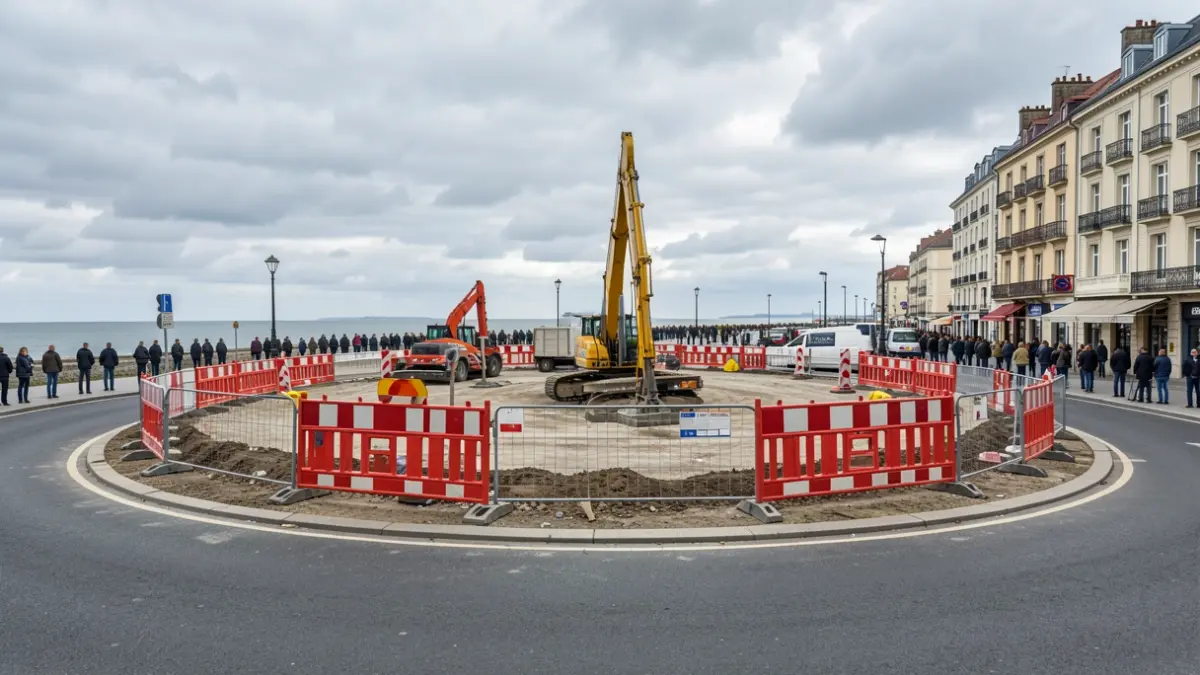
The construction of the underpass at the Belén María roundabout, a key point on the isthmus of Las Palmas de Gran Canaria, has consumed 24 out of the 29 months planned since its commencement in July 2024. The works, aimed at transforming mobility in the area of entry and exit to the Port of La Luz, affected traffic this Saturday, forcing drivers to take alternative routes and causing brief traffic jams.
This project, with an initial estimated cost of 25 million euros and executed by the Government of the Canary Islands in agreement with the State, adds to the trend of public works significantly exceeding their execution deadlines. The main objective is to alleviate congestion at one of the city's most problematic traffic points, connecting the port and one of the most important industrial estates.
The project, which began in 2024, started amidst controversy, as traffic specialists had pointed to other more critical points. The decision to proceed with the underpass in this port area, with the construction limit set at the height of the Castillo de La Luz, has encountered various "unforeseen obstacles."
Among the setbacks are the discovery of hydrocarbon residues in a soil testing well, a problem that had already been warned about in 1987 when the underpass in the area was discarded due to the subsoil being considered a "sieve." Additionally, about 40 palm trees have been felled and relocated, and concrete works have been carried out that have not caused significant traffic disruptions.
This weekend's work, such as the dismantling of lighting poles, represents a small step forward in a process that has been considerably prolonged. Residents of La Isleta, an area with over 20,000 citizens, are hoping to see significant progress, amidst an already complex traffic situation due to MetroGuagua works and changes on streets like Doctor José Guerra.
The completion of this work, which began with delays to avoid coinciding with other interventions in Santa Catalina, remains uncertain, with its origins dating back long before the laying of the first stone in the summer of 2024.