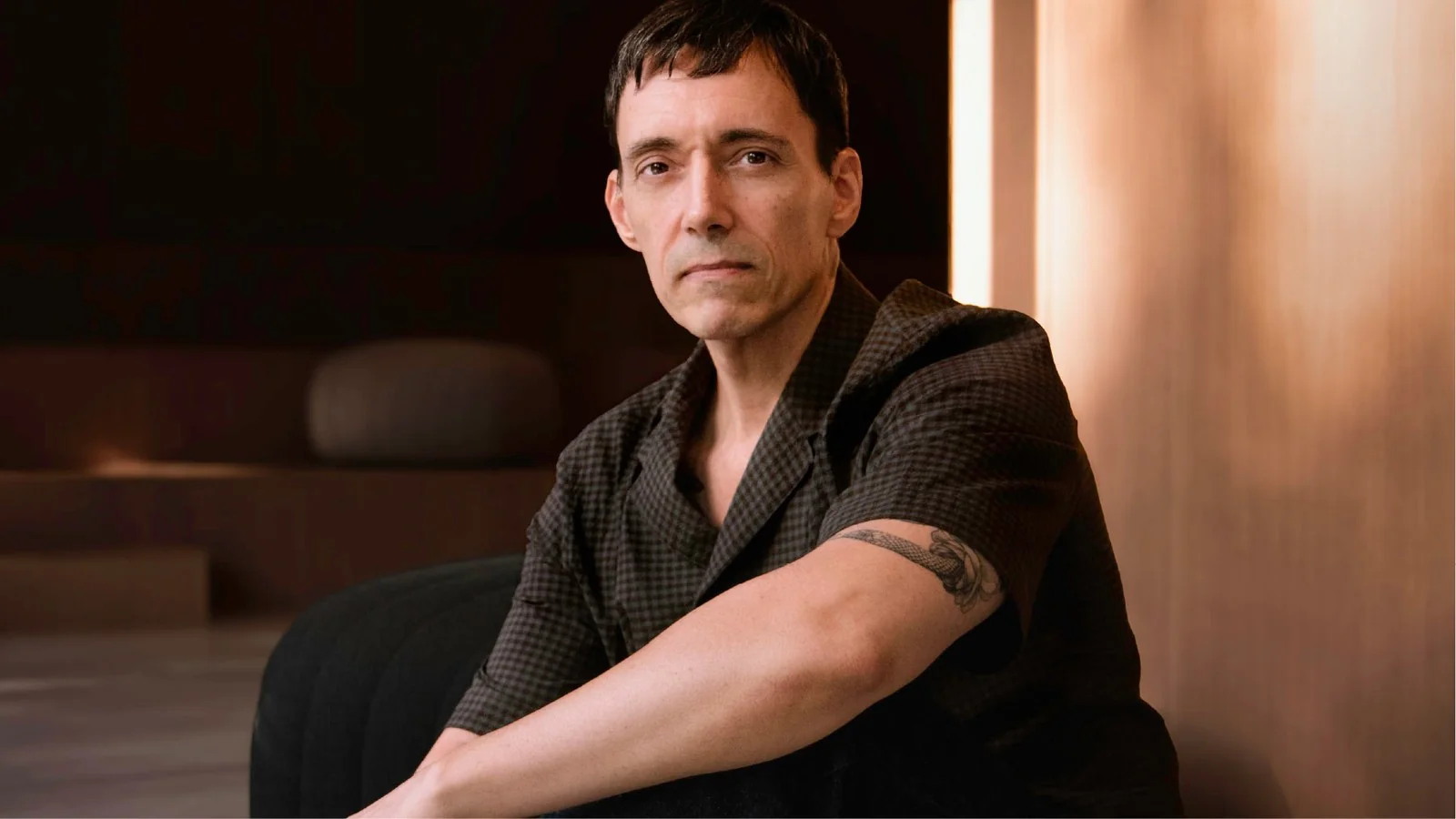
To start, how would you define the essence of the studio and who is behind the project?
Our essence is focus, getting down to the nitty-gritty, going beyond what's expected. We demonstrate this when we design a memorable and strategic presence, both online and offline, so that whoever sees you, chooses you. Behind the project is myself, Caco Martín, designer and consultant. A Canary Islander with cat wings.
What has the journey been like to reach the point where the studio is today?
I started back in 2010 as a freelance entrepreneur, with all the ups and downs of a roller coaster you can imagine. It all began in the Canary Islands, after many years working as a window dresser and entering the vibrant world of web design, which was starting to become very popular.
My first commissions were websites for all kinds of entrepreneurs, and little by little, they started calling me for more challenging projects, both in terms of size and client type: cultural projects, festivals, some of which have evolved over the years into digital ecosystems. In 2020, like many professionals, I had to rethink things, including making the leap to Madrid to continue growing and expand my network of collaborators and clients.
When a new client comes in, what is the first step?
Listening to them. And not just how they want their website: that's almost the least important part. To create a real solution, it's vital to understand the current stage of their project or company, the people involved, and the challenges they face. Without that, we'd just be creating a pretty website that serves no purpose.
“"Listen, understand, and propose. Never the other way around."
You have an acceptance rate for proposals that is close to 98%. How do you achieve such precision?
I have to confess, with a laugh: it's not a bluff! I first said it after many years of successes, during the talk-workshop 'Design a website that doesn't look like a typical WordPress,' at WordCamp Madrid 2025.
There are two key details for a proposal to be a 'yes': understanding the project and the people behind it, and aiming to go beyond what's expected. I always say that a website should show what you aspire to be, grounded in your strengths but looking towards your future.
Sometimes what the client imagines doesn't align with what you propose, yet you exceed their expectations. How do you achieve that turnaround?
Sometimes the surprise is part of that acceptance. It's not just about the aesthetics or the design itself. Often, it's about putting a new spin on the business's communication, discovering opportunities where there were previously weaknesses. It can even be about solving internal bottlenecks that are then reflected in the website's services or products.
In such a competitive sector, what sets you apart from the rest?
That we don't work with just any type of client. There are so many studios to choose from that each client can work with the professionals who best suit their needs. We like to build solid, long-term relationships, watch our clients grow, and accompany them through their milestones. Many have been with us almost since the beginning, when I was a freelancer. Although we offer digital services, we always work with people.
What sets us apart is the depth of our work, which we achieve through consultancy: we delve deep into each project to find solutions and improvements. The website is the starting point for everything else.
Is there any project you hold particularly dear?
That's a difficult question. There are quite a few, but if I had to name one, it would undoubtedly be the website for the architect Virgilio Gutiérrez Herreros. At a time when skeuomorphism was fashionable, around 2013, working with him hand in hand was a huge creative exercise. It opened my mind to different ways of approaching design, concept, and message. He remains my benchmark to this day.
What is the team's day-to-day like when facing a creative or technical challenge?
You know, it's nothing grand: we mostly work online. My team is a network of independent collaborators, and when a challenge arises, the first thing I do is listen to their proposals, analyze, and be as quick as possible. Creative challenges are always easier to solve; technical ones have many physical and digital components and are more complex, although they also have creative solutions.
What industry trends are most motivating you right now?
In the early 2000s, stock photos turned the web design industry upside down with the standardization of aesthetics. This made real photos of a company's team even more valuable than those of a group of young Swedes on a white background. I'd say artificial intelligence is going through a similar phase now: it encompasses much more than photos, and its use has become standardized at breakneck speed.
But what motivates me to keep creating is paying attention to the aptitudes that enable human creativity and knowledge. Communicating with a wide variety of people, learning new things to gain broad knowledge, and even trusting my intuition are skills that, so far, no machine can replicate.
“"Intuition is felt. That's human. And as long as there are humans who need solutions in any field, there is work."
Where can people find out more about your work?
At cacomartin.com, we're ready to get started. Your project is waiting for us.