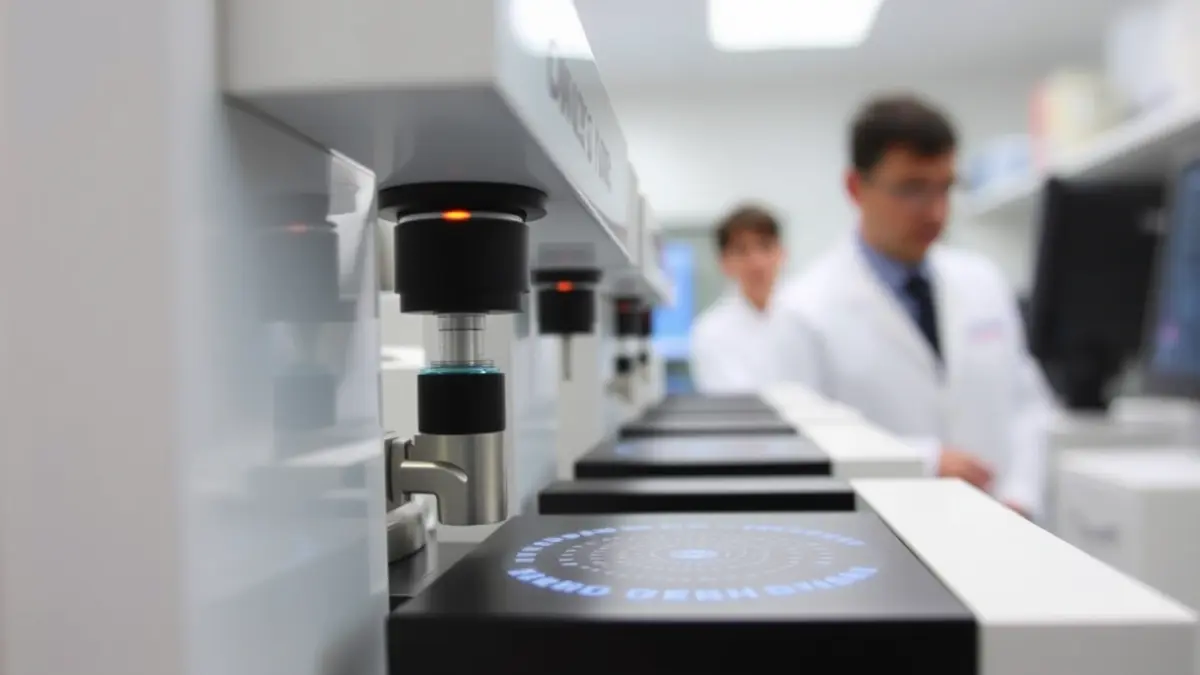
A total of five institutions dedicated to research and development across the Archipelago will benefit from this state aid. The primary goal is to equip these centers with the best tools to foster scientific excellence, as highlighted by the Minister of Science, Innovation and Universities. The recipient entities will be required to co-finance the remaining amount to complete the purchase of this equipment.
This funding is part of a broader national initiative, where the State has distributed 103.8 million euros through 268 grants nationwide. The 2025 Call for the Acquisition of Scientific-Technical Equipment by the State Research Agency, co-financed by FEDER funds, has primarily benefited Andalusia, followed by Catalonia, the Valencian Community, and Madrid.
In the Canary Islands, the beneficiary institutions include the two public universities, the Astrophysical Institute of the Canary Islands (IAC), the Technological and Renewable Energies Institute (ITER), and the Institute of Natural Products and Agrobiology (IPNA), associated with the Spanish National Research Council (CSIC). This call is framed within the State Plan for Scientific, Technical and Innovation Research 2024-2027, aiming to boost the development and improvement of scientific and technological infrastructures.
The University of La Laguna (ULL) has been the most favored entity, securing 1.3 million euros for four projects. The University of Las Palmas de Gran Canaria (ULPGC) has received one million euros for three projects. The IPNA has obtained 776,000 euros, the ITER 621,000 euros, and the IAC 470,800 euros.
“"The provision of high-cost scientific-technical infrastructures constitutes a strategic element for the development of advanced research, by allowing the incorporation of specialized equipment, the improvement of analytical and experimental capabilities, and access to technologies that are critical for the competitiveness of research groups."
Among the services that will expand their equipment is the Biosafety Level 2+ Laboratory, which will acquire a flow cell analyzer with spectral imaging technology. This state-of-the-art equipment will be integrated into the service catalog of the General Research Support Service (Segai) at ULL, which will make all equipment available to the scientific community starting in 2027.
“"This technology will allow for more reliable and higher quality data."
The Particle and Microsurface Characterization Laboratory, also integrated into Segai, will incorporate cutting-edge equipment for analyzing micro and nanoparticles, benefiting sectors such as industry and pharmaceuticals. Additionally, the Genomics Service will acquire new equipment to automate procedures, enabling the study of a larger number of samples and reinforcing essential functions like DNA purification and sequencing.
Finally, the University Institute of Neuroscience (IUNE) at ULL will use the funding to establish an advanced neuroimaging laboratory for social cognition. This equipment will allow for simultaneous brain recordings in four people, facilitating the study of phenomena such as brain synchronization, empathy, and cooperation, and analyzing variables like gaze direction and physical proximity.