The total number of cars, motorcycles, vans, and commercial vehicles in the Islands amounts to 2,012,450 units. This volume places the Canary Islands' automotive fleet above nations such as Uruguay (1.5 million) or Croatia (1.8 million), and matches the fleet of Denmark, a country with nearly six million residents.
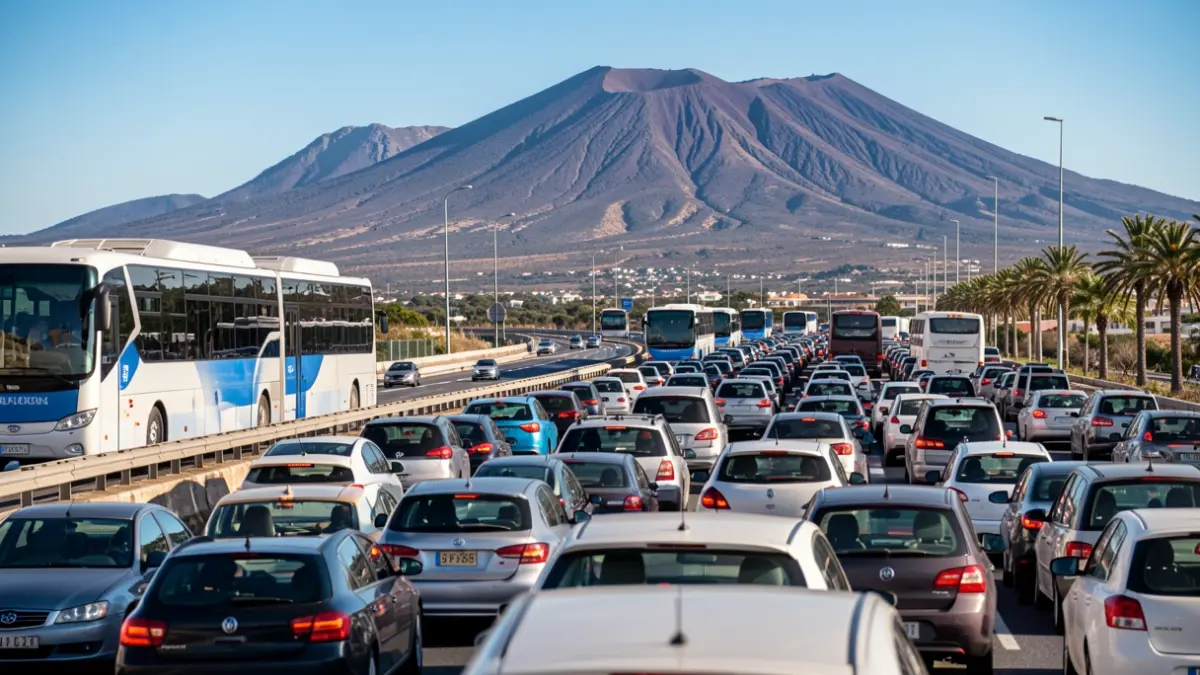
The constant increase in registrations, boosted after the pandemic and the significant presence of rental fleets, has contributed to this saturation. Despite the free public transport on buses and trams since 2023, its usage accounts for barely one in ten motorized journeys in Tenerife or Gran Canaria. Geographical dispersion, the lack of rail alternatives, and strong tourism demand are key factors in the continuous acquisition of private vehicles.
Island-wise, La Palma leads the regional rate with 942 vehicles per thousand residents. It is followed by Lanzarote and Fuerteventura, with indices close to 815 cars per thousand. In Tenerife, over 792,000 units circulate for a registered population of 950,000 people.
Regarding fuel types, 67% of the Canary Islands' vehicle fleet uses gasoline engines, while diesel accounts for approximately 31.8%. Fully electric vehicles, despite incentive plans, barely reach 22,000 units, representing 1.1% of the regional total.
The pace of new vehicle incorporation has doubled figures recorded before the pandemic. In the first seven months of the current year, more than 44,000 new registrations have been recorded in the archipelago, consolidating an upward trend that strains the main road arteries of the island network.