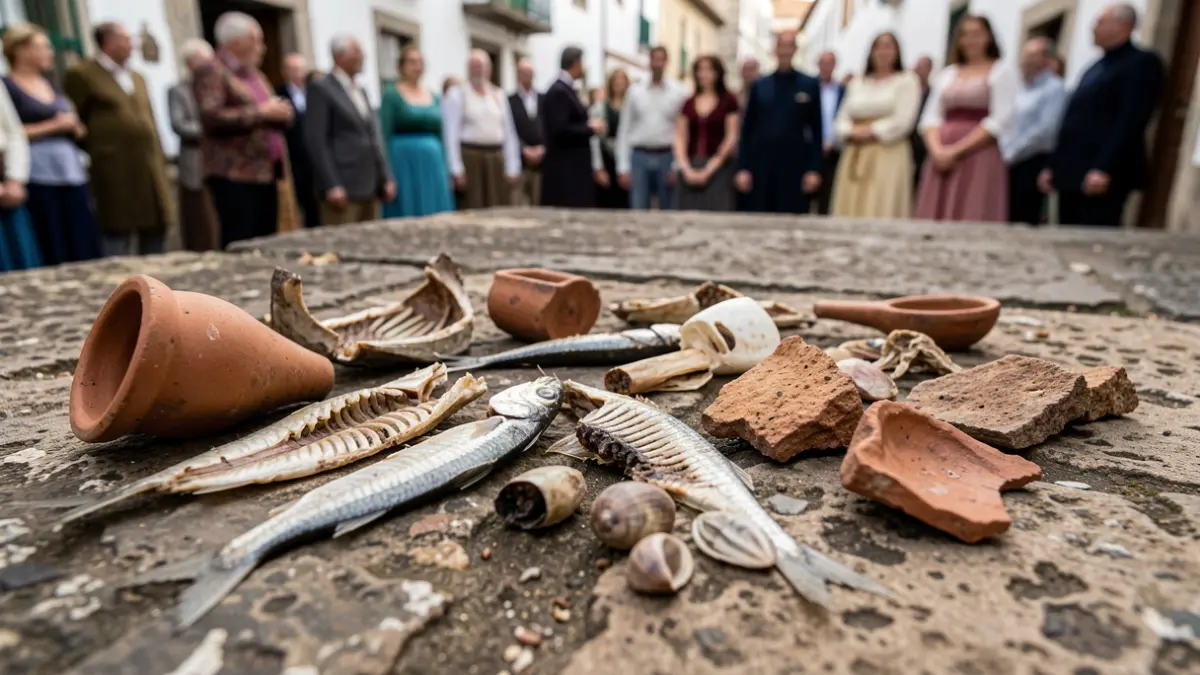
The first inhabitants of the Canary Islands, known as Guanches, maintained an omnivorous diet adapted to available resources, which were sometimes affected by climate crises. While the consumption of meat and fish was widespread across all islands, its distribution was not uniform. Recent research explores the proportion of fish versus meat consumption, the possible intake of seals, and dietary variations over the approximately 1,500 years of the Amazigh culture in the archipelago.
Tools such as stable isotope analysis, developed in the 20th century and applied in fields like forensic medicine, allow archaeologists like Tenerife-based Elías Sánchez Cañadillas, an authority in the subject, to obtain evidence of pre-Hispanic nutrition from bone remains. These studies, along with zooarchaeology, led by specialists such as Verónica Alberto Barroso, shed light on eating practices and diseases resulting from food crises.
Although livestock farming was crucial, with evidence of a sheep and goat farming model oriented towards dairy production, according to Verónica Alberto, preliminary analyses of human bones by Sánchez Cañadillas suggest a strong reliance on terrestrial proteins, especially from domestic animals. However, the limited attention paid to the exploitation of wild animals and the potential intensive hunting that led to the extinction of species like the Gallotia Goliath lizard and the Canaryomis Bravoi rodent, documented in Tenerife, raise questions.
Faunal remains from coastal sites in Gran Canaria, La Palma, Tenerife, and El Hierro indicate that fishing and shellfish gathering were vital. Research by Teresa Delgado and colleagues suggests, through auricular exostosis, a greater dependence on marine resources in coastal populations of Gran Canaria. Isotope profiles, supported by Matilde Arnay de la Rosa, reveal distinct dietary patterns, with greater marine dependence in El Hierro compared to a more balanced consumption of terrestrial animal proteins and vegetables in Tenerife.
Carmen Gloria Rodríguez, author of the first doctoral thesis on archaeoichthyology in the Canary Islands, highlights that marine species found in sites across several islands are coastal, suggesting that fishing was carried out near the shore. The fish richness of the era would have been considerable, making it unnecessary to venture far out to sea.
On the more arid islands like Lanzarote and Fuerteventura, the diet may have been influenced by high trophic level marine foods, such as seals or cetaceans, although these hypotheses still require corroboration. However, isotope studies have limitations, as similar signals can be due to non-dietary factors, such as the ecosystem's aridity, as warned by Verónica Alberto.
Pork consumption is documented on several islands, being particularly important in Gran Canaria. There is a hypothesis, though without archaeological certainty, of honey consumption. Regarding dogs and cats, there is bone evidence of cynophagy in Tenerife and Gran Canaria, although it is considered a minority and non-systematic consumption.
The diet varied over time due to economic changes, migrations, occasional shortages, or population increases, according to Javier Velasco. In Gran Canaria, a high prevalence of osteoporosis (29%) is observed, indicating periods of famine, in contrast to El Hierro, where lower agricultural dependence and a mixed economy may have mitigated these effects.
Medical research, such as that by Dr. Emilio González Reimers, Professor of Internal Medicine at the ULL, has revealed a high prevalence of osteopenia and osteoporosis in pre-Hispanic populations, especially in Gran Canaria, linking it to agricultural dependence and external factors like drought.