Greenpeace Denounces Tourism Project in Tenerife for 'Greenwashing'
The environmental organization has filed allegations against the Ocean Citizen project in Punta Blanca, Guía de Isora, considering it a facade for a theme park.
By Redacción La Voz Canaria
••3 min read
IA
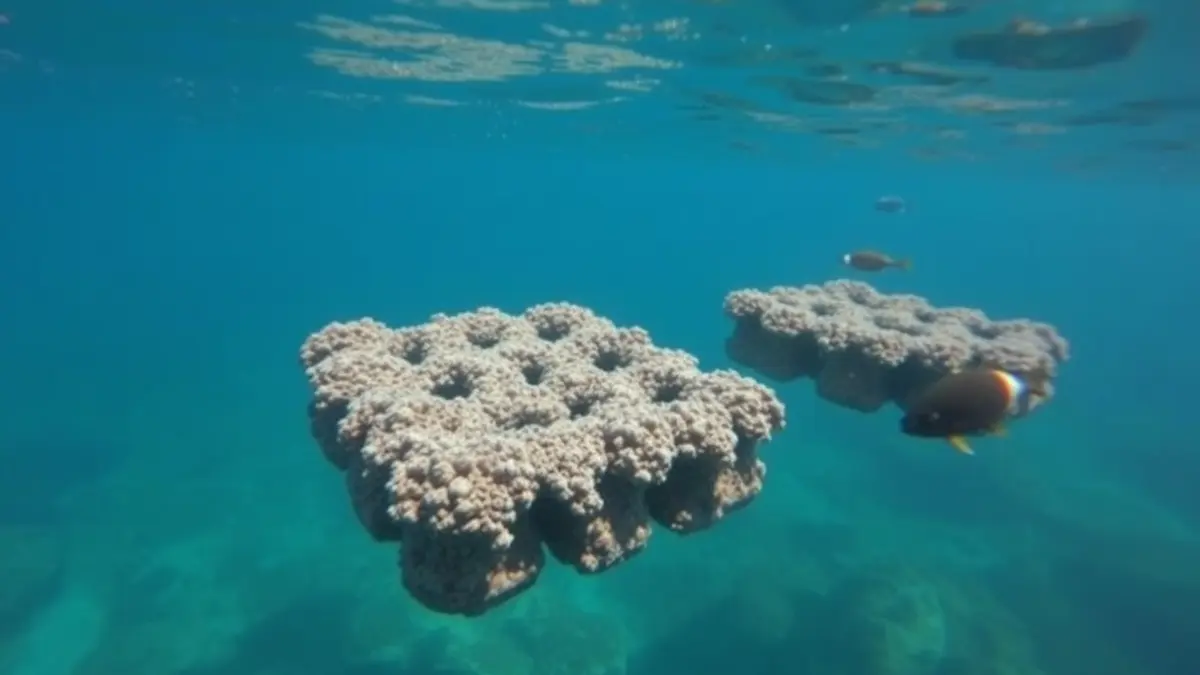
Image of artificial reefs underwater in a marine environment, representing a controversial tourism project.
The environmental organization Greenpeace has filed allegations with the General Directorate of Coasts and Management of the Canarian Maritime Space against the Ocean Citizen project in Punta Blanca, Guía de Isora, Tenerife, labeling it as 'greenwashing' for disguising a tourism business as scientific research.
The project, which seeks to occupy public maritime-terrestrial domain, would be located in the Special Area of Conservation (SAC) Teno-Rasca Marine Strip, an area of the Natura 2000 Network that hosts the only whale sanctuary in the European Union. Greenpeace argues that Ocean Citizen, funded by European funds, is an inseparable part of the large-scale tourism project Underwater Gardens Park Tenerife, declared of insular interest in 2022 by the Cabildo de Tenerife.
The environmental organization requests the denial of the application, pointing out that the project's fragmentation, by separating the marine part from the terrestrial complex, seeks to avoid a comprehensive environmental assessment and conceal its true recreational-tourism nature. The actions in Tenerife include the installation of 86 artificial reef modules, most of them in shallow waters in front of Punta Blanca, where the promoting company plans its theme park and underwater experiences.
“
"The promoter systematically uses concepts such as ecological restoration or regeneration to disguise as scientific altruism what is, in practice, a lucrative leisure business. It is pure greenwashing. The ultimate goal is not the advancement of scientific knowledge or the restoration of ecosystems, no matter how much interested reference is made to the scientific bodies of the Ocean Citizen consortium, but the creation of a recreational diving scenario in the Natura 2000 Network that supports the theme park planned in Punta Blanca."
Among the allegations, Greenpeace highlights that the project does not justify the need for intervention in the Teno-Rasca SAC and could generate artificial changes in marine habitats instead of restoring them. Furthermore, they criticize that the project does not address the causes of environmental degradation and could exacerbate them with the massive influx of tourists to the theme park.
“
"It is inadmissible that an initiative funded with public European funds is used to pave the way for a private theme park in such a sensitive area as Punta Blanca and in a protected area as pressured as Teno-Rasca. We are facing a clear fraud of law, with which they intend to commercialize common natural heritage under a false rhetoric of sustainability."
The southwestern region of Tenerife is of great biological and geological importance, with significant marine biodiversity and habitats of community interest. This area suffers intense anthropogenic pressure due to urban and tourist expansion. Projects like Underwater Gardens threaten to destroy the few remaining virgin spaces and further overcrowd the Teno-Rasca marine strip, one of the most important marine SACs in Europe.
The project has generated considerable social conflict in the Canary Islands, with opposition articulated through the Salvar Punta Blanca platform, which brings together 34 groups, including Greenpeace. An international signature collection on WeMoveEurope has exceeded 62,000 adhesions.