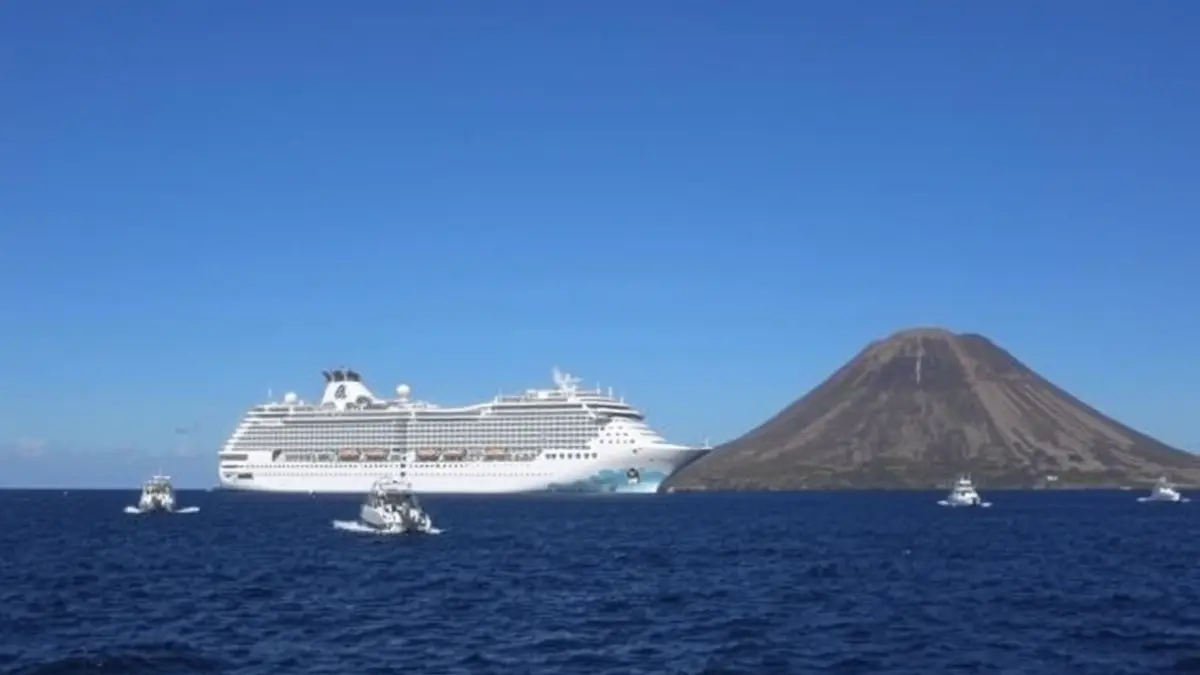
The Dutch-flagged vessel MV Hondius is sailing towards the port of Granadilla in Tenerife from Cape Verde. On board are fourteen Spanish citizens who, according to the Ministry of Health, remain asymptomatic. These passengers will undergo an initial evaluation on the island before being transferred to the Gómez Ulla Central Defense Hospital in Madrid.
The arrival of the MV Hondius in Granadilla will not involve a conventional disembarkation. A system with controlled sanitary circuits has been designed to avoid any unnecessary contact with the local population. After the evaluation in Tenerife, foreign passengers will continue their journey to their countries of origin, while Spanish citizens will be directly transferred to Madrid.
“"The priority is to act with prudence and maximum safety, minimizing risks during the operation."
The Gómez Ulla Hospital was chosen for its capability to handle situations requiring advanced sanitary isolation. This military center features a High-Level Isolation Unit, equipped with seven hospitalization beds, a BSL-3 laboratory, and spaces designed to separate patients with suspected or confirmed high-risk infections. This unit is prepared to protect both healthcare personnel and other patients, with permanent activation protocols and communication systems for family members.
Hantaviruses are a family of viruses that can cause severe diseases, primarily transmitted through contact with infected rodents or their secretions. Although human-to-human transmission is rare, cases have been documented in situations of close and prolonged contact with the Andes virus. The Ministry of Health has coordinated this operation with the Government of the Canary Islands, including the participation of figures such as the Minister of Health, the Minister of Territorial Policy, and the President of Canarias, to ensure rigorous health control and the safety of all involved.