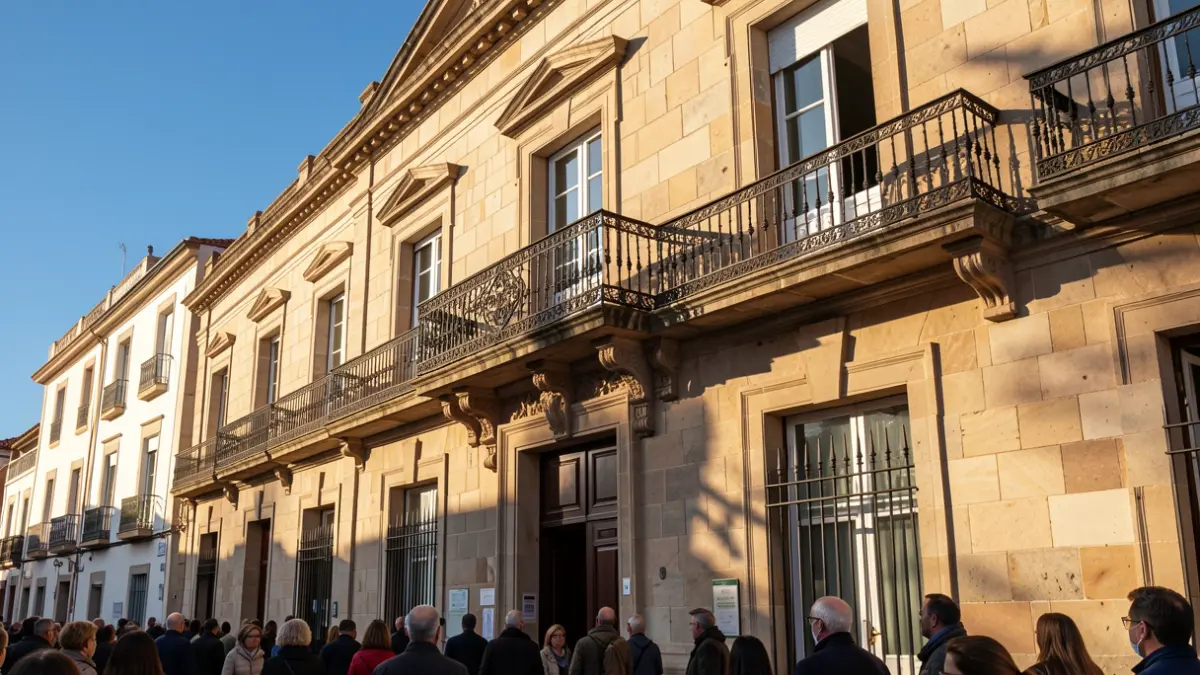
The first day of in-person service for migrant regularization in the Canary Islands was marked by the absence of large crowds at Correos offices in the archipelago's capitals. The implementation of prior appointments has been key to managing the flow of applicants, contrasting with the situation in other Spanish cities.
Despite the external calm, the process has not been without internal difficulties. Technical failures in the systems and staff shortages have caused significant delays. Some applicants, such as a Venezuelan resident with two years on the islands, experienced prolonged waits due to the slow Immigration platform and the activation of only one counter for this procedure.
“"The page is a bit slow because many of us are doing the same thing."
The need to upload a large volume of documents and the thorough review of each file contribute to the slowness of the process. Many migrants, like a young Colombian woman who arrived with three organized folders, seek to regularize their status to access formal employment and contribute to social security, after years of working in the informal economy.
“"We work illegally, and it's very difficult. You don't get holidays, you get sick, and they don't pay you."
In Santa Cruz de Tenerife, the situation was similar at the Plaza de España office, where only one of the ten available counters was dedicated to this procedure, causing delays of almost an hour. Comisiones Obreras (CCOO) has supported the regularization but criticized the lack of staff reinforcement and insufficient training received by Correos employees, as well as the limited number of enabled offices.
The Minister of Inclusion, Social Security and Migration, Elma Saiz, positively assessed the first day, assuring that the system is prepared and highlighting the mandatory nature of prior appointments and the open deadline until June 30. However, she also expressed concern about the lack of collaboration from some municipalities in processing necessary reports.