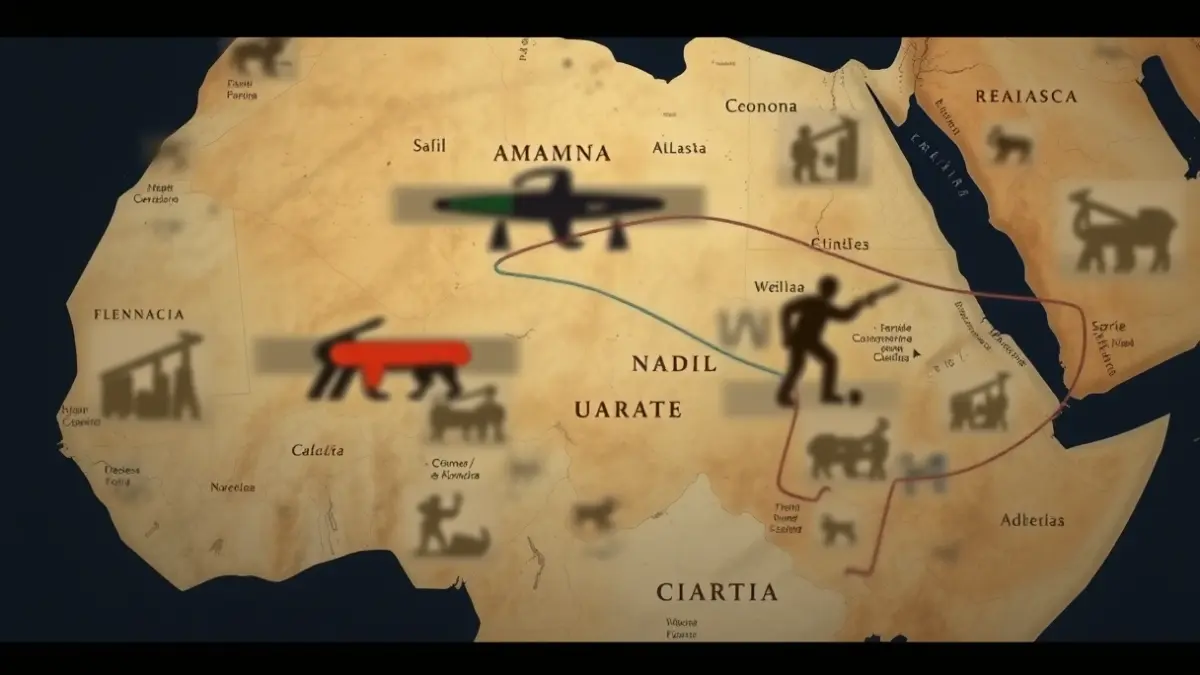
On April 25, a coordinated offensive by jihadist groups and Tuareg militias shook Mali, notably with the fall of Kidal, a strategic stronghold in the north. This event exposed the limitations of the Russian deployment in the area, with the retreat of the Africa Corps forces, heirs to the former Wagner organization, and the subsequent erosion of the narrative of control that Moscow had built in the Sahel.
The Russian withdrawal has not led to a collapse of the current pro-Russian government, but it has shown that the departure of European troops, including those from Spain, and Russia's entry have not achieved a new balance, but rather the perpetuation of a long-standing conflict. Recent attacks were not limited to the north, reaching the vicinity of Bamako and even the residence of the Minister of Defense, Russia's main ally in the region.
Instability has ceased to be peripheral and has also settled in the capital's surroundings.
Although the Malian state has not collapsed, its territorial control has diminished. A unified force from Niger, Burkina Faso, and Mali, countries governed by military juntas, responded with an air campaign against cities under rebel control. This force, which expanded to 15,000 troops by mid-April, aims to combat terrorist groups.
The situation on the ground remains volatile, with a tactical alliance between jihadists and Tuareg groups complicating stabilization. The Russian presence, which has replaced the French, has not solved the problem and, according to some analyses, has exacerbated it, strengthening insurgents. While Russia downplays setbacks, the European Union describes the situation as a “humiliation” and considers the need to resume its presence in the area to prevent conflicts and address the root causes of migration and organized crime.
For the Canary Islands, the crisis in Mali translates into growing political tension and increased migratory pressure. Although the Archipelago does not decide on the conflict in the Sahel, it directly manages its consequences, as instability, jihadism, and poverty drive irregular migration towards the islands, consolidating the Atlantic route with thousands of arrivals.